The Ultimate Guide for Worldbuilders
Sci-Fi | Fantasy | Alien Worlds | Mythology | D&D | Generator Formula
| 700+Planet Names | 24+Categories | GeneratorFormula Included | Real AstronomyExplained |
700+ Planet Name Ideas: The Ultimate Guide for Worldbuilders
A planet’s name is the first thing a reader learns about an entire world before they’ve seen a single tree, met a single inhabitant, or understood a single custom. ‘Arrakis’ tells you the planet is harsh before you know it’s a desert. ‘Pandora’ tells you to expect wonder and danger simultaneously, borrowing three thousand years of mythological weight in two syllables. The name is doing enormous narrative work before the story has even started.
This guide gives you 700+ planet names across every category a worldbuilder, sci-fi novelist, game designer, or D&D dungeon master could need alien worlds, fantasy planets, mythology-inspired Vampire Names, planets organized by actual biome and type, moons, binary systems, and more. Every major name includes meaning or context, because a planet name without roots is just a random collection of syllables.
This guide also does something no competitor covers properly: it explains how real planets actually get named. The International Astronomical Union has genuine rules, genuine history, and a genuine naming philosophy that has shaped every planet name humans have ever assigned including the names of the planets in our own solar system. Understanding that history will make every name you choose (or invent) more grounded and more interesting.
How Real Planets Get Their Names — IAU Rules & Astronomical History
The International Astronomical Union (IAU), founded in 1919, is the official body responsible for naming celestial objects. Their rules explain why our own planets are named the way they are, and they offer genuine inspiration for fictional naming systems.
Our solar system’s planets are named for Roman gods, continuing a tradition that predates the IAU by millennia. Mercury (the swift messenger god, fitting for the fastest-orbiting planet), Venus (goddess of beauty, the brightest planet in our sky), Mars (god of war, the ‘red planet’), Jupiter (king of the gods, the largest planet), Saturn (god of agriculture and time, Jupiter’s father), Uranus (the Greek sky-god, an exception to the Roman rule), and Neptune (god of the sea, matching its deep blue color). Each name was chosen because something about the god’s mythology matched an observed quality of the planet.
For exoplanets — planets outside our solar system, of which over 5,000 have now been confirmed — the default naming convention is far less poetic: a designation based on the host star’s name or catalog number, plus a lowercase letter indicating discovery order (starting at ‘b,’ since ‘a’ implicitly refers to the star itself). So the first planet discovered around the star 51 Pegasi is called 51 Pegasi b. This is functional but not exactly inspiring, which is why the IAU launched NameExoWorlds in 2015 — a public campaign inviting countries and organizations to propose real names for exoplanets and their stars, many of which drew from national mythology and literature.
Moons follow their own convention: they’re typically named after figures connected to the god their parent planet is named for. Jupiter’s moons are named for the god Jupiter’s (Zeus’s) lovers and children: Io, Europa, Ganymede, Callisto. Saturn’s moons draw from the Titans: Titan, Enceladus, Mimas. This layered mythological naming creates a coherent system — exactly the kind of internal logic that makes fictional naming systems feel real.
How Our Solar System’s Planets Got Their Names
| Planet Name | Meaning / Notes |
| Mercury | Roman messenger god — named for its speed; completes an orbit in just 88 days |
| Venus | Roman goddess of love and beauty — named for being the brightest object in the night sky |
| Earth | Old English/Germanic ‘eorthe’ — the only planet not named for a Roman/Greek deity |
| Mars | Roman god of war — named for its blood-red color, visible even to the naked eye |
| Jupiter | King of the Roman gods — named for being the largest planet, fitting a king’s stature |
| Saturn | Roman god of agriculture and time, Jupiter’s father — the second-largest, famous for its rings |
| Uranus | Greek sky-god (not Roman) — named by William Herschel’s contemporaries, breaking the pattern |
| Neptune | Roman god of the sea — named for its deep blue coloring, discovered through mathematics in 1846 |
The Phonosemantics of Planet Names — Why Certain Names Feel Alien
Different planet types benefit from different sound signatures. Understanding this helps you choose or invent names that communicate a world’s nature before any description follows.
Harsh, unfamiliar planets (deserts, volcanic worlds, hostile environments) tend to use hard consonants and unusual clusters: ‘Arrakis,’ ‘Mustafar,’ ‘Vulcan.’ The difficulty of pronunciation mirrors the difficulty of survival. Beautiful or paradise worlds tend toward flowing, open-vowel names: ‘Elysia,’ ‘Aurelia,’ ‘Serenity.’ Mysterious or ancient worlds often use Kitsune Names with unusual rhythm or archaic-feeling roots: ‘Xandar,’ ‘Krypton,’ ‘Gallifrey.’
Ice worlds favor names with sharp, cold-sounding consonants (K, T, sharp I sounds): ‘Hoth,’ ‘Kelvara,’ ‘Icessia.’ Gas giants and massive worlds favor long, rolling names with deep vowels that take real breath to say: ‘Jovian,’ ‘Colossara,’ ‘Behemoth Prime.’ Water worlds favor liquid consonants and flowing rhythm: ‘Aquaria,’ ‘Naboo,’ ‘Thalassa.’
A useful test: does the name feel like it took effort for a civilization to say, or does it feel like something you’d want to visit? ‘Mordor’ (Tolkien, technically a region but functioning as its own harsh world) feels like the former. ‘Rivendell’ feels like the latter. Neither is right or wrong — they’re doing different narrative jobs.
Planet Name Generator Formula
A repeatable, step-by-step formula for building your own planet name.
Step 1: Determine the Planet’s Defining Trait
Every good planet name starts with the single most important fact about the world: its environment (desert, ocean, ice), its role in your story (homeworld, battlefield, forbidden zone), or its cultural identity (empire capital, forgotten colony, sacred world). This becomes your naming foundation.
Step 2: Choose a Root
Draw from mythology (a god or figure whose story matches the planet’s nature), a real word in another language (Latin, Greek, Sanskrit, Norse) related to the trait, or an invented root built from phonosemantic principles matching the environment.
Step 3: Add a Planetary Suffix
Common effective suffixes: -us/-os (classical, masculine-feeling: Vulcanus, Meridios), -a/-ia (classical, open, often feminine-feeling: Aurelia, Ignitia), -on/-ion (mysterious, ancient: Cryon, Ashion), -is/-ys (harsh, alien: Arrakis-style, Vendris), -prime (modern sci-fi convention for a ‘primary’ or ‘first’ world: Kelvara Prime).
Step 4: Test Pronunciation and Distinctiveness
Say the name in a dramatic context: ‘We have received a distress signal from [NAME].’ Does it work? Check it against your other planet names for a consistent naming logic across your universe — and check that it’s not already a famous fictional planet name (unless the homage is intentional).
Best Planet Names
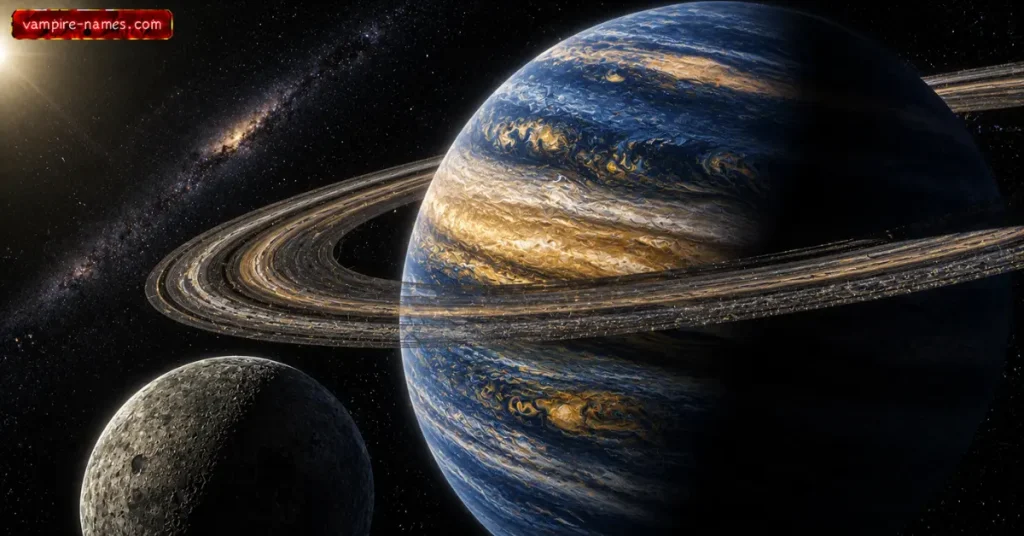
The flagship names versatile, memorable, and effective across science fiction, fantasy, and gaming. Each has been chosen for phonetic power and genuine linguistic or mythological grounding.
Best Planet Names with Meanings
| Planet Name | Meaning / Notes |
| Aurelia | Latin: ‘golden’ — evokes a bright, prosperous world; used across sci-fi and fantasy alike |
| Vendris | Invented: harsh V + alien -is ending — sounds hostile and unfamiliar |
| Elysium | Greek: the paradise afterlife realm for heroes — the archetype of the utopian planet name |
| Kaldross | Invented: ‘kald’ (cold-adjacent) + ‘ross’ — sounds like a harsh northern ice world |
| Meridian | Latin: ‘midday, noon’ — suggests a central, important, sun-bright world |
| Thessaly | Greek: real region name repurposed — pastoral, ancient, mythological weight |
| Voidreach | Invented compound: void + reach — a frontier world at the edge of known space |
| Ignara | Invented: from Latin ‘ignis’ (fire) — a volcanic or sun-scorched world |
| Nyxara | Invented: from Nyx (Greek night goddess) — a planet in perpetual darkness |
| Solvane | Invented: ‘sol’ (sun) + ‘vane’ — a solar-aligned or sun-worshipping world |
| Cryovant | Invented: ‘cryo’ (cold) + ‘vant’ — a scientific-feeling ice world name |
| Astralis | Latin: ‘of the stars’ — elegant, celestial, works for a capital or sacred world |
| Drakomir | Invented Slavic-feel: ‘drako’ (dragon) + ‘mir’ (world/peace) — a dragon-associated world |
| Zephyria | Greek: from Zephyrus (west wind) — a wind-swept or storm-covered planet |
| Obsidia | From ‘obsidian’ — a black volcanic-glass world, dark and sharp-edged |
More Best Planet Names — Quick Reference
| Kepler-9x | Vantara | Ossian | Rhessia |
| Thalassar | Umbriel | Ferrovane | Griselda |
| Halcyon | Ithren | Jovaris | Kestrion |
| Luminae | Mordrath | Novastra | Orvani |
| Pyraxis | Quillon | Ravendra | Solmere |
| Tyranis | Uvantis | Vexara | Wraithspire |
Fictional & Made-Up Planet Names
Made-up planet names work best when they sound like they could belong to a real astronomical catalog, a mythological system, or an in-universe culture — consistent internal logic makes fictional planets feel real, even when nothing about them literally exists.
| Planet Name | Meaning / Notes |
| Kelvara Prime | Invented + ‘Prime’ suffix (sci-fi convention for the primary or first-discovered world in a system) |
| Threxos IV | Invented + Roman numeral (suggests a numbered planet within a star system, like our own) |
| New Meridian | ‘New’ + place name — suggests a colony world named for a lost or distant original |
| Vantageth | Invented compound: ‘vantage’ + ‘-eth’ — suggests a strategically important world |
| Cindrax Minor | Invented + ‘Minor’ (paired with an implied ‘Major’) — implies a binary or twin system |
| Old Thessaly | ‘Old’ + real place name — implies a founding world that predates its colonies |
| Perigee Station | Astronomical term (closest orbital point) repurposed as a whole-world name |
| The Fractured World | Descriptive title-name — implies backstory (broken apart, divided nations) directly |
| Aldevar | Brontheus | Corvantis | Dravengale |
| Estrellar | Fendrisk | Glorindar | Havenmoor |
| Isendral | Jovannis | Kestraline | Lyrathane |
| Mordekai IX | Nyxendor | Orithane | Pellucid |
| Quorvath | Ravensong | Sylvestrix | Thornheim |
| Ulvantar | Vestara | Whisperveil | Xandrium |
Alien Planet Names
Alien planet names should feel genuinely non-human — unusual consonant clusters, apostrophe breaks, and combinations that don’t follow familiar Earth-language patterns work best here.
| Xar’thul | Q’renna | Vex’targon | Zzyzara |
| K’thress | Yvon’tal | Zorathix | Nyx’quel |
| Threx’ion | Vulk’ara | Zenithra | Q’baltir |
| Krynn’dor | Xhalvest | Zorvexis | Ythrandor |
| Quel’mira | Vranthex | Zylophar | Krethnos |
| Ixthal | Novakrell | Praxithor | Skarvenix |
Fantasy Planet Names
Fantasy planet names — as distinct from hard sci-fi alien names — lean into mythological beauty, elemental themes, and the sense of a world governed by magic rather than physics.
| Aelindor | Sylvaneth | Mysthaven | Thornrealm |
| Celestyn | Faewild Prime | Glimmerath | Ironspire World |
| Lumendor | Moonrealm | Nightveil Sphere | Oakenworld |
| Prismara | Runethane | Starweave | Twilightor |
| Umbraleth | Verdanor | Windmere Sphere | Ashenworld |
| Brightspire | Crystalreach | Dawnrealm | Emberworld |
Cool Planet Names
Cool planet names carry style and confidence — short, punchy, and built for a Star Wars-style opening crawl or a video game loading screen.
| Kryonis | Voss | Draxis | Nyra |
| Ferox | Zenar | Kaldeth | Vortan |
| Ryzal | Skorn | Tessarine | Vandark |
| Wraithe | Xantar | Yveron | Zorak |
| Blackpoint | Coreward | Duskarion | Emberfall |
| Frostgate | Gravenholm | Ironvale | Jetstream |
Unique & Creative Planet Names
Unique planet names avoid the most common sci-fi and fantasy patterns by combining unexpected roots or drawing from underused linguistic traditions.
| Planet Name | Meaning / Notes |
| Sarasvana | Sanskrit-influenced: from Sarasvati, the Hindu goddess of knowledge and rivers — rarely used in Western sci-fi |
| Anansaris | West African-influenced: from Anansi, the trickster spider-god — a genuinely unusual mythological root |
| Tlalocan | Nahuatl: the Aztec paradise of the rain god Tlaloc — lush and untapped naming territory |
| Ratatoskrun | Old Norse-influenced: from Ratatoskr, Yggdrasil’s messenger squirrel — unexpectedly whimsical |
| Marduvane | Babylonian-influenced: from Marduk, chief god of Babylon — ancient Mesopotamian weight |
| Osirian | Egyptian: from Osiris, god of the afterlife and rebirth — already used in some franchises but genuinely strong |
| Quintessa | Halcyara | Verendel | Osmovane |
| Kethrandi | Prospera | Ambrivell | Duskarath |
| Elyndrith | Faronel | Grovendal | Isharyn |
Mythology-Inspired Planet Names
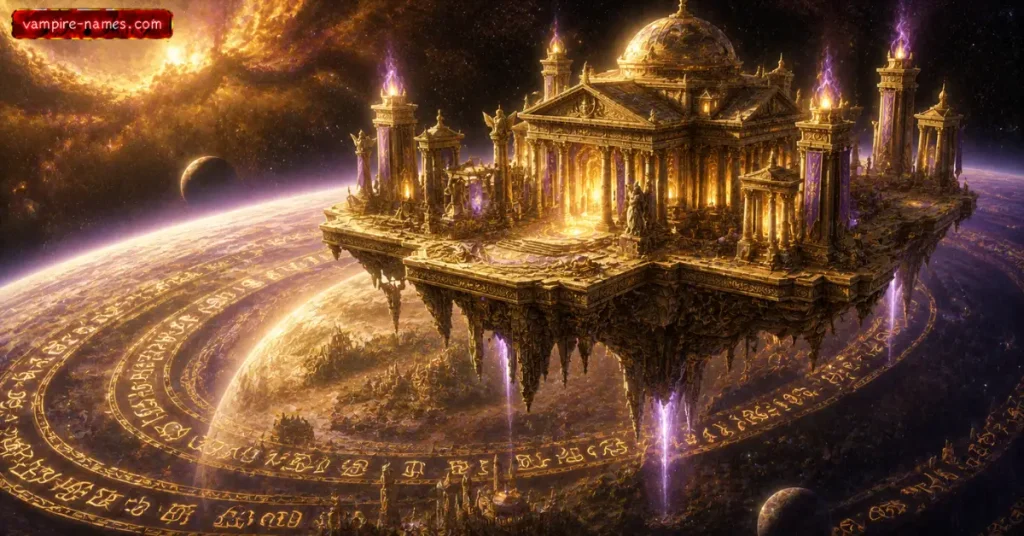
Real-world mythology offers the deepest well of planet-naming material gods, heroes, and cosmological concepts from every human culture, most of them still completely untapped by mainstream sci-fi.
Greek & Roman Mythology Planet Names
| Hyperion | Selene | Erebus | Chronos |
| Gaia Prime | Tartessa | Nemesara | Aether |
| Persephone II | Demetria | Apollyon | Artemara |
Norse Mythology Planet Names
| Asgardia | Ymirworld | Vanaheim Prime | Bifrostane |
| Ratatoskr | Yggdrantis | Fenriskol | Muspelheim II |
| Niflvane | Valkyrion | Odinstar | Thorveil |
Egyptian Mythology Planet Names
| Ammitara | Anubara | Horuscant | Isisvane |
| Osiridian | Ravenkhet | Sekhmara | Thoth Prime |
| Bastenar | Nutspire | Sobekara | Wadjetis |
Hindu & Aztec Mythology Planet Names
| Agnivane | Brahmara | Devaloka | Indrastra |
| Shivara | Vishnovan | Coatlicue | Huitzilan |
| Quetzara | Tezcatlan | Tlalocan | Xochivane |
Planet Names by Type
Real planetary science gives us distinct planet categories — and each category suggests different naming logic. This is the section most competitors skip entirely, despite it being the most useful for actually worldbuilding a consistent universe.
Ocean World Names
| Thalassar | Naboo | Aquavane | Pelagios |
| Marenna | Tidalis | Oceandrift | Rivenwave |
| Coralith | Depthara | Brinevale | Fathomere |
Desert World Names
| Arrakeen | Dunestra | Sandveil | Aridara |
| Scorchane | Solarion | Duskdrift | Cracklands |
| Bariddesh | Xerathis | Emberdune | Wastelume |
Ice World Names
| Hothara | Cryovane | Glacielle | Frostane |
| Icessia | Permafrix | Kelvindra | Nivaris |
| Rimefrost | Sleetara | Winterhold | Zerovane |
Volcanic / Fire World Names
| Mustafara | Ignivane | Pyraxis | Cindervale |
| Emberon | Flarehold | Magmaris | Scorchveil |
| Cinderis | Vulcanea | Blazendor | Charrvane |
Jungle / Forest World Names
| Yavinel | Verdanth | Vinewild | Canopara |
| Mossveil | Thornara | Junglara | Palmerune |
| Rootspire | Sylvantis | Wildreach | Fernholt |
Gas Giant Names
| Jovaris | Stormveil | Behemara | Colossane |
| Vastara | Windroar | Turbulon | Cyclonis |
| Nimbara | Zephyrion | Tempestra | Grandiveil |
Rogue Planet Names (Starless Wanderers)
| Driftara | Nomadion | Wanderveil | Exilis |
| Lostworld | Vagravane | Solitude Prime | Unbound |
| Voidwalker | Strayvane | Orphanis | Umbraveil |
Ring Planet Names
Ring planets need names that evoke circularity, orbit, and grandeur — the ring system itself is often the most visually distinctive feature, so the name should honor that.
| Saturnia | Ringveil | Haloran | Coronet |
| Orbivane | Circlet Prime | Annulus | Diadem |
| Corolla | Wreathara | Torvane | Encircled |
Twin & Binary Planet Names
Twin and binary system names benefit from paired naming logic —Names That Mean Monster that clearly belong together, often sharing a root with a distinguishing modifier.
| Planet Name | Meaning / Notes |
| Sol and Luna | The simplest binary pairing — sun and moon roots, immediately understood as a pair |
| Castor and Pollux | Greek: the twin Gemini brothers — already an established astronomical binary tradition |
| Ignis and Glacia | Latin: fire and ice — elemental opposites orbiting together |
| Dawn and Dusk | English: the two ends of day — evokes a system in perpetual twilight |
| Umbra and Lumen | Latin: shadow and light — a classic dual-nature binary pair |
| Thera and Thanis | Invented shared-root pair — the same naming family, distinguished by ending |
Moon Names
Following real astronomical convention, moon names should relate to their parent planet — named for figures connected to that planet’s mythology, or simply diminutive/secondary versions of the planet name.
| Io | Selene Minor | Titanix | Callindra |
| Ganymere | Europani | Enceladine | Mimasara |
| Charonis | Phobetor | Deimara | Umbriel II |
| Ariel Minor | Nereidon | Larissane | Despina Minor |
| Galatea II | Proteusar |
Beautiful & Gleaming Planet Names
Beautiful planet names use flowing sounds, light imagery, and open vowels to evoke wonder rather than danger.
| Luminae | Aurelia | Celestine | Glimmerath |
| Radiantis | Opaline | Prismara | Iridessa |
| Halcyona | Serenova | Lucenne | Solarielle |
Weird & Funny Planet Names
Sometimes a planet doesn’t need to be taken seriously. These work for comedy sci-fi, parody worldbuilding, or a lighthearted campaign setting.
| Zorpalot | Blorgon-9 | Snackworld | Wigglenax |
| Poot IV | Doofalax | Yeetaris | Blipzoid |
| Sploosh Prime | Gribblenar | Wobbleon | Meh-tron |
| Uh-Ohia | Nopeplanet | Chunkasaurus | Fluffonia |
| Grumpton | Snorlaxia |
Cute Planet Names
Cute planet names lean into softness and warmth — perfect for children’s sci-fi, cozy games, or friendly alien worlds.
| Puffara | Bubblewick | Cloudessa | Dewdropia |
| Fuzzball Prime | Glowbug | Honeyvane | Jellybelle |
| Kittenworld | Lullaby Sphere | Marshmallowe | Nectarine Prime |
Dark & Ominous Planet Names
Dark planet names should carry genuine menace — hard consonants, oppressive vowels, and a rhythm that suggests danger before any description arrives.
| Malvorath | Grimspire | Voidmaw World | Thanaris |
| Necrovane | Doomhaven | Blightara | Shadowreach |
| Corvexis | Direwake | Perdition Prime | Krethgul |
Famous Fictional Planets & What Makes Their Names Work
Learning from the most successful fictional planet femboy name in media history reveals the actual mechanics of great planet naming.
| Planet Name | Meaning / Notes |
| Tatooine | Star Wars — named after the real town of Tataouine, Tunisia; Lucas filmed there; grounds an alien world in a real place |
| Arrakis | Dune — Herbert built it from Arabic linguistic roots; the harsh consonants mirror the harsh desert |
| Krypton | Superman — from Greek ‘kryptos’ (hidden); a planet whose very name means ‘secret, concealed’ |
| Pandora | Avatar — borrows the Greek myth of Pandora’s box; promises both wonder and catastrophe |
| Vulcan | Star Trek — named for the Roman fire-god; fitting for a hot, volcanic homeworld |
| Gallifrey | Doctor Who — entirely invented; the alien unfamiliarity of the sound matches the Time Lords’ otherness |
| Naboo | Star Wars — short, soft, liquid sounds match its status as a peaceful water-rich world |
| Coruscant | Star Wars — from Latin ‘coruscare’ (to glitter) — perfectly matches a planet-spanning, glittering city |
Planet Names for D&D & RPGs
Tabletop and RPG planet names need to work spoken aloud at a table repeatedly, while still carrying enough distinctiveness to be memorable across a campaign.
| Toril Beyond | Krynnos | Oerthara | Athasvane |
| Ravenspire World | Sigil’s Reach | Faerunis | Wildspace Prime |
| Astralore | Ethervane | Mythrandor | Netherworld IX |
Galaxy & Star System Names
Beyond individual planets, galaxy and star system names anchor an entire fictional universe. These benefit from grand, sweeping sounds appropriate to their much larger scale.
| The Aurelian Expanse | Kaldross System | The Thessaly Cluster | Voidreach Galaxy |
| The Meridian Arm | Astralis Nebula | The Wraithspire Belt | Novastra System |
| The Ossian Reaches | Threxos Cluster | The Umbral Sea | Solmere Galaxy |
How to Choose the Perfect Planet Name
Tip 1: Match the Name to the World’s Function in Your Story
A homeworld should feel foundational — short, strong, easy to say repeatedly. A one-scene setting can afford to be more exotic and complex since it won’t need to be said constantly. A doomed or dangerous world should have a name whose sound alone creates unease.
Tip 2: Build a Consistent Naming System Across Your Universe
If one planet uses Latin roots and another uses invented alien phonetics, the universe feels inconsistent. Decide early whether your setting uses real-world linguistic roots (grounded, familiar), fully invented phonetics (alien, unfamiliar), or a mix tied to different species/cultures within your universe (most sophisticated, requires the most planning).
Tip 3: Consider How the Name Sounds in Dialogue
‘We’re three jumps from Kelvara Prime’ should feel natural in spoken dialogue. Test every planet name in an actual sentence of dialogue before committing — Male Dragonborn Names that look good on a page sometimes stumble when spoken aloud.
Tip 4: Don’t Over-Explain the Name
The best planet names create curiosity rather than answering every question immediately. ‘Arrakis’ doesn’t tell you it’s a desert planet — the story tells you that. The name just needs to feel right once you know. Resist the urge to make the name itself a complete description (avoid ‘Desertworld’ unless you’re deliberately going for blunt, functional sci-fi naming).
Frequently Asked Questions About Planet Names
Q: What is a good name for a planet?
Good planet names combine a meaningful root (from mythology, another language, or an invented but consistent phonetic system) with a fitting suffix. Strong general-purpose options include Aurelia (Latin: golden), Meridian (Latin: midday/central), Elysium (Greek: paradise realm), and Astralis (Latin: of the stars). The best planet name matches the world’s role in your story — a peaceful homeworld needs a different sound than a hostile frontier world.
Q: What are cool world names?
Cool world names tend to be short, punchy, and phonetically confident: Kryonis, Voss, Draxis, Ferox, Zenar. These work well as single-word names that carry weight without needing lengthy explanation — similar to how ‘Vulcan’ or ‘Krypton’ function in established franchises. Hard consonants (K, V, X, Z) and clean two-syllable structures tend to read as ‘cool’ rather than either cute or purely alien.
Q: What is a cool space name?
Cool space names extend beyond individual planets to include star systems, galaxies, and regions of space: The Aurelian Expanse, Kaldross System, Voidreach Galaxy, The Umbral Sea. These use grand, sweeping vocabulary (expanse, reach, sea, cluster) combined with a strong root name, mirroring the vast scale the name needs to represent.
Q: What is a cute celestial name?
Cute celestial names use soft consonants, open vowels, and often food or nature-adjacent vocabulary: Puffara, Bubblewick, Honeyvane, Marshmallowe, Dewdropia. These work well for children’s science fiction, cozy games, or any friendly, non-threatening alien world meant to feel welcoming rather than dangerous.
Q: What are names of made-up planets?
Made-up planet names work best with internal consistency — following a naming system rather than being purely random. Effective made-up Evil Names include Kelvara Prime (using the sci-fi ‘Prime’ convention), Vantageth (invented compound), New Meridian (colony-naming convention), and Threxos IV (numbered system convention). The key to a good made-up planet name is that it feels like it belongs to a real, if fictional, astronomical catalog or cultural naming tradition rather than being an arbitrary string of sounds.
Q: What are fictional planets’ names inspired by mythology?
Mythology offers the richest and most underused source for planet names. Beyond the well-known Greek/Roman tradition (Elysium, Hyperion, Persephone), consider Norse names (Asgardia, Yggdrantis, Valkyrion), Egyptian names (Anubara, Osiridian, Sekhmara), Hindu names (Brahmara, Shivara, Devaloka), and Aztec names (Quetzara, Tlalocan, Coatlicue). Each tradition carries genuine cultural depth and offers naming territory that most science fiction has left largely unexplored.
Q: What are imaginary planet names for a fantasy world?
Fantasy planet names (as distinct from hard sci-fi alien names) lean into elemental themes, magical beauty, and mythological resonance: Aelindor, Sylvaneth, Celestyn, Starweave, Glimmerath. These differ from sci-fi alien names by favoring flowing, magical-feeling roots over scientific or harshly alien phonetics — they should sound like they belong in a world of magic rather than a world of physics and technology.
Q: What are the coolest planet names in fiction?
The most celebrated fictional planet names share a common trait: they do real narrative work through sound alone. Arrakis (Dune) uses harsh consonants that mirror its desert brutality. Krypton (Superman) literally means ‘hidden’ in Greek, foreshadowing its destruction and secrecy. Pandora (Avatar) borrows three thousand years of mythological warning about opening dangerous, beautiful things. Coruscant (Star Wars) comes from Latin for ‘to glitter,’ perfectly matching a planet-covering city. The coolest names aren’t just cool sounds — they’re sounds carrying real meaning.
Q: How do I create unique names for made-up planets?
Start with the planet’s single most important trait (environment, story role, or cultural identity), then draw from an underused linguistic or mythological tradition rather than the overused Greek/Roman/Latin default. Sanskrit, Norse, Egyptian, Aztec, and West African mythology all offer genuinely fresh naming material that most science fiction hasn’t touched. Combine a real root from one of these traditions with a consistent suffix system (-a, -us, -on, -is, or ‘Prime’) to create a name that feels both unique and internally consistent with the rest of your universe.
Q: Can I use real astronomy to name my planet?
Yes, and it often produces the most convincing results. Real exoplanet naming conventions (host star name + lowercase letter, like ’51 Pegasi b’) can inspire a scientifically grounded fictional system. You can also follow the IAU’s mythological tradition by choosing gods or figures whose stories match your planet’s qualities — exactly how Mercury, Venus, Mars, and the rest of our solar system were named. Borrowing this real naming logic, even loosely, makes fictional planets feel like they belong in an actual, coherent universe rather than an arbitrary invented one.
Conclusion
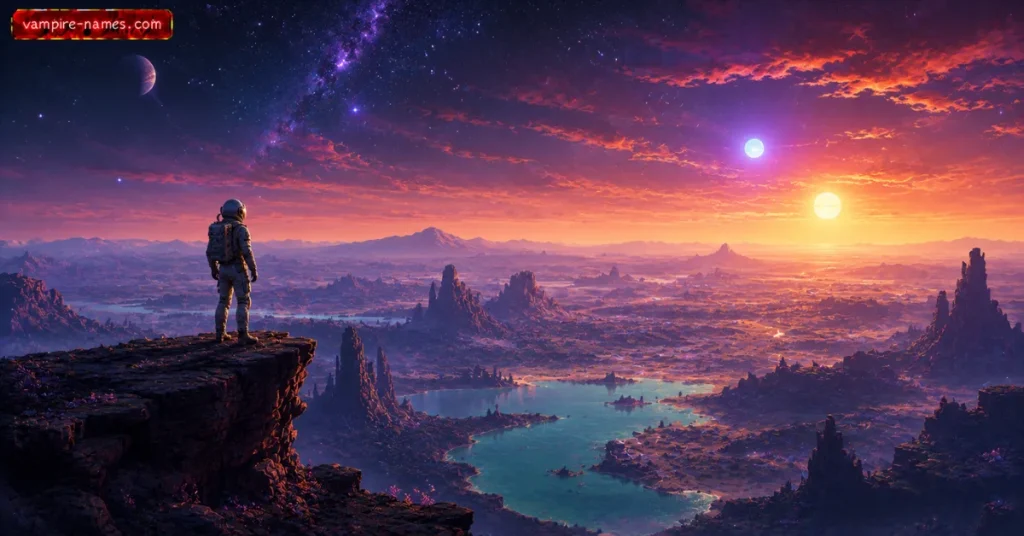
A planet’s name is a promise. It tells the reader, player, or viewer what kind of world they’re about to enter before a single description follows. The 700+ names in this guide span every tradition worth drawing from real astronomical history, world mythology from cultures too often overlooked, and the phonetic principles that make invented names feel genuinely alien, beautiful, or dangerous.
Use the generator formula to build something entirely your own. Use the mythology sections to ground your world in real cultural weight. Use the type-specific sections to match your planet’s name to its actual environment and role in your story. And remember: the best planet name is the one that makes someone want to know more before you’ve told them anything at all.
“Every world begins the moment someone says its name for the first time.”