The Ultimate Guide to Scary, Cool & Mythical Names
Scary | Cute | Sea Monsters | Kaiju | Yokai | Norse | Lovecraftian | Kids & Pets
| 800+Monster Names | 31+Categories | With MeaningsAll Key Names | Every LanguageEtymology Covered |

800+ Monster Names: The Ultimate Guide to Scary, Cool & Mythical Names
Every culture in human history has needed names for the things that frighten it. The monster is one of humanity’s oldest inventions — older than writing, older than agriculture, as old as the fire that kept the dark at bay. And every monster needs a name, because an unnamed fear is somehow worse than a named one. Once you can say its name, you have some power over it. That’s the whole psychology behind this entire guide.
This is the most comprehensive monster name resource available anywhere 800+ Vampire Names across 31 categories, covering everything from names that literally mean ‘monster’ in a dozen languages to kaiju names to Lovecraftian cosmic horrors to the perfect name for your child’s stuffed monster toy. Every major name includes etymology or context, because a monster name without roots is just noise, and the best monster names carry genuine linguistic or mythological weight.
Whether you’re naming a baby (yes, ‘monster names’ are a real and growing baby-naming trend), a D&D villain, a novel’s antagonist, a video game creature, your dog, or a Halloween costume character — this guide has what you need. We start with the actual linguistics of monster naming, because understanding why certain sounds feel terrifying (and others feel adorable) will make every name choice you make after this point better.
What Makes a Name Sound Monstrous? The Phonosemantics of Horror
Phonosemantics — the study of how sounds carry meaning independent of definition — has documented consistent patterns in what humans perceive as frightening versus friendly, and monster names exploit these patterns whether their creators know the linguistics or not.
Guttural and back-of-throat sounds (GR, KR, CH, X) feel primal and threatening because they require more physical effort and resonate lower in the vocal tract: ‘Grendel,’ ‘Kraken,’ ‘Xenomorph.’ Sibilants (S, SH, Z) feel sly, slippery, and reptilian: ‘Sslytherin,’ ‘Slaugh,’ ‘Basilisk.’ Hard plosive endings (K, T, G, D) feel abrupt and violent, like something snapping shut: ‘Wraith,’ ‘Grimlock,’ ‘Sköll.’
Conversely, open vowels and soft consonants (L, M, N, W) combined with the right context can feel cute rather than scary — which is why ‘Wumpus’ or ‘Blorp’ land as adorable while ‘Vrask’ or ‘Ghorlath’ land as terrifying, even though both pairs are equally invented. Doubled letters and bouncy rhythms (Grimble, Snuggler, Boop) signal safety even when applied to something monstrous, which is the entire comedic engine behind ‘cute monster’ branding from Monsters Inc. to Pokémon.
Length also matters. Short, hard names (Grimm, Fang, Maw) feel like immediate physical threats — you’ll meet this monster in the next five seconds. Long, rolling names (Nyarlathotep, Cthulhu, Belphegor) feel ancient and cosmic — this monster has existed for longer than you can comprehend and your five seconds don’t matter to it. Choose length based on the type of fear you want to create: immediate physical danger, or existential dread.
Names That Mean Monster Across Languages
These names literally translate to ‘monster,’ ‘beast,’ ‘demon,’ or ‘terror’ in real languages from around the world. This is the deepest cross-linguistic treatment of monster etymology available in any name guide — use these when you want a name whose meaning is inseparable from the concept of monstrosity itself.
| Name | Meaning / Origin |
| Teras | Greek: ‘monster, marvel, sign’ — the root of ‘teratology’ (the study of monsters/malformations) |
| Belua | Latin: ‘beast, monster’ — used for large, terrifying creatures in Roman literature |
| Monstrum | Latin: ‘monster, portent’ — the direct root of the English word ‘monster’ itself |
| Rakshasa | Sanskrit: ‘to guard against, that which is harmful’ — the great demon-monsters of Hindu myth |
| Oni | Japanese: ‘demon, ogre’ — the classic horned monster of Japanese folklore |
| Bakemono | Japanese: ‘changing thing’ — the general term for shapeshifting monsters and yokai |
| Div | Persian: ‘demon, monster’ — the great evil spirits of Zoroastrian and Persian myth |
| Ifrit | Arabic: ‘powerful evil spirit’ — the most dangerous class of jinn in Islamic tradition |
| Chudovishche | Russian: ‘monster, wonder’ — from ‘chudo’ (wonder), showing monsters were once marvels |
| Nekker | Old English root: related to ‘nicor’ (water monster) — origin of English water-monster names |
| Ungeheuer | German: ‘monster’ — literally ‘not familiar/uncanny,’ the monster as pure Otherness |
| Bete | French: ‘beast’ — as in ‘la Bête’ (the Beast of Gévaudan), a real historical man-eating creature |
| Wight | Old English: ‘creature, being’ — evolved to mean specifically an undead monster (barrow-wight) |
| Draug | Old Norse: ‘undead, revenant’ — the walking corpse-monster of Scandinavian tradition |
| Yaoguai | Chinese: ‘demon, evil spirit’ — the monster-spirits that populate Chinese myth and Journey to the West |
| Namtar | Akkadian: ‘fate, doom, plague-demon’ — the Mesopotamian monster of pestilence |
| Kishi | Angolan (Kimbundu): the two-faced monster of Angolan folklore; beauty on one side, hyena on the other |
| Tikoloshe | Zulu: the mischievous water-monster/goblin of South African folklore |
| Alu | Akkadian/Sumerian: an ancient demon of illness and nightmare, older than most named monsters |
| Basan | Japanese: a fire-breathing rooster-monster; also a general term for uncanny creatures |
Names That Mean Fear, Dread & Chaos
Beyond literal ‘monster’ words, some of the most effective monster names come from words meaning the emotional or conceptual territory monsters occupy: fear, dread, chaos, hunger, the unknown.
| Name | Meaning / Origin |
| Phobos | Greek: ‘fear, panic’ — the god of fear itself, son of Ares; root of every ‘-phobia’ |
| Deimos | Greek: ‘dread, terror’ — Phobos’s twin brother; both rode with Ares into battle |
| Tremor | Latin: ‘trembling, shaking’ — the physical response to fear made into a name |
| Pavor | Latin: ‘panic, terror’ — root of Spanish/Italian ‘pavor/paura’ (fear) |
| Angst | German: ‘fear, anxiety’ — the specific dread of the unknown or existential |
| Khaos | Greek: ‘chasm, void, disorder’ — the primordial emptiness before creation itself |
| Ekstasis | Greek: ‘displacement, standing outside oneself’ — root of ‘ecstasy’; the monster that unmakes identity |
| Nihil | Latin: ‘nothing’ — the monster that represents pure absence and negation |
| Grendel | Old English: possibly ‘grinder, one who grinds/destroys’ — Beowulf’s monster |
| Loki | Old Norse: contested etymology, possibly ‘to close/end’ — the trickster who becomes an agent of Ragnarok |
| Apep | Egyptian: the great chaos-serpent who battled Ra every single night for eternity |
| Tiamat | Akkadian: ‘sea, chaos’ — the primordial chaos-dragon of Mesopotamian creation myth |
| Angra | Avestan: ‘destructive, evil’ — as in Angra Mainyu, the great Zoroastrian evil spirit |
| Vritra | Sanskrit: ‘the enveloper, obstacle’ — the serpent-demon of drought and chaos in Vedic myth |
| Errare | Latin: ‘to wander, err’ — root of ‘error’; the monster of lost paths and wrong turns |
Best Monster Names

The flagship names versatile, memorable, and effective across fiction, gaming, and naming contexts. Each has been chosen for phonetic power and genuine etymological or mythological weight.
Best Monster Names with Meanings
| Name | Meaning / Origin |
| Grendel | Old English: ‘grinder/destroyer’ — Beowulf’s monster; the archetype of the ancient man-eating horror |
| Nyx | Greek: ‘night’ — primordial darkness goddess; used for shadow and night monsters |
| Karkinos | Greek: ‘crab’ — the giant crab-monster that fought Heracles; became the constellation Cancer |
| Skoll | Old Norse: ‘mockery, treachery’ — the wolf who chases the sun and will catch it at Ragnarok |
| Morrigan | Irish: ‘great queen’ or ‘phantom queen’ — the war-goddess who could become a monstrous crow |
| Wendigo | Algonquian: the cannibalistic winter spirit-monster; genuinely feared in Indigenous tradition |
| Charybdis | Greek: uncertain etymology — the whirlpool monster who devours entire ships |
| Balor | Irish: ‘the flashing one’ — the one-eyed giant king of the Fomorians; his gaze killed armies |
| Namtaru | Akkadian: ‘fate’ — the plague-demon who determines when death arrives |
| Yaldabaoth | Gnostic: ‘child of chaos’ — the blind, ignorant creator-demon of Gnostic cosmology |
| Sekolah | Invented shark-god-feel name — primal, oceanic, and consonant-heavy for maximum menace |
| Grimtusk | Invented compound: grim + tusk — immediate visual threat encoded directly into the name |
| Vorash | Invented: harsh V and hissing SH — built purely from phonosemantic principles of dread |
| Maloch | Variant of Moloch — the ancient god demanded child sacrifice; among history’s most feared names |
| Ghorlath | Invented: GH opener (guttural) + -lath ending — unpronounceable-feeling, deeply alien |
More Best Monster Names — Quick Reference
| Fang | Grim | Maw | Nix |
| Onyx | Rend | Skarn | Thresh |
| Umbral | Vex | Wraith | Xul |
| Yowler | Zaruth | Bane | Coil |
| Drex | Ecto | Fume | Gash |
| Howl | Ichor | Jarl | Krag |
| Loom | Mire | Noxis | Ossuary |
| Pallid | Quake |
Scary Monster Names
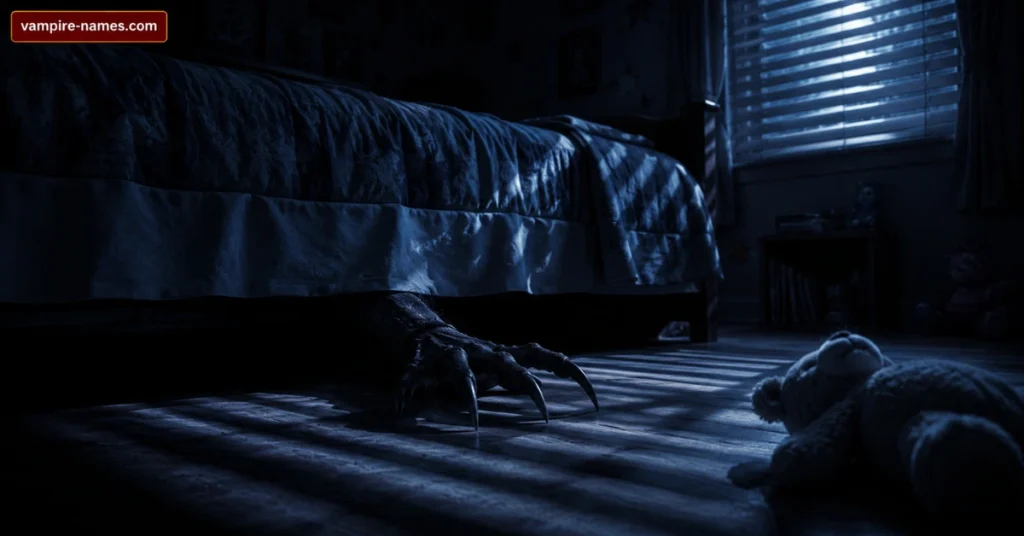
Genuinely scary monster names work through the phonosemantic principles above: guttural sounds, hard consonant clusters, and a rhythm that doesn’t resolve comfortably. These are built for horror fiction, campaign villains, and anything meant to unsettle.
| Name | Meaning / Origin |
| Vrathkull | Invented: ‘vrath’ (wrath-adjacent) + ‘kull’ (skull-adjacent) — double threat compression |
| Screxa | Invented: opens with a scream-like SCR cluster; ends on a hiss |
| Malkuthor | Invented: ‘mal’ (evil, Latin) + Norse-feeling ‘kuthor’ — cross-cultural dread |
| The Skinless One | Descriptive title-name — body horror encoded directly; no interpretation needed |
| Ghastmire | Invented: ‘ghast’ (ghost/ghastly) + ‘mire’ (swamp) — rot and haunting combined |
| Voidmaw | Invented compound: the emptiness with a mouth; cosmic horror made simple |
| Krezgul | Invented: harsh consonant cluster, guttural, ends abruptly — maximum phonetic menace |
| The Hollowed | Descriptive: suggests something emptied out and repurposed by something else |
| Dreadmurk | Invented compound: dread + murk (darkness/fog) — fear you can’t see clearly |
| Xa’thrull | Invented: apostrophe breaks the syllable unnaturally, mimics alien/wrong pronunciation |
| Corpsewright | Invented: ‘corpse’ + ‘-wright’ (maker, as in shipwright) — implies deliberate craft in death |
| The Unseen Hunger | Descriptive title — combines invisibility fear with consumption fear |
More Scary Monster Names
| Bloodmaw | Crawler | Deathwhisper | Eldritch |
| Flayer | Gorehowl | Hollowborn | Ichorclaw |
| Jawbreaker | Killbrood | Leechfiend | Mangler |
| Nightcrawl | Obscura | Painweaver | Quietus |
| Rotgrip | Skinstealer | Tormentor | Undertaker |
| Vilehowl | Wormtongue | Xenophage | Yowling Dark |
Cool Monster Names
Cool monster names have edge and style without necessarily being terrifying — they’re built for video game bosses, action fiction, and any monster meant to be badass rather than purely horrifying.
| Ragnos | Vexar | Kroatoa | Malice |
| Thraxis | Voidfang | Grimjaw | Nightshade |
| Obliterax | Pyrothos | Ravok | Skullcrusher |
| Talonstrike | Umbreon | Vantablack | Wraithking |
| Xerathos | Zerath | Blackout | Cataclysm |
| Deathstroke | Executor | Frostbite | Gravemind |
| Hellborn | Ironmaw | Judgment | Kryptik |
| Lockdown | Meltdown |
Cute Monster Names
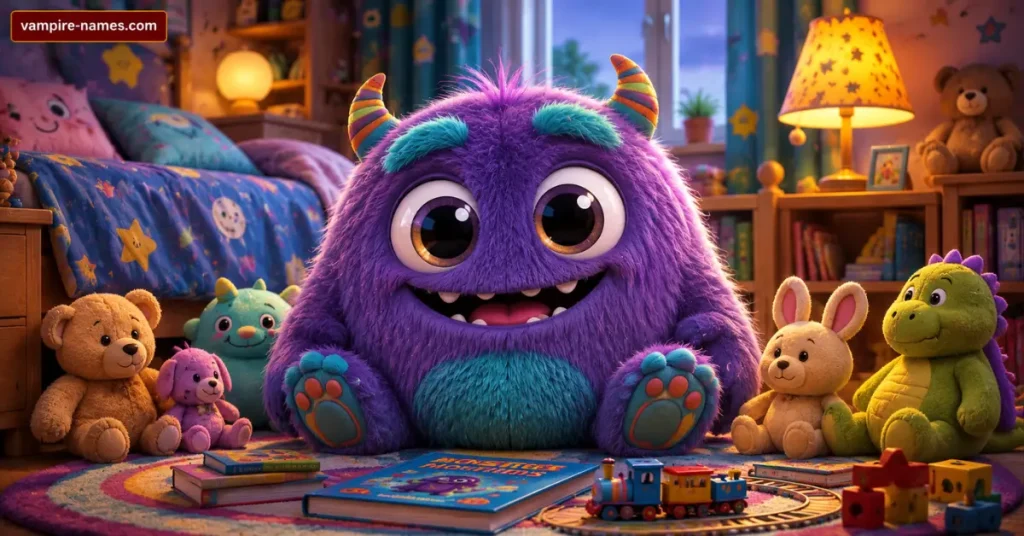
Cute monster names use the opposite phonosemantic toolkit from scary Archer Names : doubled letters, bouncy rhythms, soft consonants, and open vowels. These are perfect for children’s books, plush toys, friendly game NPCs, and baby names.
| Blorp | Bumbles | Chomper | Doodle |
| Fuzzby | Giggler | Huggins | Inkle |
| Jellybub | Kiku | Lumpkin | Muffle |
| Noodler | Oomf | Pudge | Quibble |
| Rumble | Snoot | Tootsie | Umple |
| Vroomie | Wumpus | Yeti Baby | Zizzle |
| Boop | Chunk | Dinkle | Fluffernut |
| Gribble | Honkle |
Monster Names for Boys
Monster-inspired baby names have grown into a real naming trend — parents drawn to names that carry mythological weight, strength, or fierce meaning without being overtly frightening for everyday use.
| Name | Meaning / Origin |
| Orion | Greek: the great hunter constellation; connected to monster-slaying myths |
| Damon | Greek: ‘to tame, subdue’ — shares a root with ‘daemon,’ softened into a warm name |
| Kian | Persian/Irish: ‘ancient, royal’ — phonetically strong without being frightening |
| Rune | Old Norse: ‘secret, mystery’ — the magical symbol-letters; mysterious but gentle |
| Ozzy | Diminutive of Oswald: ‘god power’ — casual, monster-culture-adjacent via Ozzy Osbourne |
| Beowulf | Old English: ‘bee-wolf’ (bear) — the monster-slayer’s own name as a baby name |
| Talon | Latin: ‘claw’ — a predatory, strong-sounding modern name |
| Griffin | The mythological eagle-lion hybrid — already an established, popular baby name |
| Drago | Latin/Italian: ‘dragon’ — direct and increasingly used |
| Fenn | Short form connected to Fenrir, the great Norse wolf-monster |
| Kaiser | German: ’emperor’ — phonetically powerful, used in kaiju-monster fan culture too |
| Ash | Old English: the tree; also evokes ‘ashes,’ fire, and post-apocalyptic resilience |
| Bram | Corvin | Drake | Endrick |
| Falkor | Gideon | Hadrian | Ivor |
| Jaeger | Killian | Loki | Magnus |
| Nero | Osiris | Phelan | Quill |
| Roran | Sable | Thane | Ulric |
| Vance | Wulfric | Xander | Zephyr |
Monster Names for Girls
Monster-themed girl names draw from goddesses, fierce mythological women, and the softer edges of horror aesthetics — the same list that gives us Lilith and Medusa also gives us Luna and Raven.
| Name | Meaning / Origin |
| Medusa | Greek: ‘guardian, protectress’ — the gorgon; ironically means something protective |
| Lilith | Hebrew/Sumerian: ‘of the night’ — Adam’s first wife in Jewish folklore; independence and defiance |
| Circe | Greek: possibly ‘hawk’ — the powerful sorceress who transformed men into swine |
| Nyx | Greek: ‘night’ — the primordial goddess even Zeus feared |
| Raven | Old English: the dark, clever bird associated with omens and the otherworldly |
| Selene | Greek: ‘moon’ — lunar and mysterious, tied to werewolf and night-monster lore |
| Freya | Old Norse: ‘lady’ — goddess of war and magic, commanded valkyries |
| Morrigan | Irish: ‘phantom queen’ — the shapeshifting war-goddess who could take crow form |
| Isolde | Welsh: ‘ice ruler’ — cold, powerful, tragic Arthurian queen |
| Persephone | Greek: uncertain, possibly ‘bringer of destruction’ — queen of the underworld |
| Kali | Sanskrit: ‘the black one, she of time’ — the Hindu goddess of destruction and transformation |
| Hela | Old Norse: ruler of the realm of the dead; half-living, half-corpse |
| Adria | Briar | Carys | Delphine |
| Eirlys | Faye | Gwyneira | Hecate |
| Isadora | Jinx | Kore | Lamia |
| Maeve | Nyxie | Odessa | Persie |
| Quenna | Ravyn | Seraphine | Thalia |
| Ursula | Vesper | Willow | Xandra |
Monster Names for Kids & Babies
For actual baby names or children’s characters, the goal is monster-adjacent meaning without monster-level intensity. These carry mythological weight but read as completely wearable, everyday Male Dragonborn Names .
| Ash | Brynn | Cove | Dax |
| Ellery | Fable | Gray | Haven |
| Indie | Juniper | Knox | Lyra |
| Marlowe | Nova | Onyx | Phoenix |
| Quill | Reign | Sage | Storm |
| Talon | Umber | Vale | Wren |
Monster Names for Dogs & Pets
Monster names for pets lean cute-fierce — a big dog named after something genuinely scary is a classic naming joke, and a small dog with the same name is even funnier.
| Godzilla | Kraken | Yeti | Chewbacca |
| Gizmo | Gremlin | Bigfoot | Chupacabra |
| Loch Ness | Cerberus | Fang | Cujo |
| Beast | Trollhunter | Ogre | Frankie |
| Drac | Wolfie | Gargoyle | Basilisk |
| Hydra | Sasquatch | Nessie | Grim |
Vampire Monster Names
Vampire names draw from Eastern European folklore roots, the aristocratic Gothic literary tradition established by Stoker, and the specific vocabulary of blood, night, and immortality.
| Name | Meaning / Origin |
| Strigoi | Romanian: the undead vampiric spirit of Romanian folklore — the actual folk root behind Dracula |
| Nosferatu | Possibly from Old Slavonic ‘nosufur-atu’ (plague-carrier) — the 1922 film made it iconic |
| Vrykolakas | Greek: the reanimated corpse-vampire of Greek folk tradition |
| Upyr | Slavic root of ‘upir/vampir’ — the original Slavic word behind the modern term ‘vampire’ |
| Dhampir | Balkan folklore: the half-human, half-vampire offspring, said to be a skilled vampire hunter |
| Sanguine | Latin: ‘bloody, blood-colored’ — elegant vampire-adjacent name |
| Carmilla | Le Fanu’s 1872 vampire novella — predates Dracula by 25 years; the original literary vampire |
| Lamia | Greek: the child-devouring, blood-drinking monster-woman of Greek myth |
| Ashari | Bloodmourne | Crimsona | Duskbite |
| Elvira | Fangorel | Grimlorde | Hemlock |
| Ixion | Judeth | Katarina | Lestrange |
| Morteus | Nightblood | Orlok | Ravenna |
| Sanguis | Thornwraith | Ulric | Vaella |
| Wraithe | Xerath | Yzabel | Zoltan |
Werewolf Monster Names
Werewolf names draw from Old Norse warrior tradition, Latin lycanthropy vocabulary, and the direct ‘wolf’ words of numerous cultures.
| Fenris | Lycos | Ulfric | Varga |
| Warg | Wolfsbane | Grimwolf | Lupercal |
| Moonhowl | Skinwalker | Feral | Gorewolf |
| Howler | Lupin | Rimwolf | Sableclaw |
| Thornfang | Vargr | Werewind | Bloodfang |
| Coywolf | Direwulf | Ferox | Grimhowl |
Zombie & Undead Monster Names
Undead names carry the vocabulary of rot, silence, hunger, and the walking dead. These draw from actual burial and death terminology combined with pure horror phonetics.
| Name | Meaning / Origin |
| Ghoul | Arabic ‘ghul’: a shape-shifting desert demon that feeds on the dead and living alike |
| Revenant | Latin/French: ‘one who returns’ — the vengeful undead who comes back for a purpose |
| Draugr | Old Norse: the walking corpse that guards burial mounds and grows stronger over time |
| Jiangshi | Chinese: ‘stiff corpse’ — the hopping vampire-zombie of Chinese folklore |
| Zombi | Haitian Creole, from West African roots: the reanimated, will-less corpse of Vodou tradition |
| Ashenrot | Bonewalker | Cryptshade | Deadwalker |
| Emberrot | Festerclaw | Graveborn | Hollowflesh |
| Ichorborn | Jawrot | Kadaver | Lichgrasp |
| Moldering | Necrotia | Ossuran | Putrid |
| Quagmire | Rotgnaw | Sepulcher | Tombclaw |
| Undermaw | Vilecorpse | Wormfeast | Yellowbone |
Ghost & Poltergeist Names
Ghost names carry the vocabulary of absence, whispers, and the unresolved dead. Poltergeist names (from German ‘poltern,’ to make noise, + ‘geist,’ spirit) add violent physical presence to the invisible haunting.
| Wisp | Wraith | Banshee | Specter |
| Shade | Phantasm | Revenant | Haint |
| Yurei | Onryo | Spirare | Echo |
| Hollow | Grieveling | Moanwind | Cryhowl |
| Wailweave | Silentborn | Grasping | Whisperclaw |
| Fadewalker | Groangrasp | Chillspite | Rattlebone |
Demon Monster Names
Demon names draw from the Ars Goetia, the Talmud, and various world religious traditions of infernal beings — real Clown Names with genuine, centuries-old cultural weight.
| Name | Meaning / Origin |
| Belial | Hebrew: ‘worthless, lawless one’ — one of the four crown princes of Hell in demonology |
| Asmodeus | Persian/Hebrew: ‘creature of judgment’ — the demon of lust and wrath |
| Beelzebub | Hebrew: ‘lord of the flies’ — originally a Philistine god, later a prince of Hell |
| Mammon | Aramaic: ‘wealth, riches’ — the demon/personification of greed |
| Astaroth | From the goddess Astarte — became a male demon of the Ars Goetia, Grand Duke of Hell |
| Abaddon | Hebrew: ‘destruction’ — the angel/demon of the abyss in Revelation |
| Moloch | Ancient Levant: the god demanding child sacrifice; later demonized in Judeo-Christian tradition |
| Paimon | Ars Goetia: one of the Kings of Hell, said to teach all sciences and arts |
| Azrael | Belphegor | Chemosh | Dagon |
| Eurynomos | Furfur | Gremory | Hastur |
| Ipos | Jinni | Kasdeya | Leviathan |
| Marbas | Naberius | Orobas | Purson |
| Qayin | Raum | Sabnock | Tartarus |
| Uphir | Vepar | Wormwood | Xaphan |
Dragon Monster Names
Dragon monster names draw from the great Western dragon tradition (fire, treasure, chaos) and the Eastern dragon tradition (wisdom, water, benevolence) — two very different naming philosophies.
| Name | Meaning / Origin |
| Fafnir | Old Norse: the dwarf-turned-dragon who guarded cursed gold in the Völsunga saga |
| Smaug | Tolkien: possibly from Old Norse ‘smjuga’ (to squeeze through a hole) |
| Nidhogg | Old Norse: ‘malice striker’ — the dragon gnawing the roots of the World Tree Yggdrasil |
| Apalala | Buddhist tradition: a water-dragon converted from evil to a protector of the faith |
| Tiamat | Akkadian: the primordial chaos-dragon; her body became the sky and earth |
| Quetzalcoatl | Nahuatl: ‘feathered serpent’ — the great Mesoamerican dragon-deity |
| Aurelion | Blazerath | Cindervein | Drakonis |
| Emberclaw | Frostwyrm | Grimscale | Hellfyre |
| Ironhide | Jormun | Krakenfyre | Lavamaw |
| Malachar | Nightscale | Obsidian | Pyraxis |
| Quicksilver | Ragefyre | Scorchtide | Thornscale |
| Umbrawing | Voidwyrm | Wyrmking | Xyloth |
Goblin, Ghoul & Troll Names
Goblin names lean small and mischievous with harsh consonants; ghoul names lean feral and grave-adjacent; troll names lean large, blunt, and stone-heavy.
Goblin Names
| Grix | Snagtooth | Warble | Fizzcog |
| Grubnik | Ratchet | Snickerpick | Bogsnout |
| Cragwhistle | Muckle | Skreech | Wretchin |
Ghoul Names
| Gravewretch | Cryptfeeder | Ossivore | Rotmaw |
| Boneprowler | Deathcrawl | Charnelwalk | Gorgehowl |
| Ashenghoul | Fleshgnasher | Tombraider | Wightling |
Troll Names
| Grokstone | Boulderjaw | Thrundal | Mossback |
| Craghand | Grimboulder | Stonecrusher | Bridgekeeper |
| Fjordbreaker | Rockjaw | Thunderthud | Ironback |
Witch & Warlock Monster Names
Witch and warlock names for monstrous magic-users draw from folk-magic vocabulary, dark nature imagery, and the historical language of witch-trial fear.
| Hexbane | Cauldronborn | Nightshade | Wickthorn |
| Grimoire | Belladonna | Willowisp | Hemlock |
| Ashenweave | Crookfinger | Mandrake | Toadstool |
| Ravenclaw | Serpentina | Coventree | Widdershins |
| Warlockane | Brimsworn | Cursewell | Deadnettle |
| Foxglove | Gallowsglow | Hagstone | Ironweed |
Sea Monster Names
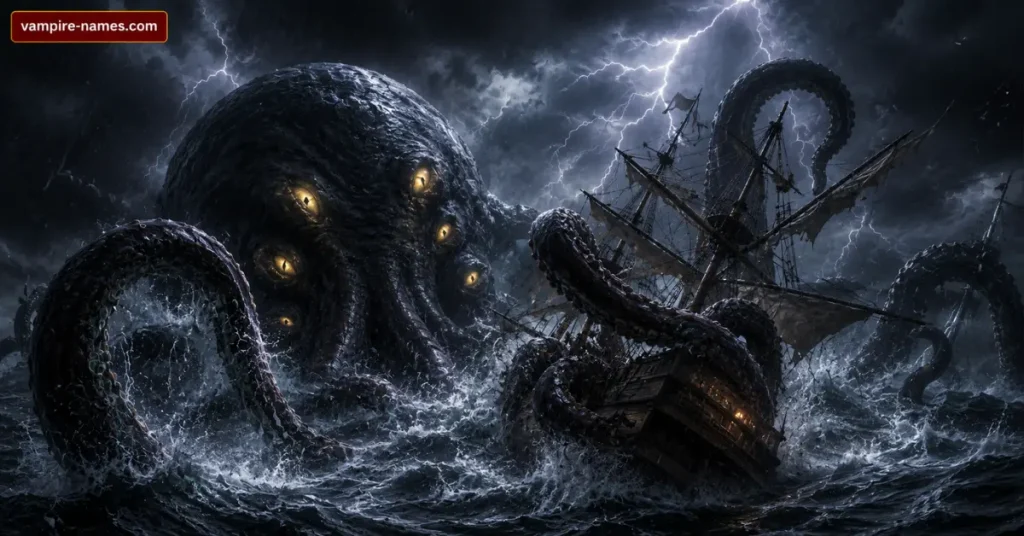
Sea monster names draw from the genuinely ancient tradition of maritime fear the kraken, the leviathan, the siren creatures that terrified sailors across every seafaring culture in history.
| Name | Meaning / Origin |
| Kraken | Norwegian: ‘unhealthy/twisted creature’ — the giant squid-like sea monster of Scandinavian legend |
| Leviathan | Hebrew: ‘twisted, coiled’ — the great sea beast referenced in the Book of Job |
| Charybdis | Greek: uncertain — the whirlpool-monster who devoured ships whole three times a day |
| Scylla | Greek: ‘she who rends’ — the six-headed monster who preyed on sailors from the rocks |
| Jormungandr | Old Norse: ‘huge monster’ — the World Serpent, so large it encircles the entire earth |
| Cetus | Greek: general term for sea monster or whale; root of ‘cetacean’ |
| Umibozu | Japanese: ‘sea monk’ — a smooth-headed giant that appears calm before capsizing ships |
| Ningen | Japanese cryptid: an enormous, pale, humanoid sea creature reported in Antarctic waters |
| Abyssara | Brinehowl | Coralfang | Deepmaw |
| Fathomless | Gillmaw | Hadalveil | Isobar |
| Jellyfang | Krakenspawn | Lurequill | Mireclaw |
| Nautikos | Oceanid | Pelagios | Quillfin |
| Riptide | Seaghast | Tidemaw | Undertow |
| Vortexia | Whirlspawn | Xiphofin | Zaltherion |
Giant & Kaiju Monster Names
Kaiju (Japanese: ‘strange beast’) Empire Names need scale in the sound itself — long vowels, deep resonant consonants, and often a nod to the Japanese naming conventions of the genre’s origin.
| Name | Meaning / Origin |
| Gojira | Japanese: portmanteau of ‘gorira’ (gorilla) + ‘kujira’ (whale) — the original name for Godzilla |
| Mothra | From Japanese ‘Mosura’ — possibly derived from ‘moth’ with a Japanese phonetic ending |
| Ymir | Old Norse: the primordial frost giant from whose body the entire world was made |
| Atlas | Greek: ‘to bear, endure’ — the titan condemned to hold up the sky itself |
| Behemoth | Hebrew: possibly ‘beast’ (plural intensive) — the colossal land-monster paired with Leviathan |
| Golgomath | Invented but genre-consistent kaiju naming pattern — harsh consonants, ancient feel |
| Titanorax | Colossivore | Gargantis | Behemothra |
| Terraquake | Skyscraper | Continentum | Monolith |
| Worldbreaker | Cataclysra | Megasaur | Ultrazon |
| Voidtitan | Gigadon | Planetfall | Massivor |
| Doomscale | Earthshaker | Skybreaker | Oceanrend |
Mummy & Golem Names
Mummy names draw from actual Egyptian mythology and funerary tradition; golem names draw from Hebrew/Jewish mystical tradition and the vocabulary of animated clay and stone.
Mummy Names
| Name | Meaning / Origin |
| Anubis | Egyptian: god of mummification and the afterlife, jackal-headed guide of the dead |
| Sekhmet | Egyptian: ‘the powerful one’ — the lioness goddess of war, plague, and vengeance |
| Ammit | Egyptian: ‘devourer’ — the crocodile-lion-hippo hybrid who consumed unworthy souls |
| Imhotep | Egyptian: ‘the one who comes in peace’ — became the villain’s name in The Mummy franchise |
Golem Names
| Name | Meaning / Origin |
| Golem | Hebrew: ‘shapeless mass, embryo’ — the animated clay being of Jewish folklore |
| Emet | Hebrew: ‘truth’ — the word written on a golem’s forehead to animate it |
| Adam | Hebrew: ‘earth, red clay’ — the first human, sometimes considered the first golem-like being |
| Maharal | Title reference to Rabbi Loew, the legendary creator of the Golem of Prague |
Banshee & Wailing Spirit Names
Banshee names draw from Irish and Scottish Gaelic tradition — the wailing woman whose cry foretells death — alongside other ‘wailing spirit’ traditions worldwide.
| Bean Sidhe | Caointeach | Bean Nighe | Cyhyraeth |
| Gwrach y Rhibyn | Llorona | Screamsworth | Wailwind |
| Griefcry | Moanhollow | Keeningveil | Sorrowsong |
| Tearweave | Deathherald | Omenwail | Foretold |
| Hushcry | Lamentia |
Shapeshifter Monster Names
Shapeshifter monster names need to carry inherent duality — something in the sound itself should feel unstable or dual-natured.
| Nagual | Skinwalker | Tanuki | Kitsune |
| Selkie | Rougarou | Boggart | Doppelganger |
| Metamorph | Shiftling | Duskform | Twoface |
| Voidshape | Fluxborn | Everform | Manyskin |
| Wereborn | Changeling |
Cyclops & Giant Creature Names
Cyclops and giant names draw from Greek mythology’s original one-eyed giants and the broader tradition of oversized humanoid monsters found in nearly every culture’s folklore.
| Polyphemus | Brontes | Steropes | Arges |
| Cottus | Briareus | Gyges | Fomor |
| Jotun | Surtr | Thrym | Skrymir |
| Antaeus | Orion | Tityos | Otus |
| Ephialtes | Argus |
Alien Monster Names
Alien monster names benefit from sounds that feel genuinely non-human — unusual consonant clusters, apostrophe breaks, and combinations that don’t follow familiar linguistic patterns.
| Xenomorph | Vex’thor | Zyraxis | Qu’thal |
| Krillith | Nomex | Ptera’kai | Threxil |
| Vorlath | Xy’len | Zenithar | Glorax |
| Hivemind | Voidkin | Skitterling | Chitinous |
| Parasect | Bloodhive |
Japanese Yokai Monster Names
Yokai names come from the genuinely vast Japanese tradition of supernatural creatures — far richer than most guides acknowledge, with specific creature types for nearly every kind of mundane object or fear.
| Name | Meaning / Origin |
| Kappa | ‘River child’ — a water-dwelling trickster with a water-filled head-dish that’s the source of its power |
| Tengu | ‘Heavenly dog’ — a red-faced, long-nosed mountain spirit, once feared, later a protector figure |
| Nurarihyon | The ‘leader of the yokai’ — an old man who sneaks into houses and drinks their tea |
| Rokurokubi | ‘Pulley-neck’ — a human by day whose neck stretches impossibly long at night |
| Nue | A chimera with a monkey head, tanuki body, tiger limbs, and snake tail — an omen of misfortune |
| Yuki-onna | ‘Snow woman’ — a beautiful, deadly spirit who freezes travelers lost in snowstorms |
| Jorogumo | ‘Whore spider’ — a spider that can transform into a beautiful woman to lure prey |
| Akaname | ‘Filth licker’ — a small yokai that licks the grime from dirty, uncleaned bathrooms |
| Tsuchigumo | Amanojaku | Futakuchi | Ittanmomen |
| Kamaitachi | Konaki | Nopperabo | Shirime |
| Tofu-kozo | Wanyudo | Zashiki | Betobeto |
Norse & Celtic Creature Names
Norse and Celtic monster names draw from the rich Northern European mythological corpus — sagas, folklore, and the specific creature-vocabulary of pre-Christian belief systems.
Norse Creature Names
| Fenrir | Jormungandr | Nidhogg | Draugr |
| Huldra | Nokken | Kraken | Trolde |
| Vaettir | Fossegrim | Mare | Skogsra |
Celtic Creature Names
| Pooka | Dullahan | Sluagh | Fachan |
| Afanc | Cu Sith | Each-uisge | Baobhan Sith |
| Fear Gorta | Glaistig | Grogoch | Peallaidh |
Lovecraftian & Cosmic Horror Names
Cosmic horror names deliberately violate normal phonetic patterns — unusual syllable clusters, apostrophes, and combinations meant to feel like language itself is straining to describe something it wasn’t built to name. This is deliberate: Lovecraft wanted cute island names that sounded pre-human.
| Name | Meaning / Origin |
| Cthulhu | Lovecraft’s invented name — deliberately near-unpronounceable; the priest-god of R’lyeh |
| Nyarlathotep | Lovecraft: the ‘Crawling Chaos,’ the only Great Old One who actively walks among humans |
| Azathoth | Lovecraft: the ‘Blind Idiot God’ at the center of all creation, surrounded by mindless piping |
| Yog-Sothoth | Lovecraft: the entity that is ‘coterminous with all time and space’ — the Gate and the Key |
| Shub-Niggurath | Lovecraft: the ‘Black Goat of the Woods with a Thousand Young’ — fertility made monstrous |
| Vhaeryn’goth | Q’zathrix | Ythogtha | Nctolhu |
| Zvilpogghua | Chaugnar | Rhan-Tegoth | Ubbo-Sathla |
| Dhaeloth | Krynn’thax | Sseth’ka | Vulthoom |
Funny Monster Names
Comedy monster names invert expectation — pairing horror vocabulary with mundane, silly, or domestic concepts. These work for parody, kids’ entertainment, and lighthearted horror-comedy.
| Sir Screamsalot | Fluffnik the Terrible | Grumpasaurus | Beelze-bob |
| Count Fangula | Doom Muffin | The Awkward Abomination | Nightmarshmallow |
| Gary the Gargoyle | Kevin from the Void | Snugglethulhu | Deathby Cuteness |
| Chompers McGee | Lord Sir Fangsworth | The Mild Horror | Ogre Achiever |
| Wailin’ Wanda | Boo-lieve It | Fright Club President | Terror-fic |
| The Underwhelming Beast | Casually Cursed | Meh-nace | Somewhat Sinister |
Monster Name Generator Formula
A repeatable formula for building your own authentic-feeling monster name.
Step 1: Choose Your Fear Category
Physical threat (claws, teeth, size), psychological dread (the unknown, the unseen), body horror (wrongness, decay), or cosmic horror (scale beyond comprehension). This determines your vocabulary source.
Step 2: Pick a Root Word
Physical: fang, claw, maw, tusk, horn. Psychological: void, hollow, whisper, shadow. Body horror: rot, flesh, bone, wound. Cosmic: void, star, abyss, eternal.
Step 3: Add a Sound-Appropriate Suffix
For menace: -oth, -ath, -ex, -ul, -rax. For ancient/cosmic weight: -thoth, -ggua, -ithoth. For creature names: -claw, -fang, -maw, -wing, -born. For cute: -kin, -ling, -ie, -bub.
Step 4: Test the Sound
Say it aloud in a whisper (does it sound eerie?) and shouted (does it sound like a battle-cry?). The best monster names work in both registers. If a name only works shouted, it’s an action-monster name. If it only works whispered, it’s a horror-monster name. Know which one you’re building.
Frequently Asked Questions About Monster Names
Q: What are some good monster names?
Good monster names match their intended use. For horror fiction: Vrathkull, Ghastmire, Voidmaw — names with guttural sounds and hard endings. For baby names: Orion, Raven, Talon, Nova — mythologically rich but wearable. For pets: Kraken, Godzilla, Cujo, Yeti — the fun of a huge name on a small creature. For D&D villains: names drawn from real demonology (Belial, Astaroth) or Lovecraftian cosmic horror (Nyarlathotep-style invented names) carry the most weight. The ‘good’ name always depends on what kind of monster and what kind of fear you’re building.
Q: What names mean monster?
Names that literally translate to ‘monster’ across languages include: Teras (Greek), Monstrum (Latin, the direct root of the English word), Rakshasa (Sanskrit), Oni (Japanese), Div (Persian), Ifrit (Arabic), Chudovishche (Russian), Ungeheuer (German), Yaoguai (Chinese), and Wight (Old English, which evolved to mean specifically an undead creature). Each of these carries genuine cultural and mythological weight rather than being an invented word, which makes them especially strong choices for characters or names that need real linguistic roots.
Q: What are scary names for monsters?
The scariest monster names use guttural consonant clusters (GR, KR, VR), hissing sibilants (SH, X, Z), and hard, abrupt endings that don’t resolve comfortably — think Vrathkull, Krezgul, or Xa’thrull. Real mythological names also carry inherited dread: Belial, Astaroth, and Moloch have centuries of genuine cultural fear behind them. For cosmic-scale terror, Lovecraftian-style names (Nyarlathotep, Yog-Sothoth, or invented names following that pattern like Vhaeryn’goth) work because they deliberately break normal pronunciation patterns, making the entity feel fundamentally alien.
Q: What are cool monster names?
Cool monster names have style and edge without necessarily being frightening — they’re built for video game bosses and action-oriented fiction. Strong options include Ragnos, Thraxis, Voidfang, Grimjaw, and Obliterax. These use hard consonants and strong single or double-syllable structures that sound powerful when shouted. The difference between ‘cool’ and ‘scary’ monster names is largely about confidence versus dread: cool names sound like something you’d want to be, scary names sound like something you’re afraid of encountering.
Q: What are cute monster names?
Cute monster names use the opposite phonetic toolkit from scary names: doubled letters, bouncy rhythms, soft consonants (L, M, N, B), and open vowels. Examples include Blorp, Bumbles, Fuzzby, Giggler, Noodler, and Wumpus. These work well for children’s books, plush toys, friendly game characters, and any monster meant to be adorable rather than threatening. The key technique is applying childlike, playful sound patterns (similar to baby-talk phonetics) to otherwise monster-adjacent concepts.
Q: What are sea monster names?
The classic sea monster names carry real maritime folklore weight: Kraken (Norwegian, the giant squid-monster), Leviathan (Hebrew, the great sea beast from the Book of Job), Charybdis and Scylla (Greek, the twin ship-devouring horrors from the Odyssey), and Jormungandr (Old Norse, the World Serpent encircling the earth). Japanese tradition adds Umibozu (‘sea monk’) and the modern cryptid Ningen. For invented sea monster names, combine ocean vocabulary (abyss, tide, brine, fathom) with monster suffixes: Abyssara, Brinehowl, Tidemaw.
Q: What are kaiju monster names?
Kaiju (Japanese for ‘strange beast’) names typically use long vowels and deep, resonant consonant combinations to convey massive scale. The genre’s origin gives us Gojira (the original Japanese name for Godzilla, a portmanteau of ‘gorilla’ and ‘whale’) and Mothra. For original kaiju names, combine words suggesting scale (titan, colossus, continent, planet) with creature-suffixes: Titanoraz, Continentum, Worldbreaker, Terraquake. The best kaiju names sound like they’d take real physical effort to say — which mirrors the physical effort implied by their size.
Q: How do I create a unique monster name?
Start by identifying the specific fear your monster represents (physical danger, psychological dread, body horror, or cosmic scale), then pull vocabulary from a real mythological or linguistic tradition connected to that fear rather than inventing from nothing. Combine a real root word (from the ‘names that mean monster’ or ‘names that mean fear’ lists in this guide) with an invented suffix that matches your desired phonetic weight. Test the name in both a whisper and a shout — the strongest monster names work in both registers, which signals they’re doing real phonosemantic work rather than just sounding random.
Q: What are famous monster names in movies and books?
Iconic fictional monster names include Grendel (Beowulf), Frankenstein’s Monster (though technically the creator’s name), Dracula (from Vlad the Impaler’s patronymic ‘Dracul’), Godzilla/Gojira (Japanese cinema), Cthulhu and Nyarlathotep (H.P. Lovecraft), the Xenomorph (Alien franchise), Pennywise (Stephen King’s It), the Wendigo (Algonquian folklore, adapted across horror media), and Cujo (Stephen King). Each of these names has become so culturally embedded that they now function as genre shorthand — saying ‘a real Godzilla situation’ communicates instantly without further explanation.
Q: What are Norse mythology monster names and their meanings?
Norse mythology offers some of the richest monster names in Western tradition: Fenrir (the great wolf destined to kill Odin at Ragnarok), Jormungandr (the World Serpent, ‘huge monster’), Nidhogg (‘malice striker,’ the dragon gnawing Yggdrasil’s roots), Draugr (the increasingly powerful walking undead who guard burial mounds), and Ymir (the primordial frost giant from whose body the world was made). These names carry genuine saga-tradition weight and work exceptionally well for fantasy fiction, D&D campaigns set in Norse-inspired worlds, or any story wanting mythological authenticity.
Conclusion

Every monster name in this guide connects back to the same ancient human impulse: naming the thing that scares us so we can hold some power over it, or just as often so we can turn that fear into delight, into a plush toy, into a beloved villain, into a name we give our children because it carries strength rather than terror.
Whether you needed something for a horror novel, a D&D campaign, a video game boss, your new puppy, or an actual human baby, the 800+ names in this guide span the full range of what ‘monster’ has meant across every culture that ever told stories in the dark. Use the etymology to ground your choice in something real, use the phonosemantic principles to build something new, and trust the name that makes the hair on your arms stand up or the one that makes you smile. Both are doing exactly what a monster name should do.
“We name our monsters so the dark has an answer when we ask what’s there.”