The Complete Guide to Greek, Fantasy, DnD & WoW Satyr & Faun Names
Greek Mythology | Roman Fauns | DnD 5e | WoW | BG3 | Music | Nature | Wine
| 700+Total Names | 30Name Categories | Greek + Roman + WoW + DnDMythology Sources | 20+Named Satyrs Profiled |
700+ Satyr Names: The Complete Guide to Greek, Fantasy, DnD & WoW Satyr & Faun Names
Satyrs are one of Greek mythology’s most misunderstood creatures. The modern image — a mischievous half-goat man playing pan pipes in a forest — is partly accurate but strips away the genuine complexity of these ancient beings. The real satyrs of Greek mythology were wild, divine, deeply musical, occasionally terrifying, and inseparably connected to Dionysus, the god of wine, ecstasy, and the dissolution of ordinary boundaries. They were also, as a group, some of the most individually named creatures in Greek mythology — because unlike most monsters, satyrs had personalities.
The distinction between a Greek satyr and a Roman faun matters enormously for naming. Greek satyrs (Σάτυροι, Satyroi) are associated with Dionysus and the ecstatic tradition — they have horse-tails (in early depictions), wine-red faces, and Vampire Names that reflect specific qualities or stories. Roman fauns (Fauni) are more pastoral, associated with Faunus (Pan’s Roman equivalent) and the peaceful countryside. Their naming traditions diverged over centuries, and modern fantasy naming has drawn from both in ways that are sometimes confused.
This guide covers 700+ satyr and faun names across 30 categories — named Greek mythology satyrs with full biographical context, phonetic rules for authentic Greek names, archetype-based naming, male/female/unisex, Greek canonical, Roman faun tradition, DnD 5e, WoW (corrupted night elf satyrs), BG3, cool, unique, funny, OC names, Pan-inspired, nature, music, wine/Dionysus-themed, dark, ancient, modern fantasy, last names, nicknames, A–Z, and five generator methods.
What Is a Satyr? — Greek Mythology, the Faun Distinction & Cultural History
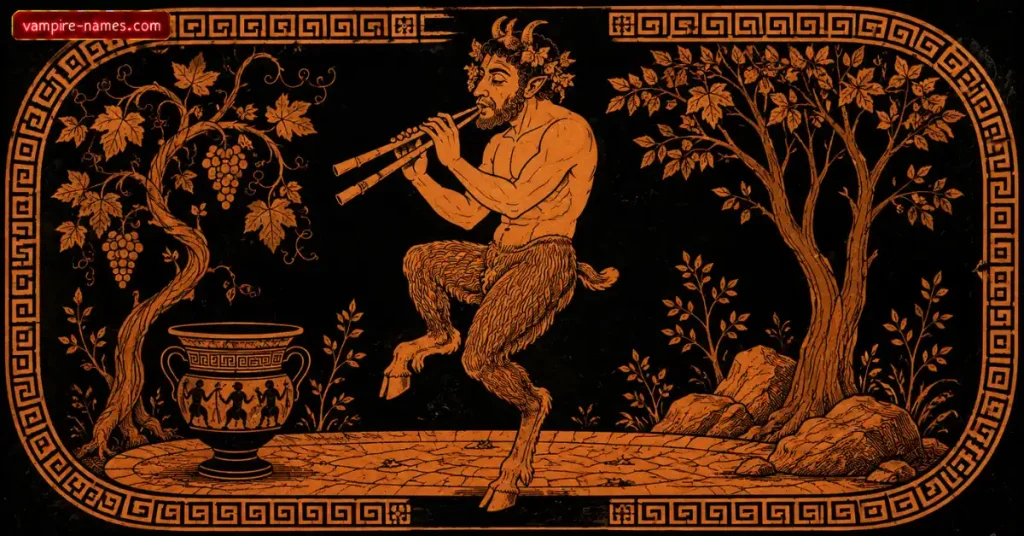
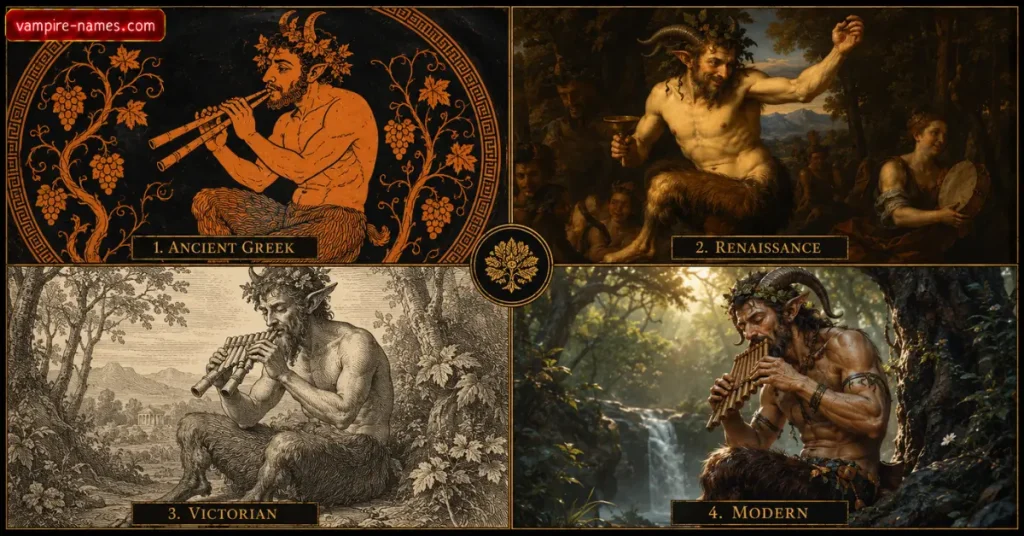
The ancient Greek satyr (σάτυρος) is a nature spirit associated with Dionysus — part of his divine retinue (the thiasus) along with the maenads (female ecstatic worshippers). In early Greek art and literature, satyrs have horse ears, horse tails, and sometimes hooves — the goat-legs are a later development, possibly influenced by the Sileni (a related group of elder satyrs). By the time of classical Athens, satyrs appear regularly in vase paintings, theatrical satyr plays (a specific genre where satyrs appear as a chorus), and mythological poetry.
The satyr’s defining qualities: they are wild and uncontrolled (the opposite of civilized Greek society), deeply musical (the aulos/double flute is their instrument), devoted to wine and the pleasures of the body, and associated with the dangerous ecstasy that Dionysus represents. They are not evil — they are a-moral, outside the moral framework that humans inhabit. This makes them fascinating characters: they represent the part of human nature that civilization is built to contain.
The Roman faun (Fauni, singular Faunus) is related but distinct. Roman fauns are more pastoral — they’re the protectors of flocks and forests rather than the wild companions of a wine god. Faunus (from ‘faveo’ = to be kind to) is a more benevolent figure than Dionysus. The faun’s most famous modern incarnation is Mr. Tumnus from C.S. Lewis’s Narnia — gentle, melancholy, slightly anxious. Pan’s Labyrinth’s Fauno is the other major modern faun — ancient, ambiguous, not entirely trustworthy. These two characters define the modern faun as distinct from the ancient satyr.
In DnD 5e (particularly from Mythic Odysseys of Theros), satyrs are a playable race — charismatic, musical, resistant to magic, and inherently mischievous. Their naming tradition draws directly from Greek mythology. In World of Warcraft, satyrs are corrupted night elves who made a demonic bargain — their names are twisted versions of night elf names, darker and more angular.
The Etymology of ‘Satyr’ — Where the Word Comes From
The word ‘satyr’ (Greek Σάτυρος, Satyros) has an uncertain etymology — which is itself interesting, since Greek is one of the best-documented ancient languages. Several theories exist: it may derive from a pre-Greek Aegean language (suggesting the satyr tradition predates Greek civilization), it may relate to a root meaning ‘full, overflowing’ (suggesting their association with abundance and excess), or it may be connected to a word for ‘he-goat’ in a related language. The uncertainty suits the satyr’s liminal nature — they’re always at the boundary of the known.
‘Faun’ (Latin Fauni) derives from Faunus, the Roman woodland god — and Faunus comes from ‘faveo’ (to be kind, to favour). The Roman faun is thus literally the ‘kind one’ — which fits the pastoral, protective tradition.
For naming purposes, the Greek root produces Fake Country Names built on Greek phonetics — vowel-heavy, ending in ‘-os’, ‘-us’, ‘-on’, ‘-as’, often based on nature vocabulary (trees, animals, wine-making, music). Latin-influenced faun names tend to be slightly more structured and less wild-sounding.
The Named Satyrs of Greek Mythology — Full Profiles
Unlike most mythological creatures (who are usually named only by type), Greek satyrs were frequently named as individuals. These are the canon satyrs — the ones with actual mythology attached, not just a name.
| Name | Meaning / Notes |
| Pan | Technically the god of the wild rather than a satyr, but Pan is the defining satyr figure — goat legs, goat horns, pipes (the pan pipes/syrinx). ‘Pan’ is Greek for ‘all’ (he is the god of all things wild) or may come from a pre-Greek root. He is the prototype for all satyr naming. |
| Silenus | The elder satyr — tutor to Dionysus, the wisest of the satyrs. ‘Silenus’ may relate to ‘selas’ (light) or be pre-Greek. He is depicted as fat, drunk, and riding a donkey, but when sober he speaks profound truth. Midas captured him to learn wisdom. |
| Marsyas | The satyr who found Athena’s discarded aulos (she invented it but threw it away when she saw it distorted her face) and became so skilled that he challenged Apollo to a music contest. He lost and was flayed alive. ‘Marsyas’ is possibly pre-Greek. His flaying inspired artists for centuries. |
| Krotos | The inventor of rhythmic clapping to accompany music — also possibly the inventor of archery. He was placed in the stars as the constellation Sagittarius. Son of Pan and a Muse’s nurse. |
| Ampelos | Dionysus’s beloved companion, a young satyr. He was killed by a bull while attempting to ride it. Dionysus transformed him into a grapevine (ampelos = vine in Greek), which became the first wine grape. |
| Leneus | A satyr whose name comes from ‘lenos’ (wine vat, the pressing trough). Associated with the winemaking process. His name is also related to the Lenaia festival of Dionysus. |
| Oreios | A mountain satyr — ‘oreios’ means ‘of the mountains’. One of several satyrs named for their preferred terrain. |
| Pherespondos | A named satyr in a Dionysiac context — ‘pherespondos’ may relate to ‘bringing offerings’. One of the more unusual satyr names. |
| Satyros (generic) | The type-name — used both as a category and occasionally as a specific character name in later mythology. |
| Komos | A personification of revelry and festive celebration — often depicted as a satyr-like figure. ‘Komos’ is the root of ‘comedy’. |
| Lenaeus | Another wine-vat satyr, possibly the same as Leneus or a variant. Associated with the pressing of grapes. |
| Astrabakos | A Spartan hero connected to Artemis worship whose name carries the odd quality of some satyr names — ‘astrabakos’ is otherwise unattested. |
| Nomios | Pan’s alternative name meaning ‘of the pastures’ — ‘nomo’ (pasture/law). Sometimes used as a satyr name. |
| Hyagnis | The legendary inventor of the aulos — father of Marsyas in some traditions. The musician-satyr origin story. |
| Silenos (plural Silenoi) | The elder satyrs — different from Silenus the individual. Horse-tailed, horse-eared, wiser and older than the younger satyrs. |
| Aegipan | ‘Goat-Pan’ — ‘aegi’ (goat) + ‘Pan’. A goat-fish deity who helped Zeus recover his sinews after Typhon stole them. Sometimes classified as a satyr. |
The Phonetics of Satyr Names — What Makes a Name Sound Authentically Greek
Greek satyr names follow specific phonetic patterns drawn from ancient Greek. Understanding these patterns lets you build names that feel genuinely mythological rather than invented.
- Vowel richness — ancient Greek had more distinct vowel sounds than modern English. Satyr names often have two or three distinct vowel sounds: ‘Sile-nus’, ‘Mar-sy-as’, ‘Am-pe-los’, ‘Kro-tos’. Every syllable tends to have a full vowel.
- ‘-os’, ‘-us’, ‘-on’, ‘-as’, ‘-ias’ endings — most Greek masculine names end in one of these suffixes. ‘-os’ is the most common (Marsyas in Greek is Μαρσύας, which follows this pattern). ‘-us’ is the Latin-influenced version of ‘-os’. ‘-on’ appears in many compound Names That Mean Monster .
- Nature vocabulary roots — Greek satyr names often derive from nature words: ‘ampelos’ (vine), ‘oreios’ (mountain), ‘komos’ (revel), ‘lenos’ (wine vat). The name describes the satyr’s association.
- ‘-ias’, ‘-aios’, ‘-eus’ suffixes for more complex names — ‘Marsyas’ has ‘-yas’, ‘Hyagnis’ has ‘-is’, ‘Nomios’ has ‘-ios’. These suffix variations produce the specific quality of ancient Greek sound.
- Hard ‘k’ sounds (written ‘k’ or ‘c’) — ‘Krotos’, ‘Komos’, ‘Kraton’. The hard ‘k’ gives Greek names their specific crispness.
- Compound names — many Greek names are compounds of two meaningful elements: ‘Aegipan’ (goat + Pan), ‘Pherespondos’ (bearing + libation). Building compound names from Greek vocabulary produces authentic-sounding names.
Satyr Naming by Archetype
Not all satyrs are the same character. Understanding the archetype you’re naming helps choose the right kind of name.
🎵 The Musician Satyr
The musician satyr is the most refined of the satyr archetypes — still wild, but the wildness expresses itself through music rather than pure chaos. Marsyas is the prototype: a musician of divine skill who challenged a god. Names should reference music, instruments, or sound.
| Marsyas | Hyagnis | Krotos | Aulaios |
| Syrinxos | Lyrandos | Aulos | Kitharis |
| Melodion | Harmonios | Rhythmios | Cadenzos |
| Melodar | Harmonar | Rhythmar | Cadenzar |
| Piperon | Flautios | Drumbeatos | Chordsinger |
| Resonar | Timbreos | Pitchos | Tonarios |
| Echosar | Sonatios | Improvisios | Cadenzios |
| Threnos (lament) | Hymnios | Dityrambos | Paianios |
🎭 The Trickster Satyr
The trickster satyr is the chaos agent — not evil, but gleefully disruptive. These names should have a lighter, more mercurial quality.
| Komos | Thrasyboulos | Paignia | Skertios |
| Prankalos | Jokarios | Tricksios | Foolios |
| Chaosion | Disruptios | Anarchios | Wildios |
| Mercurial | Quickios | Nimblios | Slipperios |
| Laughter | Gigglios | Chortle | Snicker |
| Mischief | Mayhem | Chaos | Disorder |
| Prankster Pan | Jest-God | Fool Divine | Wild One |
| Teaser Thrix | Baiter Brix | Goader Grix | Prodder Prix |
🍷 The Elder/Wise Satyr (Silenus Type)
The Silenus-type satyr appears drunk and foolish but speaks profound truth when sober. These names should carry age and weight.
| Silenus | Silenos | Elder Pan | Ancient Krotos |
| Wise Ampelos | The Old Satyr | The Truth-Speaker | The Drunk Sage |
| Palaios | Geronios | Sophos | Phronimos |
| Old Wine | Deep Knowledge | Hidden Truth | When Sober |
| The Captured One | He Who Knows | The Ancient One | Before The Gods |
| Greybeard Satyr | White-Horn Elder | Long-Lived One | Century Satyr |
| Teller of Truth | Keeper of Secrets | Holder of Wisdom | Prisoner of Kings |
| Prophetic Satyr | Seeing One | Future-Known | Past-Remember |
💃 The Wild Dancer Satyr
The dancer satyr is pure ecstasy — the satyr of the thiasus, the Dionysiac procession, the night of wild abandon.
| Komastes | Orgiasmos | Thyrsophoros | Mainalos |
| Danceios | Leapios | Spinios | Whirlios |
| Ecstasion | Frenzios | Madnessios | Rapturios |
| Thyrsoshaker | Wineskin-Bearer | Ivy-Crowned | Torch-Runner |
| Midnight Dancer | Dawn Reveller | Dusk-Singer | Full-Moon Wild |
| The Possessed | The Transported | The Beyond | The Elsewhere |
| Mountain-Wild | Forest-Mad | River-Frenzied | Sea-Ecstatic |
| Dionysiac | God-Touched | Wine-Taken | Grape-Born |
❤️ The Lover Satyr
The satyr as romantic pursuer — amorous, persistent, occasionally successful. Names should suggest charm combined with the satyr’s inherent wildness.
| Eros-Touched | Aphrodite-Blessed | Charm-Gifted | Beauty-Chaser |
| Lovesick Pan | Heartache Satyr | Pursuit-Born | Longing-Made |
| Amorous | Enamoured | Besotted | Infatuated |
| Sweet-Talker | Honey-Voice | Smooth Horn | Gentle Hoof |
| Forever Chasing | Never Caught | Always Hoping | Perpetually Courting |
| Nymph-Chaser | Dryad-Lover | Naiad-Pursuer | Oread-Admirer |
| Beautiful Rejection | Gentle No | Patient Pursuit | Hopeful Chase |
| Ampelos (beloved) | Adored One | God’s Favourite | Divine-Loved |
Male Satyr Names with Meanings
| Name | Meaning / Notes |
| Pan | The god of the wild. ‘Pan’ = ‘all’ or pre-Greek root. The prototype of all satyr names. |
| Silenus | The elder satyr-tutor. Possibly ‘selas’ (light) or pre-Greek. The wisdom-drunk. |
| Marsyas | The musician who challenged Apollo. Pre-Greek etymology. The pride that was punished. |
| Krotos | The inventor of rhythm. Possibly related to ‘kroto’ (clap/rattle). The beat-keeper. |
| Ampelos | ‘Vine’ in Greek. Dionysus’s beloved companion, transformed into the grape vine. |
| Leneus | From ‘lenos’ (wine vat). The satyr of the winepress. |
| Thyrsophoros | ‘Thyrsus-bearer’ — the staff of Dionysus. The standard-bearer. |
| Komastes | ‘Reveller’ — from ‘komos’ (revel). The satyr of the feast. |
| Oreios | ‘Of the mountains’ — ‘oreios’. The mountain-dwelling satyr. |
| Aulaios | ‘Of the aulos’ — the double-pipe player. A musician satyr name. |
| Komos | ‘Revel, festivity’ — the personification of revelry. Root of ‘comedy’. |
| Aegipan | ‘Goat-Pan’. The goat-fish deity, sometimes classified satyr. |
| Nomios | ‘Of the pastures’ — ‘nomo’. Pan’s pastoral alternative name. |
| Pherespondos | ‘Bearing libations’. A rare satyr name with religious connotation. |
| Skertios | Possibly ‘one who leaps, gambols’. A dancing satyr. |
| Mainalos | From Mount Mainalos in Arcadia, sacred to Pan. The Arcadian satyr. |
| Thrasyboulos | ‘Daring counsel’ — ‘thrasys’ (bold) + ‘boule’ (counsel). The boldly wise. |
| Hymenaios | The god of wedding songs — sometimes satyr-adjacent. ‘Hymen’ (membrane/wedding song). |
| Paignia | ‘Playful things’ — ‘paignion’ (plaything, game). The playful satyr. |
| Orgiasmos | ‘Sacred ritual frenzy’ — from ‘orgia’ (secret rites). The ritual-frenzied. |
| Thyrsion | Dionysion | Bacchion | Orgion |
| Kradon | Silvaros | Vindaros | Boscalos |
| Groveion | Forestion | Wildion | Nymphalos |
| Piparian | Aularian | Lyraios | Kitharaios |
| Danceios | Leapios | Whirlios | Spinios |
| Grapeion | Vineion | Fermentos | Vintageios |
| Honcharios | Raucalios | Bawdios | Lustyios |
| Merrion | Joyfullios | Gladios | Cheerios |
| Thornios | Briarion | Oakios | Elmion |
| Ivyios | Vineyard Son | Winemaker’s Child | Grape-Born |
| Fleetfoot | Quickhoof | Nimble-Horn | Swift-Tail |
| Laughterion | Jestios | Wit-Sharp | Clever-Hoof |
Female Satyr Names — Satyresses
Female satyrs (sometimes called satyresses, or ‘Satyriskoi’ in some traditions, though this more properly refers to young satyrs) appear less frequently in ancient Greek art than male satyrs but are present. They carry the same wild qualities but are often depicted as more self-possessed — the female wildness is different from the male.
| Name | Meaning / Notes |
| Satyra | The direct feminine form of Satyros. Used in some ancient texts. |
| Thyia | A female divine figure associated with Dionysus — possibly a maenadic satyress. ‘Thyia’ from ‘thyo’ (to rush/rage). |
| Krotera | Invented feminine of Krotos. The female rhythm-keeper. |
| Ampela | Feminine of Ampelos. The vine-woman. |
| Syringe | From ‘syrinx’ (pan pipe) — the nymph who was transformed into pan pipes to escape Pan. Technically a nymph but adjacent to satyr tradition. |
| Mainalias | ‘Of Mount Mainalos’ — a female satyr of Arcadia. |
| Oreias | ‘Of the mountains’ — the feminine mountain satyr. |
| Lenaia | ‘Of the lenos’ — the wine-vat woman. Also the name of a Dionysiac festival. |
| Bakkheia | ‘Of Bakkhos (Dionysus)’ — the female companion of Dionysus. |
| Thyrsophora | The female thyrsus-bearer. |
| Komastes (fem) | The female reveller. |
| Nymphaios (fem) | ‘Of the nymphs’ — a satyr who lives among nymphs. |
| Aulaios (fem) | The female aulos-player. |
| Silena | Feminine of Silenus. The wise drunk female elder. |
| Paignion | ‘Plaything, game’ — the playful female satyr. |
| Orgiasma | ‘Sacred frenzy’ in feminine form. The ecstatic female. |
| Satyra | Thyia | Ampela | Syringe |
| Mainalias | Oreias | Lenaia | Bakkheia |
| Thyrsophora | Silena | Paignion | Orgiasma |
| Vinara | Grapeia | Fermentia | Vintageia |
| Forestia | Groveias | Wildias | Nymphaia |
| Danceias | Leapias | Whirlias | Spinias |
| Piparia | Aularia | Lyraia | Kitharaia |
| Ivyias | Thornias | Briaras | Oakias |
| Merrion (fem) | Joyfullias | Gladias | Cheerias |
| Laughterias | Jestias | Witsharpa | Cleverhoofia |
| Quickhoofia | Fleetfootia | Nimblehornia | Swifttailas |
| Wild Dancer | Forest Runner | Night Reveller | Dawn Singer |
Gender-Neutral Satyr Names
| Wild | Forest | River | Mountain |
| Vine | Grape | Wine | Dance |
| Pipe | Aulos | Syrinx | Lyra |
| Echo | Rhythm | Beat | Melody |
| Ivy | Thyrsus | Wreath | Crown |
| Pan | Laughter | Joy | Revel |
| Dawn | Dusk | Moonlit | Starlit |
| Fern | Moss | Bark | Root |
| Deer | Fox | Hare | Bird |
| Stream | Cascade | Pool | Brook |
| Komos | Orgia | Thiasus | Thiasos |
| Ecstasy | Frenzy | Transport | Beyond |
Greek Mythology Satyr Names — Canonical
These are Funny Detective Names that appear in ancient Greek sources — vase paintings, poetry, plays, or mythological accounts. They represent the authentic tradition.
| Pan | Silenus | Marsyas | Krotos |
| Ampelos | Leneus | Oreios | Komos |
| Aegipan | Nomios | Hyagnis | Mainalos |
| Skertios | Thyrsophoros | Komastes | Pherespondos |
| Thyia | Paignia | Thrasyboulos | Orgiasmos |
| Silenos (variant) | Satyriskos | Silenoi | Bakkhoi |
| Tityroi | Panes | Fauni (Roman) | Silvanoi |
| Hymenaios (adjacent) | Komos (personification) | Likos | Astron |
| Pithos | Amphoraios | Kantharios | Kylix |
| Aulos Maker | Pipe Inventor | Rhythm Father | Beat Keeper |
| Horse-Tail Pan | Goat-Foot Old | Wild-Eye Young | Vine-Crown Elder |
| Of The Thiasus | Of The Retinue | Of The Wild | Of The Mountain |
Roman Faun Names — The Faun Tradition
Roman fauns are the Latin evolution of the Greek satyr tradition — gentler, more pastoral, associated with the countryside and flocks rather than Dionysiac ecstasy. The god Faunus (Roman Pan) gives the faun their defining quality: kindness to the natural world.
| Name | Meaning / Notes |
| Faunus | The Roman god of forests, fields, and flocks. Equivalent to Pan. ‘Faunus’ from ‘faveo’ (to be kind to). |
| Silvanus | The Roman god of forests. ‘Silva’ (forest). Often depicted in faun-like form. Guardian of the uncleared land outside cultivation. |
| Picus | The first king of Latium, transformed into a woodpecker. ‘Picus’ (woodpecker). Sometimes classified as a faun. |
| Lupercus | The Roman deity of the Lupercalia festival — possibly a faun aspect. Associated with wolves and fertility. |
| Inuus | A fertility deity who took the form of Pan. ‘Inuus’ from ‘ineo’ (to go into/copulate). Associated with flocks. |
| Favonius | The Roman west wind — faun-adjacent. ‘Faveo’ root. The kindly breeze. |
| Silvicola | ‘Forest dweller’ — ‘silva’ (forest) + ‘incola’ (dweller). A descriptive faun name. |
| Arvalis | ‘Of the fields’ — from ‘arvum’ (cultivated field). A field-faun. |
| Pastoris | ‘Of the shepherd’ — from ‘pastor’. The faun who protects flocks. |
| Mr. Tumnus (modern) | C.S. Lewis’s faun — ‘Tumnus’ is invented but follows Latin phonetics. The gentle, melancholy, nervous faun. |
| Fauno (modern) | Pan’s Labyrinth — the ancient, ambiguous, not-entirely-trustworthy faun who offers Ofelia a way out. |
| Vinitor | ‘Winemaker’ — from ‘vinum’ (wine). A Roman faun of the vineyard. |
| Silvicultrix | ‘Cultivator of forests’ — the female form. The faun-woman who tends the wood. |
| Nemoris | ‘Of the grove’ — from ‘nemus’ (sacred grove). The grove-faun. |
| Ruricola | ‘Rural dweller’ — from ‘rus’ (countryside) + ‘incola’ (dweller). The country faun. |
| Saltus | ‘Forest, leap’ — both a wooded area and the verb to jump. The faun who leaps through the forest. |
DnD 5e Satyr Names — With Class & Character Suggestions
In DnD 5e (particularly from Mythic Odysseys of Theros), satyrs are a playable race from the plane of Theros. They are charismatic, magical, resistant to enchantment and illusion, and inherently musical. Their naming convention draws directly from Greek mythology — and the PHB suggests names like ‘Castor’, ‘Evan’, ‘Gregor’, ‘Idris’, ‘Nikos’, ‘Orion’, ‘Percy’, ‘Petros’, ‘Rizos’, ‘Stamos’.
| Name | Meaning / Notes |
| Bard Satyr Names | Marsyas, Krotos, Aulaios, Melodion, Harmonios, Lyrandos, Rhythmios — the musical tradition is the bard’s heritage. |
| Rogue Satyr Names | Komos, Skertios, Thrasyboulos, Quickhoof, Nimble, Fleetfoot — the trickster tradition. |
| Ranger Satyr Names | Oreios, Mainalos, Forestion, Wildion, Nomios — the outdoorsman tradition. |
| Warlock (Archfey) Names | Thyrsophoros, Orgiasmos, Bakkhion, Ecstasion — the divine madness tradition. |
| Paladin (Oath of the Ancients) Names | Nomios, Silvicola, Nemoris, Groveion — the protector tradition. |
| 5e PHB Examples | Castor, Evan, Gregor, Idris, Nikos, Orion, Percy, Petros, Rizos, Stamos (male); Amara, Daphne, Delia, Freya, Irine, Lira, Lydia, Morrigan, Myria, Tia (female) |
| Satyr Cultural Notes | In Theros, satyrs are called ‘Fauns’ by some and ‘Satyrs’ by others — the two traditions overlap. They are resistant to magic because their inherent wildness is its own kind of power. |
| Character Hooks | A satyr’s name often reflects their most defining quality. A bard whose music charmed a god might rename themselves ‘Marsyas’ as an aspiration or warning. A trickster who escaped divine punishment might be ‘Komos’. |
| Castor | Evan | Gregor | Idris |
| Nikos | Orion | Percy | Petros |
| Rizos | Stamos | Amara | Daphne |
| Delia | Freya | Irine | Lira |
| Lydia | Myria | Tia | Morrigan |
| Theron | Lysander | Caspian | Dorian |
| Florian | Sylvan | Arvid | Bramble |
| Clover | Dusk | Fern | Grove |
| Hazel | Iris | Jasper | Kelp |
| Larch | Maple | Nettle | Oak |
| Pine | Quill | Reed | Sedge |
| Thorn | Umber | Vine | Wren |
WoW Satyr Names — The Corrupted Night Elf Tradition
World of Warcraft satyrs are a completely different tradition from Greek satyrs — they are fallen night elves who made a bargain with the Burning Legion (demonic forces) and were transformed. Their names are twisted versions of night elf names, darker and more angular, with demonic influences.
| Name | Meaning / Notes |
| Night Elf Name Roots | WoW night elf names use flowing nature sounds: Tyrande, Malfurion, Illidan, Sylvanas. These are the pre-corruption names. |
| Corruption Twist | When a night elf becomes a satyr, their name darkens. ‘Silvanus’ might become ‘Silvanus Corrupted’ or ‘Silvanos Darkfall’. The nature element remains but twists. |
| Demonic Suffix | Many WoW satyr names gain demonic suffixes: ‘-fel’, ‘-dark’, ‘-shadow’, ‘-corrupt’. ‘Illidari’ (of Illidan) suggests the naming pattern. |
| Famous WoW Satyrs | Xavrius (the Nightmare Satyr), Peroth’arn (an ancient satyr), Zin’rokh (adjacent demon), Azshara’s Satyrs (unnamed mass). |
| WoW Satyr Naming Formula | [Night elf root] + [Corruption marker] + [Demonic suffix]. ‘Arannis’ (night elf) → ‘Arannos Darkbark’. ‘Silvanus’ → ‘Silvan Felbough’. |
| Xavrius | Peroth’arn | Illidari Satyr | Felcorrupted Night Elf |
| Darkmane Satyr | Shadowhoof Satyr | Felfire Satyr | Demonblood Satyr |
| Aranfel | Silvanos Dark | Thalfel | Naroth’arn |
| Krix’vel | Zix’than | Aroth’vel | Nix’rath |
| Darkbark Arannis | Shadowroot Silvos | Felleaf Thalion | Demonvine Nareth |
| Corrupted Grove | Tainted Forest | Fel-Touched Wild | Demon-Marked Pan |
| Goatleg Demon | Felhorn Satyr | Darkhoof Fallen | Shadowtail Night Elf |
| Once-Natural Now-Fel | Former Druid | Fallen Priest | Lost to the Fel |
BG3 Satyr Names
Baldur’s Gate 3 includes satyrs as NPCs following the DnD 5e tradition. They appear in Act 1 in the Druid Grove area and the surrounding forest, and follow Greek mythology-inspired naming conventions.
| Nere (adjacent) | Arabella (not satyr but forest) | Alfira | Andrick |
| Greek-Style BG3 Satyrs | Forest-Born Names | Theros-Inspired | DnD 5e Convention |
| Theron | Sylvan | Bramble | Fern |
| Grove | Thorn | Reed | Vine |
| Castor (BG3 style) | Nikos (BG3) | Petros (BG3) | Rizos (BG3) |
| Melody Satyr | Revel Satyr | Dance Satyr | Pipe Satyr |
| Forest NPC Satyr | Act One Satyr | Druid Grove Satyr | Wild Region Satyr |
| Flute Player NPC | Dancer Satyr NPC | Mischief Satyr NPC | Curious Satyr NPC |
Cool Satyr Names
| Marsyas | Silenus | Pan Darkwood | Thrasyboulos |
| Oreios Wildborn | Ampelos Vinechild | Krotos Rhythmmaker | Mainalos Mountainborn |
| Thyrsus Bearer | Wild Reveller | Dance Lord | Revel King |
| Forgehoof | Ironhoof | Steelhoof | Darkhorn |
| Wildrunner | Forestborn | Mountaincaller | Riverwalker |
| Ecstasion | Frenzion | Rapturion | Madnesion |
| Ancient Pipes | Old Pan | First Flute | Original Wild |
| Shadow Satyr | Night Dancer | Dark Revel | Midnight Horn |
| Thunder Hoof | Storm Runner | Lightning Horn | Tempest Dancer |
| Primal Wild | Pure Instinct | Raw Nature | Untamed |
| Dionysiac | God-Mad | Wine-Blessed | Grape-Touched |
| The Unyielding Wild | The Untameable | The Unrestrainable | The Free |
Unique Satyr Names
| Sylvikos | Dendralos | Chlorophylion | Petromalos |
| Pneumatikos | Aitheros | Chthonios | Ouranos Satyr |
| Throbbingwood | Dancingroot | Singingbark | Laughingmoss |
| Paganion | Hedonion | Epicurion | Libertasion |
| Nomadic Pan | Wandering Hoof | Travelling Pipe | Moving Melody |
| One Who Leaps | One Who Laughs | One Who Plays | One Who Dances |
| Half-Wild | Half-Gentle | Half-Known | Half-Mystery |
| Between World | Both Nature | Neither Tame | Fully Neither |
| Reed Whisperer | Stone Listener | Wind Follower | Rain Dancer |
| Grape Dreamer | Wine Philosopher | Harvest Singer | Ferment Sage |
| The Unnameable One | He Who Names Himself | She Who Chose | They Who Are |
| Laughterflow | Joystream | Merriment River | Happycurrent |
Funny Satyr Names
| Seriously Goat-Legged | Professionally Hoofed | Certified Pan-Adjacent | Licensed Piper |
| Not A Faun | Totally A Satyr | Definitely Wild | Officially Uncontrolled |
| Trampelfoot | Clomp-Horn | Jingle-Hoof | Tinkle-Tail |
| The Perpetually Tipsy | Always Slightly Drunk | Professionally Inebriated | Occupationally Merry |
| Dionysus’s Problem | Pan’s Embarrassment | The Gods’ Headache | Mount Olympus’s Concern |
| Goat Legs McGee | Captain Hoof | Admiral Pipe | General Grape |
| Techically Mythical | Arguably Ancient | Debatably Divine | Questionably Goat |
| Forest Middle Management | Nature’s HR Department | Wildlife Compliance Officer | Woodland Bureaucrat |
| The One Who Ate All The Grapes | Responsible For The Noise | Behind The Music Incident | The Reason We Can’t Have Nice Things |
| Lost His Pants Again | Pants Optional Satyr | Clothing Foe | Fashion Disaster Pan |
| Plays At 2AM | Neighbours Hate Him | Sound Violation Incarnate | City Noise Ordinance Enemy |
| Nice To Meet You I’m The Wild | Yes I Have Goat Legs | No I Can’t Explain The Horns | The Horns Are Decorative |
Satyr OC Names
For original characters — satyrs created for stories, DnD campaigns, art projects, or personal use.
| Thistledown Pan | Cloverfoot Runner | Heather-Crown Wild | Foxglove Dancer |
| Midnight Revel Satyr | Golden Hour Piper | Blue Moon Wild | Red Dawn Dancer |
| Stormchaser Hoof | Lightninghorn Runner | Thunderfoot Pan | Cloudwatcher Pipe |
| The Artist Satyr | The Scholar Pan | The Warrior Hoof | The Healer Wild |
| Soft-Heart Wildone | Gentle-Horn Dancer | Kind-Hoof Runner | Sweet-Voice Piper |
| Complex Backstory Satyr | Tragic Past Pan | Redemption Arc Hoof | Character Growth Wild |
| DnD Campaign Satyr | Story Arc Pan | Plot Important Hoof | Character Development Wild |
| Your OC Name Here | Personal Connection Satyr | Meaningful Wild | Significant Pan |
| Ember Hoof | Frosthorn Wild | Storm Dancer | Sun Runner |
| Copper Pan | Silver Hoof | Gold Horn | Bronze Wild |
| First Chapter Satyr | Final Act Pan | Mid-Story Hoof | Turning Point Wild |
| The One You Love | The One Who Grows | The One Who Learns | The One Who Changes |
Pan-Inspired Names
Pan is the god of all satyrs — his Male Character Names , his qualities, and his mythology inspire an entire category of satyr names.
| Name | Meaning / Notes |
| Pan | ‘All’ in Greek. The universal god. The name that contains everything. |
| Panikos | ‘Of Pan’ — the source of ‘panic’ (Pan caused sudden fear in lonely places). |
| Pankalos | ‘All-beautiful’ — ‘pan’ + ‘kalos’ (beautiful). A philosophical compliment. |
| Panardios | ‘All-sweet’ — ‘pan’ + ‘ardis’. Sweet in everything. |
| Diopan | ‘Zeus-Pan’ — the son of Hermes, nursed by the gods. The divine origin name. |
| Silvipan | Latin ‘silva’ (forest) + Pan. The forest-Pan. |
| Oripan | Greek ‘ori’ (mountain) + Pan. The mountain-Pan. |
| Hylipan | Greek ‘hyle’ (forest) + Pan. The woodland-Pan. |
| Nymphaipan | ‘Of the nymphs’ + Pan. The satyr who chases nymphs like Pan. |
| Syrinxchaser | Named for Pan’s pursuit of Syrinx (who became his pan pipes). |
| Echoloser | Pan also pursued Echo — who loved Narcissus and wasted away. A melancholy satyr name. |
| Pitysbroken | Pan pursued Pitys (who became a pine tree). The satyr who lost his love. |
| Pitys (pine) | The transformed nymph. A tree-name as a satyr name. |
| Aegipanborn | Born of Aegipan (the goat-fish). A complex lineage name. |
| Hermes-Given | Pan is the son of Hermes. The messenger-god’s wildest child. |
| Arcadian | Pan’s homeland. The pastoral paradise. The origin of ‘Arcadia’ as a concept. |
Nature & Forest Satyr Names
| Oakenhoof | Elmtail | Birchhorn | Willowpipe |
| Fernfoot | Mossback | Thornside | Briarleg |
| Ivycrown | Laurelwreath | Grapevine | Vineleaf |
| Acornkeeper | Mushroom Walker | Truffle Finder | Berry Picker |
| Fox Friend | Deer Dancer | Rabbit Runner | Bird Caller |
| Stream Drinker | River Bather | Lake Swimmer | Waterfall Singer |
| Stone Climber | Cliff Leaper | Mountain Dancer | Valley Runner |
| Dawn Greeter | Dusk Singer | Midnight Dancer | Noon Rester |
| Summer Wild | Autumn Dancer | Winter Sleeper | Spring Waker |
| Rain Dancer | Sun Runner | Wind Follower | Storm Chaser |
| Root Deep | Branch High | Leaf Light | Bark Solid |
| The Forest Knows | The Mountain Remembers | The River Forgets | The Stone Endures |
Music-Inspired Satyr Names
Music is the satyr’s defining gift — they invented the aulos, refined rhythm, and challenged the gods. These names honour that tradition.
| Marsyas | Hyagnis | Krotos | Melodios |
| Harmonios | Rhythmios | Cadenzios | Resonaros |
| Aulaios | Syrinxios | Kitharaios | Lyraios |
| Pipework Pan | Flute-Maker Hoof | Reed Cutter Wild | Breath Song |
| First Note | Last Chord | Middle Melody | Endless Song |
| Improvisation Satyr | Composition Pan | Performance Hoof | Practice Wild |
| The Challenge | The Contest | The Pride | The Punishment |
| Beat Keeper | Tempo Master | Rhythm God | Pulse Holder |
| Solo Satyr | Duet Pan | Ensemble Hoof | Orchestra Wild |
| Morning Song | Noon Melody | Evening Hymn | Night Music |
| Dance Music | Work Song | War Music | Love Song |
| The Music That Charmed | The Song That Lost | The Tune That Won | The Melody Forever |
Wine & Dionysus-Inspired Names
The satyr and Dionysus are inseparable — the wine god’s retinue, his companions, his earthly expression. These names honour the vine tradition.
| Ampelos | Leneus | Lenaia | Bacchios |
| Dionysion | Thyrsophoros | Grape-Born | Vine-Child |
| Winemaker’s Son | Harvest Dancer | Pressing Satyr | Ferment Wild |
| Red Wine Satyr | White Wine Pan | Rosé Hoof | Sparkling Wild |
| First Vintage | Last Drop | Empty Wineskin | Full Cup |
| The Drunk Wise | The Sober Fool | The Always Merry | The Never Sad |
| Symposion | Banquet Satyr | Feast Pan | Reveller Hoof |
| Ancient Vineyard | Old Vine Pan | Gnarled Trunk Wild | Young Shoot Hoof |
| Grape Treader | Must Maker | Lees Keeper | Clear Pour |
| Toast Giver | Libation Pourer | Wine God’s Own | Dionysus-Blessed |
| The Intemperate | The Immoderate | The Excessive | The Abundant |
| Joy Bringer | Sorrow Ender | Pain Forgetter | Care Dissolver |
Dark & Evil Satyr Names
Not all satyrs are merry — some carry the darker aspects of the wild. Pan’s capacity to cause ‘panic’, the satyr’s connection to chaos, and the WoW corrupted tradition all produce darker names.
| Darkhorn | Shadowhoof | Nighttail | Voidpipe |
| Panic-Bringer | Fear-Causer | Chaos-Maker | Disorder-Dancer |
| The Corrupt Pan | The Fallen Wild | The Tainted Hoof | The Twisted Horn |
| Malicious Melody | Evil Song | Dark Rhythm | Shadow Music |
| Nightmare Revel | Terror Dance | Horror Feast | Dread Celebration |
| Fell Satyr | Demonic Pan | Infernal Hoof | Diabolic Wild |
| Pan’s Dark Aspect | The Panic God | The Fear Bringer | The Dread Piper |
| Corrupted Grove | Tainted Forest | Blighted Wild | Poisoned Vine |
| Ancient Evil Pan | Pre-Civilisation Horror | Primordial Chaos Hoof | Before-Order Wild |
| The Hunted Turned Hunter | Prey Becoming Predator | Gentle Turned Dangerous | Soft Gone Hard |
| Malfurion-Fallen | Night Elf Corrupted | Fel-Touched Satyr | Demon-Bargained Pan |
| The Uncontrolled | The Unrestrained | The Unleashed | The Uncaged |
Ancient & Classical Satyr Names
| Pan Arkaios | Silenus Paleos | Marsyas Aionios | Krotos Archeos |
| The First Satyr | The Original Wild | The Primordial Hoof | The Ancient Horn |
| Pre-Hellenic Pan | Bronze Age Hoof | Iron Age Wild | Archaic Horn |
| Vase-Painted Satyr | Mosaic Pan | Relief-Carved Hoof | Stone Wild |
| Attic Black-Figure | Red-Figure Revel | Corinthian Dancing | Minoan Wild |
| Homer Adjacent | Hesiod Named | Pindar Praised | Ovid Described |
| Classic Amphoraios | Ancient Kantharios | Old Kylix | First Krateros |
| Thyrsoshaker of Old | Old Vine Dancer | Ancient Pipe Player | Original Beat Keeper |
| Dionysiac Retinue | Thiasus Member | Procession Satyr | Sacred Wild |
| Temple Satyr | Sanctuary Pan | Precinct Hoof | Sacred Grove Wild |
| Festival Satyr | Celebration Pan | Ritual Hoof | Ceremony Wild |
| The One Art Remembers | The One Poetry Names | The One History Keeps | The One Myth Tells |
Modern Fantasy Satyr Names
| Mr. Tumnus | Fauno (Pan’s Labyrinth) | Grover (Percy Jackson) | Gleeson Hedge |
| Silenus (Percy Jackson) | Coach Hedge | The Satyr in The Wood | The Faun in The Wardrobe |
| Emerald Satyr | Crystal Hoof | Diamond Horn | Golden Wild |
| Steampunk Pan | Clockwork Hoof | Mechanical Wild | Industrial Horn |
| Cyberpunk Satyr | Neon Hoof | Electric Wild | Digital Pan |
| Fantasy Novel Satyr | Magic System Hoof | World Building Wild | Lore Important Horn |
| The Kind Faun | The Helpful Wild | The Trustworthy Hoof | The Loyal Horn |
| The Ambiguous Faun | The Untrustworthy Wild | The Uncertain Hoof | The Question Horn |
| DnD Party Mascot | Campaign Companion | Quest Giver Satyr | Information Source Pan |
| Fan Fiction Satyr | Shipping Adjacent Pan | Character Study Hoof | Deep Lore Wild |
| Comfort Character Satyr | Fav Character Pan | Best Character Hoof | Most Interesting Wild |
| The Modern Pan | The Contemporary Wild | The Updated Satyr | The Reimagined Faun |
Satyr Last Names & Epithets
Satyrs in ancient tradition didn’t typically use surnames — they were known by their given name and their association (of the mountain, of the vine, of Pan). But for fiction, epithets serve as effective last names.
| Name | Meaning / Notes |
| Of Pan | The standard divine affiliation. ‘Marsyas of Pan’ — a satyr claimed by the god. |
| Of the Mountains | Geographic affiliation. ‘Oreios of the Mountains’ — tautologically accurate. |
| Of the Vine | Economic/cultural affiliation. ‘Ampelos of the Vine’ — already his name and his nature. |
| Wildborn | An epithet as surname. ‘Komos Wildborn’. |
| Forestchild | ‘Oreios Forestchild’. The forest as parent. |
| Wineson | ‘Leneus Wineson’. The wine as father. |
| Hoofstrike | Action epithet. ‘Skertios Hoofstrike’. What he does. |
| Thornback | Physical epithet. ‘Marsyas Thornback’. What he looks like. |
| Quickhorn | Speed epithet. A satyr who is known for nimbleness. |
| Longpipe | Instrumental epithet. The satyr with the longest aulos. |
| Greywreath | Age epithet. The elder satyr who has worn the ivy wreath so long it has greyed. |
| Newleaf | Youth epithet. The young satyr still growing into his wildness. |
| Sunwatcher | Occupation epithet. He who watches the sun as the day progresses. |
| Nightdancer | Time epithet. She who only dances after dark. |
| The Unyielding | Quality epithet. He who has never been tamed. |
| The Remembered | Legacy epithet. She whose deeds outlasted her. |
Satyr Nicknames & Titles
| The Old Wild | The Young Revel | The Dancing One | The Playing One |
| Pipe Master | Hoof Quick | Horn Sharp | Tail Swisher |
| The Drunk Wise | The Sober Funny | The Always Merry | The Never Still |
| Pan’s Own | Dionysus’ Favourite | The God’s Chosen | The Divine Companion |
| First Dancer | Last Standing | Best Player | Worst Loser |
| Forest Favorite | Mountain Known | River Heard | Valley Seen |
| The Classic | The Modern | The Ancient | The New |
| Known To Few | Loved By Many | Feared By Some | Understood By None |
| The Satyr’s Satyr | The Pan of Pans | The Wild Among Wilds | The Revel of Revels |
| Technically Divine | Marginally Mythical | Slightly Sacred | Arguably Ancient |
| Once Heard | Never Forgotten | Always Playing | Forever Dancing |
| The Inevitable Wild | The Expected Chaos | The Predicted Revel | The Certain Dance |
Satyr Names A–Z
| Ampelos | Aulaios | Aegipan | Arcadian Pan |
| Bakkhion | Boskalos | Briarhorn | Bacchos |
| Chlorion | Chromios | Chthonios | Choreia |
| Danceios | Dendralos | Dionysion | Dithyrambos |
| Ecstasion | Elation | Ereios | Euios |
| Frenzion | Forestion | Fermentios | Faunos |
| Groveion | Grapeios | Gladios | Gleasonios |
| Harmonios | Hyagnis | Hoofstrike | Hymenaios |
| Ivyios | Improvision | Intemperion | Idylios |
| Jestios | Joyfullios | Jubilios | Jokarios |
| Komos | Komastes | Krotos | Kitharios |
| Leneus | Leapios | Laughterios | Lyranos |
| Mainalos | Marsyas | Melodion | Mischievios |
| Nomios | Nymphalos | Nightdancerios | Naturios |
| Oreios | Orgiasmos | Oakenhoof | Orgiastikos |
| Pherespondos | Pan | Paignia | Piparios |
| Quickhoof | Raucalios | Revelios | Rhythmios |
| Silenus | Skertios | Syrinxios | Sylvikos |
| Thyrsophoros | Thrasyboulos | Thornback | Thyrsios |
| Unyielding Wild | Untameable Pan | Uncontrolled Hoof | Unbowed Horn |
| Vindaros | Vineios | Vintageios | Wildion |
| Wildborn | Whirlios | Wineskin Bearer | Wreath Crowned |
| Xanthios | Xenios (guest-friendly) | Xylophonios | Xylaios |
| Younghorn | Youthful Pan | Yesterwild | Yearning Hoof |
| Zephyrion | Zoeion | Zetesios | Zymphaios |
Satyr Name Generator — 5 Real Methods
Five methods that produce five completely different kinds of satyr names, each grounded in the real mythological or linguistic tradition.
Method 1 — The Greek Root Method
Choose a Greek word that describes your satyr’s most defining quality and adapt it into a name. Greek nature words: ‘ampelos’ (vine), ‘dendron’ (tree), ‘oreios’ (mountain), ‘hyle’ (forest), ‘neros’ (water). Greek music words: ‘aulos’ (flute), ‘lyra’ (lyre), ‘kithara’ (cithar), ‘rhythmos’ (rhythm), ‘melos’ (melody). Greek quality words: ‘thrasys’ (bold), ‘sophos’ (wise), ‘methy’ (wine/drunk), ‘komos’ (revel), ‘paignion’ (plaything). Add a Greek suffix: ‘-ios’, ‘-os’, ‘-on’, ‘-as’, ‘-ias’. The root + suffix method produces names like ‘Melodion’, ‘Aulaios’, ‘Thrasyboulos’, ‘Komastes’. The Empire Names means something; the meaning shapes the character.
Method 2 — The Archetype Method
Decide which satyr archetype your character embodies, then choose vocabulary specific to that archetype. Musician: ‘Marsyas’ tradition — use music instrument names, sound vocabulary, or the specific tragedy of music attempted beyond its station. Trickster: ‘Komos’ tradition — use play vocabulary, chaos words, lightness, speed. Elder Wise: ‘Silenus’ tradition — age words, wisdom words, paradox (drunk but knowing). Wild Dancer: ‘Thyrsophoros’ tradition — movement words, ecstasy vocabulary, divine madness. Lover: ‘Ampelos’ tradition — longing words, beauty words, pursuit. The archetype is the name’s source.
Method 3 — The Nature Compound Method
Combine a natural element with a satyr quality. Two-element names: [Nature Element] + [Satyr Quality]. Nature elements: Oak, Vine, Ivy, Thorn, Fern, Brook, Cliff, Mist, Dusk, Dawn. Satyr qualities: Hoof, Horn, Tail, Pipe, Dance, Revel, Wild, Run, Leap, Laugh. Combine: Oakenhoof, Vinedancer, Ivycrown, Thornleaper, Fernrunner, Brooksinger, Cliffjumper, Mistdancer, Duskpiper, Dawnreveller. This method produces names that feel like they could be DnD characters without being obviously invented — they sound like they come from a coherent naming tradition.
Method 4 — The Faun Tradition Method
For Roman faun-style names rather than Greek satyrs, use Latin vocabulary and the specific pastoral qualities of the faun tradition. Latin nature words: ‘silva’ (forest), ‘prata’ (meadow), ‘fons’ (spring), ‘nemus’ (grove), ‘arvum’ (field). Latin quality words: ‘dulcis’ (sweet), ‘lenis’ (gentle), ‘levis’ (light), ‘felix’ (happy/lucky), ‘blandus’ (charming). Latin animal words: ‘capra’ (goat), ‘cervus’ (deer), ‘lupus’ (wolf), ‘aquila’ (eagle). Combine with ‘-us’, ‘-a’, ‘-ius’, ‘-ia’ endings. ‘Silvanus’, ‘Arvalis’, ‘Pastorius’, ‘Nemoris’. The faun name should sound gentler, more pastoral, less ecstatic than the Greek satyr name.
Method 5 — The Personal Quality Method
Name the satyr for their most distinctive personal quality — the thing that anyone who’s met them would describe first. This is how many ancient satyr names were given: Silenus for his wisdom, Marsyas for his music, Krotos for his rhythm. Ask: What is the one thing this satyr does better (or worse, or more obsessively) than anything else? What would a god notice about them first? What would a nymph remember? The answer is the name. If your satyr dances better than anyone, ‘Krotos’ (rhythm) or ‘Komastes’ (reveller) or simply ‘Dance’ works. If they’re the most persistently cheerful, ‘Komos’ (revel/comedy) works. If they’re the best musician who will inevitably challenge someone they shouldn’t, ‘Marsyas’ is both name and prophecy.
Frequently Asked Questions
Q: What are satyr names?
A: Satyr names come primarily from ancient Greek mythology. The most famous named satyrs are: Pan (the god of all wild things, the model for all satyrs), Silenus (the elder satyr-tutor of Dionysus, drunk but wise), Marsyas (the musician who challenged Apollo to a music contest and was flayed alive for his pride), Krotos (who invented rhythmic clapping and was placed in the stars as Sagittarius), and Ampelos (Dionysus’s beloved companion who was transformed into the first grapevine). For DnD 5e satyrs, the PHB suggests names like Castor, Evan, Nikos, Orion, Percy for males, and Amara, Daphne, Delia, Freya, Irine for females.
Q: What is the difference between a satyr and a faun?
A: A Greek satyr (Σάτυρος) is a wild companion of Dionysus — associated with wine, ecstasy, music (the aulos/double flute), and the dissolution of civilized boundaries. They have horse elements in early depictions and goat elements in later ones. A Roman faun (Faunus) is gentler and more pastoral — associated with Faunus (the Roman Pan) and the protection of flocks and forests. The naming traditions differ: Greek satyr names tend to be more ecstatic and nature-wild (Marsyas, Krotos, Komos), while Roman faun names are more pastoral (Silvanus, Arvalis, Pastorius). Modern fantasy conflates them, but Mr. Tumnus (C.S. Lewis) is clearly in the faun tradition while Grover from Percy Jackson is clearly in the satyr tradition.
Q: Who is the most famous satyr?
A: Pan is the most famous satyr-god — technically a god rather than a satyr, but the model and prototype of all satyrs. Among actual satyrs, Silenus (the drunk-wise elder tutor of Dionysus) and Marsyas (the flautist who challenged Apollo) are most famous in ancient mythology. Marsyas is particularly significant in art history — his flaying was a popular subject from antiquity through the Renaissance. In modern fiction, Grover Underwood from Percy Jackson and the Olympians is probably the most well-known satyr character for contemporary audiences.
Q: What are DnD 5e satyr names?
A: DnD 5e satyrs (playable race from Mythic Odysseys of Theros) use Greek mythology-inspired names. The PHB provides these examples — Male: Castor, Evan, Gregor, Idris, Nikos, Orion, Percy, Petros, Rizos, Stamos. Female: Amara, Daphne, Delia, Freya, Irine, Lira, Lydia, Morrigan, Myria, Tia. For original DnD satyr names, use Greek root words plus standard Greek suffixes (-ios, -os, -on, -as): Melodion (melody), Harmonios (harmony), Oreios (mountain), Komastes (reveller). Class suggestions: Bard satyrs use musical names; Rogue satyrs use trickster names; Ranger satyrs use nature names.
Q: What are WoW satyr names?
A: World of Warcraft satyrs are corrupted night elves who bargained with demonic forces — their names are twisted versions of night elf names with darker, more angular qualities and occasional demonic suffixes. Famous WoW satyrs: Xavrius (the Nightmare Satyr), Peroth’arn (an ancient satyr). The naming formula is [Night elf root] + [Corruption marker] + [Demonic suffix]: ‘Arannos Darkbark’, ‘Silvan Felbough’, ‘Thalios Shadowroot’. WoW satyr names differ fundamentally from Greek satyr names — they are fallen rather than wild, demonic rather than ecstatic.
Q: What is the etymology of ‘satyr’?
A: The word ‘satyr’ (Greek Σάτυρος, Satyros) has an uncertain etymology — it may predate Greek civilization and come from an Aegean substrate language, which suits the satyr’s status as a creature whose tradition predates the gods of Olympus. It may relate to a root meaning ‘full, overflowing’ (appropriate for their connection to abundance and excess), or to a word for ‘he-goat’ in a related language. ‘Faun’ (Latin Fauni) is clearer — it derives from Faunus, which comes from ‘faveo’ (to be kind to), fitting the pastoral Roman faun’s protective quality. The uncertainty in satyr’s etymology is itself appropriate for a creature that exists outside ordinary categories.
Q: How do I create authentic Greek satyr names?
A: The key rules: (1) Use Greek vocabulary as roots — nature words (ampelos/vine, dendron/tree, oreios/mountain), music words (aulos/flute, lyra/lyre, rhythmos/rhythm), quality words (thrasys/bold, sophos/wise, komos/revel). (2) Add Greek masculine suffixes: ‘-ios’, ‘-os’, ‘-on’, ‘-as’, ‘-ias’. (3) Keep vowel sounds full and distinct — every syllable should have a clear vowel. (4) Consider double-element compounds like the real names: Thrasyboulos (bold + counsel), Thyrsophoros (thyrsus + bearing), Pherespondos (bearing + libation). (5) Let the name mean something — in ancient Greek, virtually every name had a meaning, and that meaning told you something about the person.
Q: Can satyr names be female?
A: Yes — female satyrs (sometimes called satyresses) appear in ancient Greek art, though less frequently than male satyrs. Known female satyr figures include Thyia (a female follower of Dionysus who may have been satyress-adjacent), Satyra (the direct feminine form), and various unnamed female satyr figures in vase paintings. For creating female satyr names, take the standard Greek masculine ending (-os, -ios) and replace with feminine endings (-a, -ia, -eia, -ara): Melodion → Melodia, Harmonios → Harmonia (already a Greek name), Oreios → Oreias, Komastes → Komastea. Female faun names follow Latin feminine patterns: Silvana, Arvalia, Nemoris, Ruricola.
Conclusion

The satyr is one of mythology’s most honest creatures. Where the hero pretends to transcend the body and its desires, the satyr embraces them. Where civilization promises order and reason, the satyr represents the part of human nature that doesn’t want to be ordered or reasoned. The satyr is not evil — evil requires choosing against good. The satyr is pre-moral, outside the framework entirely, which is both more liberating and more dangerous.
Their names carry that quality. ‘Marsyas’ is not just a name — it’s the story of musical pride that challenged a god and paid the price. ‘Silenus’ is not just a name — it’s the paradox of wisdom hidden in drunkenness. ‘Ampelos’ is not just a name — it’s the grief of Dionysus transformed into the gift of wine. Every great satyr name contains a mythology in miniature.
You now have 700+ satyr and faun names across 30 categories, the full mythology of the named Greek satyrs, the distinction between Greek satyr and Roman faun traditions, phonetic rules for authentic Greek names, archetype-based naming conventions, DnD 5e and WoW traditions properly explained, and five real generator methods. Whether you’re naming a DnD bard, a Percy Jackson-style satyr companion, a WoW corrupted night elf, a gentle Narnian faun, or a Pan’s Labyrinth-style ancient faun — the name is here. Choose the one that dances.
“The satyr doesn’t ask permission to be wild. The name is the announcement.”