The Ultimate Guide to Cute, Fierce & Funny Goblin Girl Names
D&D | Harry Potter | WoW | Pathfinder | BG3 | LOTR | Clans & Titles
| 800+Goblin Names | 25+Categories | Every GameSystem Covered | Real Mythology& Etymology |

800+ Female Goblin Names: The Ultimate Guide to Cute, Fierce & Funny Goblin Girl Names
Goblins occupy a strange and wonderful space in fantasy fiction — simultaneously the butt of every joke and, in the hands of the right writer or player, genuinely formidable. A female goblin character can be a cackling trickster, a ruthless warband leader, a brilliant tinkerer, or a scrappy comic-relief sidekick who turns out to be smarter than everyone around her. The Vampire Names you choose sets that trajectory before she’s said a single word.
This guide gives you 800+ female goblin names across every category you could need: cute and funny names, fierce warrior names, evil and dark names, names organized by game system (D&D, Pathfinder, WoW, BG3, Warhammer, FFXIV, OSRS), a genuine deep dive into Harry Potter’s goblin characters, LOTR-adjacent names, clan and surname systems, titles and ranks, and more. Every major name includes meaning or context, because goblin names — despite the genre’s comedic reputation — actually have real linguistic roots worth understanding.
We start with where the word ‘goblin’ actually comes from, because the etymology is genuinely fascinating and almost never covered properly. Understanding the real mythological family tree behind goblins, hobgoblins, kobolds, and gremlins will help you choose (or invent) a name with real weight behind it, rather than just picking something that sounds vaguely guttural.
Where “Goblin” Comes From — Real Mythology & Etymology
The word ‘goblin’ has a genuinely tangled linguistic history spanning French, Welsh, German, and Greek roots, and understanding it explains why goblin names sound the way they do across different fantasy traditions.
The most likely origin is Old French ‘gobelin,’ which named a mischievous household spirit said to haunt the region around Evreux, Normandy in the 12th century — the spirit was even mentioned by the chronicler Ordericus Vitalis around 1141. That French ‘gobelin’ may itself derive from the Medieval Latin ‘gobelinus,’ possibly connected to the German ‘kobold’ (a household spirit) or the Greek ‘kobalos’ (a rogue, knave, or impudent trickster spirit invoked in mischief-related contexts) — the same Greek root that gives us ‘cobalt,’ since medieval miners blamed sprites called kobalos for poisoning silver ore and ruining their smelting.
Welsh contributes a completely separate but similar-sounding tradition: the ‘coblynau’ (singular ‘coblyn’) were mine-dwelling spirits in Welsh folklore, said to be about eighteen inches tall, dressed like miners, and prone to both helping and hindering actual human miners depending on how they were treated. This Welsh word likely isn’t directly related to the French ‘gobelin’ etymologically, but the sonic similarity and the shared mining-spirit connection is exactly the kind of parallel-evolution linguistic coincidence that makes mythology so rich.
The related word ‘hobgoblin’ adds ‘hob’ (a familiar, rustic form of ‘Robert’ or ‘Robin,’ used generically for a rustic household spirit, as in ‘Robin Goodfellow’) to the goblin root — originally hobgoblins were considered more benevolent and homely than goblins, a distinction that’s mostly been lost in modern fantasy where ‘hobgoblin’ usually just means ‘bigger, more militaristic goblin.’ German ‘kobold’ followed its own path into English gaming culture largely through Dungeons & Dragons and World of Warcraft, where it usually denotes a small, gremlin-adjacent trickster spirit distinct from goblins proper.
The Goblin Word Family Across Languages
| Name | Meaning / Notes |
| Gobelin (Old French) | The most direct ancestor of ‘goblin’ — a mischievous household spirit recorded near Evreux, Normandy c. 1141 |
| Kobalos (Greek) | ‘Rogue, knave, mischief-spirit’ — possibly the deep root of both ‘gobelin’ and ‘cobalt’ |
| Kobold (German) | A household or mine-dwelling spirit — entered English fantasy gaming as a distinct small trickster creature |
| Coblyn / Coblynau (Welsh) | Mine-dwelling spirits, about eighteen inches tall, dressed as miners — a parallel tradition, likely not directly related |
| Hob / Hobgoblin (English) | ‘Hob’ (a rustic form of Robert/Robin) + goblin — originally a friendlier, more domestic spirit than a true goblin |
| Gremlin (20th c. English) | Possibly from Old English ‘gremian’ (to vex) or Irish ‘gruaimin’ (bad-tempered little fellow) — aviation slang from the 1920s |
| Bugbear (English) | ‘Bug’ (a frightening specter, from Welsh ‘bwg’) + ‘bear’ — a goblin-adjacent nursery-fear creature |
| Puca / Pooka (Irish) | A shapeshifting trickster spirit — goblin-adjacent in function though from a distinct Celtic tradition |
What Makes a Name Sound Like a Goblin? (Phonosemantics)
Understanding the actual sound patterns behind effective goblin names will make every name you choose or invent feel more authentic to the creature type.
Cute and comic goblin names lean on quick, bouncy consonant-vowel patterns with hard K, G, and P sounds combined with short vowels: Pip, Grix, Snib, Bink. These sounds are inherently associated with smallness and speed in English phonosemantics — the same reason ‘teeny’ sounds smaller than ‘large,’ short front vowels (I, E) read as diminutive. Doubled consonants and repeated syllables (Zibzib, Nixnix, Grubgrub) add a playful, almost childlike quality that suits comic-relief goblin characters especially well.
Fierce and warrior goblin names shift toward harsher, more guttural sounds — hard G, K, X, and R sounds with fewer soft consonants: Vraska, Krugnok, Xarza, Grothilde. The extra syllabic weight and consonant density signals toughness and danger, moving away from the cute-goblin diminutive pattern entirely.
Trickster and evil goblin names often use sibilants (S, SH, Z) to suggest slyness and unpredictability: Shiv, Sneska, Zharra, Vexish. This is the same phonetic family that makes snake-adjacent names feel untrustworthy across many fantasy naming traditions.
Female goblin names specifically, across nearly every fantasy tradition, tend to add a final vowel (usually -a, -i, or -e) to differentiate from male-coded consonant-ending names: compare ‘Grix’ (reads more masculine/neutral) to ‘Grixa’ or ‘Grixi’ (reads more feminine). This isn’t a hard rule — plenty of great female goblin names end on hard consonants for extra ferocity — but it’s a consistent pattern worth knowing when building your own names.
Female Goblin Naming Conventions & Clan Structure

Most fully-developed fantasy goblin cultures (D&D’s goblinoid lore especially) treat goblin society as clan or tribe-based rather than nuclear-family-based, which shapes how names actually function within the culture.
A goblin’s personal name is typically given at birth or shortly after by the tribe’s shaman or chief, often based on a physical trait, an early behavior, or simply what sound the goblin made as an infant goblin infant mortality being what it is in most fantasy settings, elaborate naming ceremonies are rare. The clan or tribe name functions as the goblin’s surname and social identity, often derived from the tribe’s totem animal, home territory, or founding chieftain.
Titles are earned rather than given at birth and often replace or precede the personal name entirely in daily use: a goblin who becomes a tribe’s leader is ‘Boss’ or ‘Warboss’; a goblin skilled in the tribe’s spiritual traditions becomes ‘Shaman’ or ‘Witch-Doctor’; a particularly large or strong goblin might be called ‘Big-un’ regardless of their birth name. This title-first naming convention (similar to how many real-world cultures use earned honorifics) is worth building into your own goblin naming system it adds believable social texture that a flat list of names can’t provide on its own.
Best Female Goblin Names
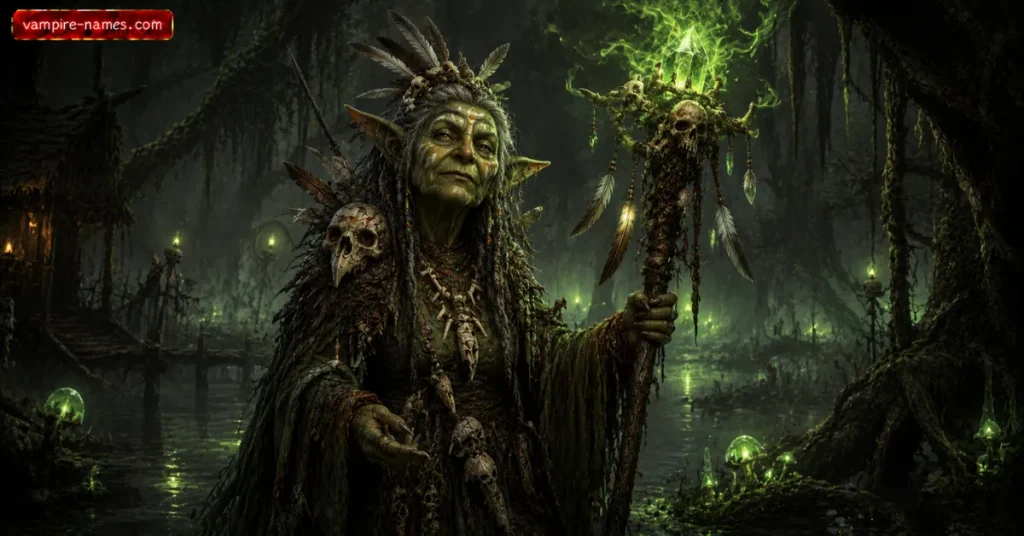
The flagship names versatile, memorable, and effective across D&D, fiction, video games, and any fantasy context. Each has been chosen for phonetic strength and genuine linguistic grounding.
Best Female Goblin Names with Meanings
| Name | Meaning / Notes |
| Grixé | Invented: hard-G goblin root + feminine -é ending — sharp, memorable, works for any goblin archetype |
| Vraska | Invented Slavic-feel: harsh consonants suggest a fierce warrior or warband leader |
| Snibbet | Invented: bouncy double-consonant pattern — ideal for comic-relief or trickster goblins |
| Zharrik | Invented: sibilant Z + hard K — works beautifully for a sly, dangerous trickster type |
| Mudflower | Compound: ironic beauty-name for a goblin — comedic when used straight, poignant when used sincerely |
| Krognora | Invented: hard consonant cluster + feminine -ora ending — excellent shaman or chieftain name |
| Pip Wartlick | Two-part comic name: short cute first name + descriptive, slightly gross surname |
| Shivara | Invented: sibilant opening suggests slyness; -ara ending softens it toward trickster-cute |
| Grubwen | Invented: ‘grub’ (larva, also goblin diet joke) + Welsh-feel ‘-wen’ ending |
| Vexnilla | Invented: ‘vex’ (to trouble) + ‘nilla’ (vanilla pun) — comedic double-meaning Fake Country Names |
| Thistlebite | Compound: nature imagery + aggression — works for a forest-dwelling goblin warrior |
| Nizzlepot | Invented: bouncy, kitchen-adjacent sound — ideal for a goblin cook or alchemist character |
| Karkasha | Invented: harsh, guttural — strong option for an evil or antagonist-tier goblin |
| Bramblewick | Compound: thorny plant + settlement suffix — works as both a personal and clan name |
| Fizzgrit | Invented: bouncy Fizz + gritty ending — perfect for a goblin tinkerer or engineer |
More Best Female Goblin Names — Quick Reference
| Grimzy | Wartle | Skitter | Bogbelle |
| Crinkle | Dritch | Ekka | Fungi |
| Grotta | Hobnib | Ickle | Jibbet |
| Kettra | Lurka | Mossbit | Nettlesnap |
| Oddwen | Piddle | Quiggle | Rikka |
| Snarla | Toadfoot | Ugla | Vinka |
Cute Female Goblin Names
Cute goblin names lean into softness, food imagery, and bouncy phonetics — perfect for friendly goblin companions, children’s fantasy, or comic-relief characters who subvert the usual goblin menace.
| Bibby | Coco Mudbelly | Dinkle | Ella Bugsworth |
| Fenna | Gigi Toadhop | Honeypaw | Iggy-Bee |
| Jelly Bean | Kiki Puddlewick | Lulubelle | Mimzy |
| Nubbin | Ollie-Pop | Peaches | Quinbee |
| Rosie Grubling | Sprinkle | Tabby Twig | Umbee |
| Vellie | Wigglet | Xoxo Bugbite | Yammy |
Fierce & Warrior Female Goblin Names
Warrior goblin names shift the phonetic register toward hard consonants and syllabic weight — names for the goblin who leads the raiding party, not the one hiding behind her.
| Name | Meaning / Notes |
| Vraska Bloodfang | Invented harsh root + descriptive surname — immediate warrior credibility |
| Krognora the Skullcracker | Full title-name format — mirrors real earned-honorific goblin naming conventions |
| Zhagra Ironhide | Sibilant opener + tough-hide surname — suggests both cunning and physical resilience |
| Grimtusk | Simple, direct, physically descriptive — the kind of name a warband would actually use |
| Warkka Deathrattle | Guttural first name + onomatopoeic surname — built for shouting across a battlefield |
| Skarza Nighthowl | Sharp K-sound + evocative wolf-adjacent surname — works for a scout or raider leader |
| Blightfang | Craghide | Dreadgrip | Emberclaw |
| Fangmarsh | Gorehowl | Hexbite | Ironjaw |
| Jaggedtooth | Krakka | Lootfist | Marrowgnaw |
Funny Female Goblin Names
Funny goblin names work through the same comedy mechanics as any pun-based naming: contrast between an impressive-sounding format and an absurd or mundane content word, plus genuine wordplay.
| Name | Meaning / Notes |
| Sir Snacksalot’s Sister | Title-mismatch comedy — borrows dignity from an implied relative for an undignified punchline |
| Griselda Von Trashheap | Aristocratic first name + garbage-adjacent surname — classic contrast-comedy structure |
| Nacho Cheese | Food-pun name — completely undignified, which is exactly the joke |
| Doom Muffin | Threat word + baked good — the tonal whiplash is the entire punchline |
| Countess Boogersnot | Noble title + deliberately gross surname — reliable comic goblin formula |
| Lady Pickled Toe | Same formula, leaning into body-horror-adjacent absurdity for maximum laughs |
| Mildew Sparklebutt | Gassy Gwendolyn | Sir Wartsalot’s Cousin | Baroness Bellyflop |
| Duchess Dungheap | Princess Puddlefart | Madame Moldybread | Empress Earwax |
Silly & Quirky Female Goblin Names
Silly goblin names don’t need a clean pun structure — pure sound-play and unexpected word combinations carry the comedy on their own.
| Ziggywoo | Bloop | Snorkelbits | Tinklefoot |
| Wobblejaw | Yankety | Chunklet | Doodlewhip |
| Flumbo | Gribblesnort | Hopscotch | Ink Blot |
| Jitterbug | Knickknack | Loopdeloop | Mishmash |
| Noodleoodle | Oopsie Daisy | Puddlejump | Quibblesnitch |
Evil & Dark Female Goblin Names
Evil goblin names lean into sibilants, guttural clusters, and the darker end of the phonosemantic spectrum — built for antagonists, cursed goblins, or trickster villains.
| Name | Meaning / Notes |
| Malzhara | Invented: ‘mal’ (evil, Latin) + harsh -zhara ending — unambiguous villain energy |
| Vexsis the Cruel | Direct ‘vex’ (trouble) root + earned epithet — works as a warband queen or cult leader |
| Nightbile | Compound: darkness + literal bile — body-horror adjacent, genuinely unsettling |
| Screxa Deathwhisper | Harsh SCR opener + ominous surname — built for a shaman-witch antagonist |
| Grimhex | Simple, dark, direct — short enough to work as both personal cute island names and epithet |
| Rotgrin | ‘Rot’ + ‘grin’ — suggests decay and cruelty simultaneously in one compact word |
| Blightmaw | Corpseweaver | Direfang | Ebonclaw |
| Festerqueen | Ghoulscratch | Hexmarrow | Ironbile |
| Jinxrot | Krethilda | Maleficara | Necrogrix |
Male Goblin Names
Male goblin names follow largely the same phonetic principles as female names minus the tendency toward feminine vowel endings — often ending on hard consonants for a rougher, blunter effect.
| Grix | Snib | Kruk | Wartle |
| Bogrik | Fizznut | Grothgar | Hobnob |
| Ickrid | Jarnak | Klug | Muck |
| Norg | Oggrim | Pug | Quirk |
| Rukk | Skab | Trog | Ugrik |
| Vrik | Wruk | Xikk | Zog |
Goblin Names by Game — D&D & Pathfinder
D&D 5e goblins are typically small, chaotic, and organized into warbands under bosses — official D&D materials favor short, punchy, consonant-heavy names. Pathfinder’s goblin lore (especially in the Pathfinder 2e goblin ancestry) leans more comedic and gleefully chaotic, with names that sound almost onomatopoeic.
D&D Goblin Names
| Klarg | Yeemik | Sildar-bane | Grol |
| Nizmik | Bratta | Chief Ripnugget | Splug |
| Vyk | Droop | Poog | Reba |
Pathfinder Goblin Names
| Bumbleboo | Chuffy | Poog | Feathertop |
| Gutwad | Squealy Nord | Mogmurch | Bimbob |
| Wormtickle | Zarelda | Bogscour | Fumblesnout |
Goblin Names by Game — WoW & BG3
World of Warcraft goblins are entrepreneurial, explosion-prone, and heavily coded with a fast-talking huckster energy — their Werewolf Names often sound like a cross between a pirate and a used-car salesman. Baldur’s Gate 3 goblins draw from D&D’s Forgotten Realms lore but lean into the game’s darker, more grounded tone.
WoW Goblin Names
| Gazlowe | Sassy Hardwrench | Trade Prince Gallywix | Millhouse Manastorm |
| Cog | Fizzle | Ziznak | Marin Noggenfogger |
| Skindle | Bilgewater Bess | Gizmo | Rustbolt Ruby |
BG3 Goblin Names
| Priestess Gut | Dror Ragzlin | Minthara-adjacent | Sazza |
| Spike | Gnarl | Ragzlin’s Kin | Kereska Zealot |
| War Chief Vrelk | Gribbo | Nadira | Kressa |
Goblin Names by Game — Warhammer, FFXIV & OSRS
Warhammer’s Greenskins lean brutal and onomatopoeic (built for shouting across a tabletop battlefield); FFXIV’s goblins are inventive tinkerers with a distinctly clockpunk naming aesthetic; OSRS (Old School RuneScape) goblins are famously simple, blunt, and often unintentionally comedic through sheer plainness.
Warhammer Goblin Names
| Grom the Paunch | Skarsnik | Gobbla | Wurrzag |
| Grimgor-adjacent | Zogwort | Snagla | Muhad |
| Grimzod | Ugbad |
FFXIV Goblin Names
| Rowena-adjacent | Cinder-Quik | Gorgagg | Splitclaw |
| Copperbelly | Widargelt | Gadgetsmith Nix | Sparkwrench |
| Tinkerbolt | Cogsprocket |
OSRS Goblin Names
| Bag | Bal | Bok | Bol |
| Bor | Bug | Bur | Buz |
| Duf | Dun | Dur | Duz |
Harry Potter Goblin Names

This is where most competitor guides fail badly they list ‘Harry Potter Goblin Names’ as a header and then populate it with generic invented names. J.K. Rowling actually named a meaningful number of goblins across the books, and Gringotts goblin culture has real internal logic worth understanding: goblin Ranch Name Generator in the Potterverse tend to be short, harsh-sounding, and consonant-heavy, deliberately contrasting with the softer, more traditionally ‘English’ names of human wizarding characters.
Real Named Goblins from the Harry Potter Books
| Name | Meaning / Notes |
| Griphook | The most prominent named goblin — a Gringotts curse-breaker who assists in the Chamber vault heist in Deathly Hallows |
| Bogrod | A senior Gringotts goblin who accompanies Harry, Ron, and Hermione into the vaults during the Deathly Hallows break-in |
| Gornuk | A goblin who fought alongside wizards against Voldemort’s forces and was later murdered by Death Eaters |
| Ragnok | Mentioned as a Gringotts goblin in Chamber of Secrets — referenced on a bank note Harry receives |
| Urg the Unclean | A historical goblin rebellion leader mentioned in the series’ background lore on goblin history |
| Ug the Unreliable | A minor background-lore goblin referenced in wizarding history texts within the series |
Harry Potter-Style Goblin Names (Following Canon Phonetic Patterns)
| Skarhook | Grindle | Nogrod | Vraghek |
| Umbrig | Torkrag | Bilehook | Skulrik |
| Wrenchgold | Gnarlfist | Coinclaw | Doomvault |
LOTR & Tolkien-Adjacent Goblin Names
Tolkien specifically distinguished between ‘goblins’ (used in The Hobbit, a more folkloric term) and ‘orcs’ (used predominantly in The Lord of the Rings, a term with its own Old English roots from ‘orcneas,’ meaning ‘demon corpses’ in Beowulf). Tolkien-adjacent goblin names favor harsh Black Speech-influenced phonetics.
| Golfimbul | Bolg | Azog-adjacent | Grishnakh-adjacent |
| Ugluk-adjacent | Muzgash | Snaga | Lugdush |
| Radbug | Gorbag-adjacent | Shagrat-adjacent | Mauhur |
Goblin Last Names & Clan Names
Goblin surnames typically derive from the tribe’s totem, territory, or founding chieftain — following the clan-structure naming convention described earlier in this guide.
| Mudroot Clan | Bloodfang Tribe | Skullgrin Warband | Toadstool Kin |
| Nightcreep Clan | Ironjaw Tribe | Bogwallow Kin | Grimspike Warband |
| Fungustooth Clan | Dreggut Tribe | Cragfoot Kin | Wartlick Clan |
Goblin Titles, Ranks & Nicknames
Following the earned-honorific naming convention, these titles often precede or entirely replace a goblin’s birth name in daily use within the tribe.
| Name | Meaning / Notes |
| Boss | The tribe leader — earned through combat prowess, cunning, or sheer force of will |
| Warboss | A boss specifically leading a military warband, common in Warhammer-influenced settings |
| Big-un | An affectionate or respectful term for an unusually large or strong goblin, regardless of birth name |
| Shaman / Witch-Doctor | The tribe’s spiritual and magical leader, often feared and respected in equal measure |
| Sneak | An earned title for a goblin skilled specifically in stealth, theft, or scouting |
| Tinker | A goblin known for mechanical skill — common in steampunk-adjacent goblin cultures |
Steampunk Goblin Names
Steampunk goblin names lean into invented mechanical and alchemical vocabulary — perfect for tinkerer, engineer, or inventor-archetype goblin characters.
| Cogsworthy | Gearlinda | Sprocketta | Bellowsina |
| Rivetrix | Steamgrix | Boltwick | Copperclank |
| Gaskettia | Pistonella | Wrenchbelle | Valvora |
Forest & Nature Goblin Names
Forest-dwelling goblin names draw from plant, fungus, and woodland vocabulary — appropriate for goblins who live in tune with (or in opposition to) the natural world.
| Mossbelle | Fernwick | Thornetta | Brambleroot |
| Toadstoolia | Lichenbark | Mushcap | Fungalinda |
| Rootsnag | Bogberry | Nettlewisp | Willowgrix |
Trickster & Mischief Goblin Names
Trickster goblin names lean on sibilants and unpredictable rhythm, fitting for characters defined by cunning, deception, or chaotic magic.
| Sneakabout | Wilyweasel | Zizzlefox | Prankster Pip |
| Quickswitch | Riddlerix | Slynara | Trixibell |
| Sly Snickers | Whimzy | Foolhollow | Jestermina |
Epic & Legendary Goblin Names
Epic goblin names carry mythic scale — for the rare goblin who becomes a legendary figure across generations of tribal storytelling.
| Name | Meaning / Notes |
| Grozdanka the World-Eater | Full epithet-name format — implies a goblin whose deeds passed into legend across many tribes |
| Uxta, First of the Deep | Suggests a founding figure of an entire goblin civilization or subterranean kingdom |
| The Nameless Empress | Withholding the name entirely, using only a title, implies mythic and possibly feared status |
| Krazgar the Undying | Suggests a goblin whose legend includes surviving what should have killed her |
| Vharshalla | Ognix the Ancient | Skarnatha | Threxilda |
| Gormundra | Vraskana the Eternal |
Ancient & Mythical Goblin Names
Ancient goblin names should feel like they predate current tribal structures entirely — names from a goblin civilization’s founding era, before recorded warband history.
| Ur-Grix | Old Mother Krath | Firstborn Nixa | Ancestor Bog |
| The Original Snib | Progenitrix | Elderroot | Founderkin Zhara |
| The First Tinker | Grandmother Grothilde |
Goblin Name Generator Formula
A repeatable formula for building your own authentic-feeling goblin name.
Step 1: Choose Your Archetype
Cute/comic, fierce warrior, evil/dark, or trickster — each has a distinct phonetic toolkit as described in the phonosemantics section above.
Step 2: Build the Root
Cute: short, bouncy CVC syllables (Snib, Pip, Dink). Fierce: hard consonant clusters (Vrask, Krog, Grim). Evil: sibilants plus dark vocabulary (Vex, Rot, Hex, Mal). Trickster: unpredictable rhythm plus S/SH sounds (Shiv, Sly, Slink).
Step 3: Add a Feminine Ending (Optional)
For female-coded names specifically, add -a, -i, -e, or -ella/-ilda to your root: Grix becomes Grixa or Grixilda. This isn’t mandatory — hard-consonant endings work great for fierce or evil archetypes too — but it’s a reliable technique when you want a clearly feminine-reading name.
Step 4: Add a Descriptive Surname or Title
Physical trait (Ironhide, Bloodfang), behavior (Sneakabout, Doomwhisper), or origin (of the Mudroot Clan, Boss of the Bogwallow Kin). This grounds the personal Monk names in the clan-structure naming convention real fantasy goblin cultures use.
Frequently Asked Questions About Female Goblin Names
Q: What are good female goblin names?
Strong female goblin names combine a punchy root with either a feminine-coded ending or a descriptive surname: Grixé, Vraska, Krognora, Zhagra Ironhide, Mudflower. The best names match your goblin’s archetype — cute and bouncy for comic relief, harsh and consonant-heavy for warriors, sibilant and unpredictable for tricksters. Real goblin naming, across most fantasy traditions, also often includes an earned title (Boss, Shaman, Big-un) that functions alongside or instead of the birth name.
Q: What are goblin names for females specifically, as opposed to male goblin names?
Female goblin names most often differ from male goblin names through a final vowel ending (-a, -i, -e, or -ella/-ilda), which is a consistent pattern across many fantasy naming traditions even though it’s not a strict rule. Compare ‘Grix’ (reads masculine or neutral) to ‘Grixa’ or ‘Grixilda’ (reads feminine). Beyond the ending, the same phonetic toolkits apply to both genders — cute, fierce, evil, and trickster archetypes work identically regardless of the goblin’s gender.
Q: What are funny goblin names?
The best funny goblin names use contrast comedy: an impressive-sounding title (Sir, Lady, Countess, Baroness) paired with a deliberately undignified or gross surname (Trashheap, Boogersnot, Bellyflop, Pickled Toe). Food-pun names (Nacho Cheese, Doom Muffin) also work well through pure tonal whiplash. The comedy mechanic is the same one that powers funny detective and clown names: set up dignity, then undercut it.
Q: Where do goblin names come from in real mythology?
The word ‘goblin’ itself likely comes from Old French ‘gobelin,’ a household spirit recorded near Evreux, Normandy around 1141, possibly rooted in the Greek ‘kobalos’ (a rogue or trickster spirit) or connected to the German ‘kobold.’ A separate Welsh tradition gives us ‘coblynau,’ mine-dwelling spirits about eighteen inches tall. ‘Hobgoblin’ adds ‘hob’ (a rustic form of Robert/Robin) to the goblin root, originally denoting a friendlier, more domestic spirit than a true goblin.
Q: What are the Harry Potter goblin names?
J.K. Rowling named several goblins across the Harry Potter series: Griphook (the most prominent, a Gringotts curse-breaker who assists in the Deathly Hallows vault heist), Bogrod (a senior Gringotts goblin present during the same break-in), Gornuk (a goblin who fought against Voldemort’s forces and was later killed), Ragnok (referenced on a Gringotts bank note in Chamber of Secrets), and Urg the Unclean (a historical goblin rebellion leader mentioned in background lore). Canon goblin names in the series consistently use short, harsh, consonant-heavy sounds.
Q: What are D&D goblin names?
Official D&D goblin names from published materials include Klarg, Yeemik, Grol, Nizmik, Bratta, Chief Ripnugget, and Splug — typically short, punchy, and consonant-heavy, reflecting D&D goblins’ chaotic, warband-based social structure. For original D&D goblin names, follow the same phonetic pattern: one or two syllables, hard consonants, minimal vowel softening.
Q: What are cute goblin names for a friendly character?
Cute goblin names lean into softness, food imagery, and bouncy double-consonant patterns: Bibby, Dinkle, Honeypaw, Jelly Bean, Mimzy, Nubbin, Sprinkle, Wigglet. These work well for friendly companion goblins, children’s fantasy fiction, or any character meant to subvert the usual goblin-menace expectation.
Q: What are evil goblin names for a villain?
Evil goblin names use sibilants (S, SH, Z) and guttural consonant clusters to suggest slyness and menace: Malzhara, Vexsis the Cruel, Nightbile, Screxa Deathwhisper, Grimhex, Rotgrin. Combining a harsh root with a dark descriptive surname (Deathwhisper, Bloodfang, Corpseweaver) works especially well for a goblin antagonist meant to be taken genuinely seriously rather than played for comedy.
Q: How do goblin clans and surnames work in fantasy lore?
Most developed fantasy goblin cultures organize around tribes or clans rather than nuclear families, and a goblin’s surname typically derives from the tribe’s totem animal, home territory, or founding chieftain — examples include Mudroot Clan, Bloodfang Tribe, or Ironjaw Tribe. Titles are earned rather than inherited and often replace the personal name in daily use: a tribe leader becomes ‘Boss,’ a spiritual leader becomes ‘Shaman,’ and an unusually large goblin might simply be called ‘Big-un’ regardless of their birth name.
Q: How do I create my own unique goblin name?
Choose your goblin’s archetype first (cute, fierce, evil, or trickster), then build a root using the matching phonetic toolkit: bouncy CVC syllables for cute, hard consonant clusters for fierce, sibilants plus dark vocabulary for evil, unpredictable rhythm with S/SH sounds for trickster. Add a feminine ending (-a, -i, -e) if desired, then attach a descriptive surname or earned title reflecting the goblin’s physical trait, behavior, or clan origin. This produces a name that’s both original and internally consistent with real fantasy goblin naming logic.
Conclusion
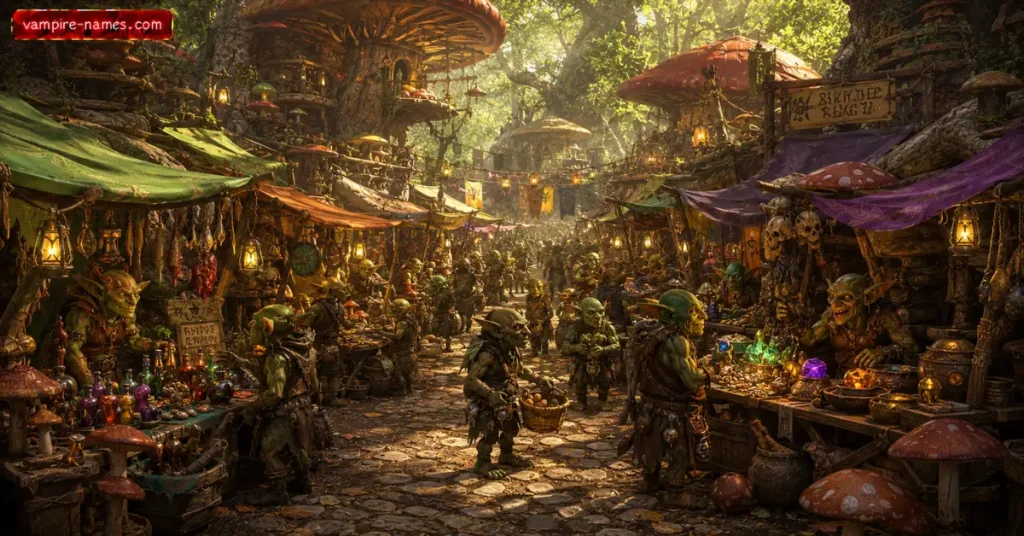
A great female goblin name does real work before your character has said a word — it signals whether she’s the comic relief, the warband leader, the sly trickster, or something far more dangerous than her small stature suggests. The 800+ names in this guide span every archetype, every major game system, and genuine mythological roots stretching back to 12th-century Normandy.
Use the phonosemantic principles to build your own names that match your specific character’s role. Use the clan and title conventions to add believable social texture. And remember: the goblin tradition has always been about subverting expectations — the creature everyone underestimates turning out to be exactly the one worth watching. Give her a name that earns that reversal.
“Never underestimate anyone whose name you can’t quite pronounce on the first try.”