The Complete Guide to Wild West, Gunslinger, Bandit & Legendary Criminal Names
Wild West | Gunslingers | Train Robbers | Gang Names | Nicknames | International Bandits
| 700+Total Names | 12Outlaw Types | 50+Historical Figures | USA / Mexico / Australia / EnglandEras & Regions |
700+ Outlaw Names: The Complete Guide to Wild West, Gunslinger, Bandit & Legendary Criminal Names
An outlaw’s name was always two things at once: the name their mother gave them and the name the legend gave them back. Jesse James was born Jesse Woodson James. Billy the Kid was born William Henry McCarty Jr., though he sometimes went by William Bonney. ‘Doc’ Holliday was John Henry Holliday, DDS. The name on the wanted poster was almost never the whole story and usually not even the beginning of it.
Outlaw naming in the American West was a specific social phenomenon with its own logic. Nicknames were earned through particular incidents, physical characteristics, places of origin, or crimes committed. The alias protected the outlaw’s family back East. The moniker built the legend faster than any newspaper could. And occasionally the name was given by enemies as an insult that the outlaw wore as a badge: ‘Billy the Kid’ was probably first used mockingly, referring to his youth and slight build. He died at twenty-one, having killed eight men.
This guide covers 700+ outlaw names across 26 categories historical Wild West figures with real biographical context, gunslingers as a distinct naming tradition, train robbers, bank robbers, cattle rustlers, border bandits, outlaw nicknames, gang Vampire Names, female outlaws, international bandits (Mexican bandidos, Australian bushrangers, English highwaymen), Native American warrior-outlaw figures, fictional outlaws from film and literature, DnD rogue names, and five construction methods for building your own outlaw name. Most guides give you a list. This one gives you the history that makes the list meaningful.
How Real Outlaws Got Their Names — The Social Mechanics of Frontier Naming
The American frontier had its own naming culture — informal, practical, and often brutally descriptive. In settled society, you were given a name by your parents and kept it. On the frontier, you earned names, were given names by others, and sometimes chose names to replace the ones you’d left behind.
There were five primary ways outlaws acquired their names on the frontier:
- The Incident Name — named for something specific they did or survived. ‘Deadwood Dick’ was named for the Deadwood, Dakota Territory area where he operated. ‘One-Eyed Jack’ is self-explanatory. These names were news reports compressed into a label.
- The Physical Description — the most common type. Billy the Kid (young and small), Black Bart (dark complexion and brooding demeanor), Red Buck (red hair). The physical trait became the identifying feature when photographs were rare and description was the primary identification tool.
- The Origin Name — where a man came from when he’d rather not say his real name. ‘Texas Jack’, ‘Arkansas Tom’, ‘The Kansas City Kid’. The geography replaced the biography.
- The Skill or Weapon Name — what they were known for doing. ‘Shootist’, ‘Gunhawk’, ‘Quick Draw’, ‘Fast Draw’. These City Name Ideas were simultaneously a reputation and a warning.
- The Self-Given Alias — chosen deliberately to break from the past. Many outlaws adopted entirely new identities after leaving home, serving prison time, or moving to a new territory. Butch Cassidy was born Robert LeRoy Parker; ‘Cassidy’ came from a mentor named Mike Cassidy, ‘Butch’ from his time working as a butcher.
The Outlaw Alias — Why They Changed Their Names & What It Protected
The alias was one of the most important survival tools available to a frontier outlaw. This isn’t obvious until you think about who outlaws left behind when they went wrong: families, sometimes wives and children, often parents who ran small farms or businesses in respectable communities. The wanted poster bearing ‘Jesse James’ protected the James family in Clay County, Missouri — his mother Zerelda could claim the wanted man was a stranger, even though everyone knew.
There’s also the practical reality that 19th-century law enforcement depended almost entirely on physical description and eyewitness testimony. Photographs were expensive and rare. A man who changed his name and moved two states over was genuinely difficult to trace. The alias gave a wanted man a running start.
What’s interesting here is that many outlaw aliases became more famous than the real names. ‘Billy the Kid’ is immediately recognised; ‘William H. Bonney’ (itself probably an alias) is a footnote. ‘Butch Cassidy’ is a cultural touchstone; ‘Robert LeRoy Parker’ is trivia. The alias outlasted the man and became the legend — which is exactly what the best outlaw names do in fiction too.
Famous Historical Outlaw Names with Full Context
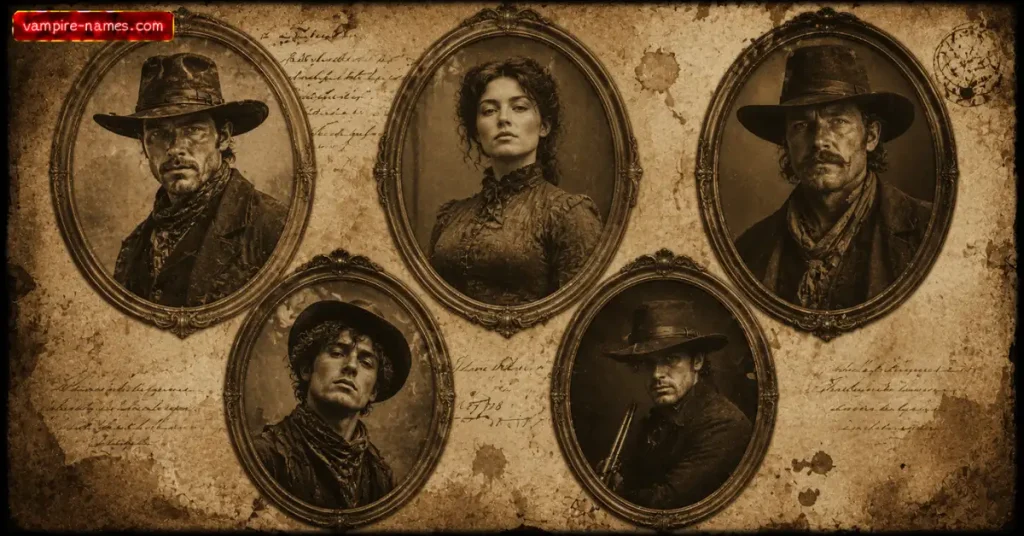
These are the real people their actual names, their aliases, and the stories behind both. Understanding these figures is essential for building convincing fictional outlaws, because the real ones were far more complex than legend allows.
| Name | Notes / Story |
| Jesse James (1847–1882) | Born Jesse Woodson James. Confederate guerrilla turned bank and train robber. Leader of the James-Younger Gang. Shot in the back of the head by Robert Ford, a gang member, for the reward money. His death made him a martyr. |
| Billy the Kid (William Bonney, c.1859–1881) | Real name possibly William Henry McCarty Jr. Used ‘William Bonney’ as an alias. ‘Kid’ referenced his youth — he was seventeen when he killed his first man. Shot by Sheriff Pat Garrett in Fort Sumner, New Mexico. |
| Butch Cassidy (Robert LeRoy Parker, 1866–1908?) | ‘Butch’ from his time working as a butcher. ‘Cassidy’ from mentor Mike Cassidy. Led the Wild Bunch. Fled to South America with the Sundance Kid. Fate disputed — possibly died in Bolivia, 1908, possibly survived. |
| Sundance Kid (Harry Alonzo Longabaugh, 1867–1908?) | Named for Sundance, Wyoming, where he served eighteen months in jail for horse theft — his first and only conviction. The name of the town became his identity. |
| Black Bart (Charles Earl Bowles, 1829–1888?) | A stagecoach robber who left poetry at the scenes of his crimes. Named ‘Black Bart’ by Wells Fargo detectives after a villain in a dime novel. Never fired his shotgun during any robbery — it may have been unloaded. |
| Belle Starr (Myra Maybelle Shirley, 1848–1889) | Called ‘The Bandit Queen’ by newspapers that dramatically inflated her criminal career. She was convicted once, for horse theft. She was murdered in 1889, two days before her 41st birthday; the killer was never identified. |
| John Wesley Hardin (1853–1895) | Possibly the deadliest gunfighter of the era — claimed to have killed 42 men, most likely an exaggeration. Named after the Methodist founder John Wesley by his preacher father. Shot in the back of the head by a lawman he’d threatened. |
| Doc Holliday (John Henry Holliday, 1851–1887) | A trained dentist from Georgia who went west for his tuberculosis. ‘Doc’ referred to his medical degree. Friend of Wyatt Earp. Present at the Gunfight at the O.K. Corral, October 26, 1881. |
| Calamity Jane (Martha Jane Cannary, 1852–1903) | ‘Calamity’ may have come from her warning that calamity befalls those who offend her, or from a specific incident — accounts vary. A frontierswoman who worked as a scout, performed in Wild West shows, and mythologised her own life. |
| Pearl Hart (1871–1955?) | One of the last stagecoach robbers in American history — her 1899 robbery in Arizona was possibly the last of its kind. Acquitted by an all-male jury who refused to convict a woman, then convicted again on a retrial. |
| Etta Place | An associate of Butch Cassidy and the Sundance Kid — followed them to South America. Real identity unknown; ‘Etta Place’ may be an alias. One of the great mysteries of the outlaw era. |
| Sam Bass (1851–1878) | A Texas outlaw who graduated from cattle theft to train robbery. His robbery of the Union Pacific’s No. 4 train in Big Springs, Nebraska — yielding $60,000 in gold — was one of the largest train robberies of the era. |
| Cole Younger (1844–1916) | Leader of the Younger Brothers gang, allied with Jesse James. Participated in the disastrous Northfield, Minnesota bank raid (1876) where three gang members were killed and the Youngers captured. |
| Tom Horn (1860–1903) | A complex figure — army scout, Pinkerton detective, and finally a hired killer for cattle barons. Executed for the murder of a fourteen-year-old boy, though evidence was disputed. His last words were allegedly ‘That’s awful.’ |
| Bill Dalton (1863–1894) | Member of the Dalton Gang and later leader of the Doolin-Dalton Gang. Shot by a deputy while wanted for bank robbery. His wife watched from the window. |
Wild West Male Outlaw Names
Male outlaw names in the Wild West tradition follow specific phonetic patterns — they’re short, they’re tough, and they often contain a physical or occupational element. The best Wild West male outlaw names could have appeared on an actual wanted poster.
| Jesse | Frank | Cole | Bob |
| Emmett | Grat | Bill | Jim |
| Hank | Buck | Clay | Rafe |
| Silas | Clem | Jed | Zeke |
| Amos | Eli | Caleb | Seth |
| Virgil | Morgan | Warren | Wyatt |
| Doc | Kid | Ace | Deuce |
| Slim | Red | Black | Blue |
| Curly | Shorty | Lefty | Righty |
| Tex | Arky | Okie | Kansie |
| Durango | Tucson | Laramie | Abilene |
| Tombstone | Deadwood | Dodge | Waco |
| Dakota | Montana | Nevada | Arizona |
| Dusty | Sandy | Rocky | Stoney |
| Ironside | Steelhand | Quickdraw | Deadshot |
| Coldwater | Blackwater | Drywater | Firewater |
Female Outlaw Names — The Forgotten Legends
Female outlaws of the Wild West are consistently underrepresented in most name guides — and they deserve much better. The women who operated outside the law in the frontier era were doing so in a society where their options were severely constrained: marry, work as a domestic, or teach school. The ones who chose the outlaw life did so with full knowledge of what it meant, and several of them built reputations that outlasted those of their male contemporaries.
| Name | Notes / Story |
| Belle Starr | ‘The Bandit Queen’ — more legend than fact, but the legend itself is extraordinary. Born Myra Maybelle Shirley. |
| Pearl Hart | The last stagecoach robber. Cut her hair, dressed as a man, robbed the stage — and became famous for it. |
| Calamity Jane | Martha Jane Cannary — frontierswoman, scout, performer. Named herself into legend. |
| Etta Place | The most mysterious woman of the outlaw era — her real identity remains unknown. |
| Laura Bullion | Member of the Wild Bunch. Served five years for robbery — the last Wild Bunch member to be imprisoned. |
| Annie McDougal (Cattle Annie) | A teenage outlaw who ran with the Doolin-Dalton Gang. Caught and sentenced to reform school. |
| Jennie Metcalf (Little Britches) | Annie McDougal’s partner. Also caught and sent to reform school. Both were teenagers when convicted. |
| Rose of the Cimarron | A mysterious figure associated with the Doolin-Dalton Gang — may have passed ammunition to her outlaw lover during a gunfight. |
| Belle Shirley (different from Belle Starr) | A separate figure sometimes conflated with the more famous Belle. |
| Myra Maybelle Shirley | Belle Starr’s actual name — itself worth using as a fictional outlaw name for its complexity. |
Female outlaw names for fiction — inspired by the frontier tradition:
| Calamity | Dusty Belle | Prairie Rose | Wild Kate |
| Shotgun Sally | Deadwood Dora | Frontier Faye | Mesa Mae |
| Outlaw Annie | Bandit Bess | Rustler Ruth | Raider Rosie |
| Iron Maggie | Steel Sarah | Stone Jane | Flint Flora |
| Red Molly | Black Betty | Grey Gracie | White Willa |
| Quickshot Quinn | Deadeye Dolly | Sharpeye Sue | Straightshot Stella |
| Dakota Dee | Montana May | Nevada Nell | Arizona Addie |
| Mesa Maude | Canyon Kate | Valley Vee | Ridge Ruth |
Gunslinger Names — A Distinct Tradition
The gunslinger is a distinct figure from the outlaw — one was defined primarily by their relationship to the law, the other by their relationship to their weapon. Many gunslingers worked both sides of the law (Wyatt Earp, Wild Bill Hickok, Pat Garrett) and their Clown Names reflect a different quality: speed, accuracy, reputation, and the specific kind of cold competence that made a man dangerous.
Gunslinger names tend to be short, precise, and carry a specific physical or skill element. They’re often two-syllable names with one hard consonant — names that could be said quickly, the way you’d call a warning.
| Name | Notes / Story |
| Wild Bill Hickok (James Butler Hickok) | ‘Wild Bill’ — possibly from ‘Duck Bill’ (his nickname for his unusual lip shape) evolved into ‘Wild Bill’. Shot while playing poker in Deadwood, 1876 — the dead man’s hand: aces and eights. |
| Wyatt Earp (1848–1929) | One of the few gunfighters who actually lived to old age. The name ‘Earp’ is English — from Old English ‘earp’ (dark-complexioned). |
| Doc Holliday | A dentist. The most famous gunfighter with a professional credential other than ‘gunfighter’. |
| Pat Garrett (1850–1908) | The man who shot Billy the Kid. Was himself shot — by a man in a land dispute who was acquitted. The law killed the outlaw killer. |
| Bat Masterson (William Barclay Masterson) | ‘Bat’ possibly from ‘Bartholomew’. A lawman, gambler, and later sports journalist for the New York Morning Telegraph. |
| John Slaughter (1841–1922) | Sheriff of Cochise County, Arizona. A tiny man — 5’6″ — whose reputation for absolute mercilessness made him one of the most effective lawmen of the era. |
| Dallas Stoudenmire (1845–1882) | El Paso City Marshal. Killed four men in eleven seconds in what became known as the Four Dead in Five Seconds Gunfight. |
| Clay Allison (1840–1887) | Known as the ‘Wolf of the Washita’. Died when he fell from his wagon and it ran over his head — not in a gunfight. |
| John King Fisher (1854–1884) | A Texas outlaw turned lawman. Shot alongside Ben Thompson at the Vaudeville Variety Theater in San Antonio. |
| Ben Thompson (1843–1884) | A professional gambler and hired gunfighter. Shot alongside King Fisher. |
| Luke Short (1854–1893) | A gambler and gunfighter known for his accuracy. His real name was actually Luke Short. |
| Mysterious Dave Mather | Used ‘Mysterious’ as a self-given first name. Served as a lawman in multiple territories. His later life is genuinely unknown. |
Fictional gunslinger names for stories and games:
| Ace Coldwater | Deadeye Dex | Quickdraw Quinn | Ironhand Jake |
| Steeleye Sam | Stoneheart Cole | Flintlock Finn | Smokebore Slade |
| Six-Shot Seth | Fivebullet Frank | Fourgun Ford | Threeshot Thad |
| Dusty Graves | Sandy Death | Rocky End | Stoney Last |
| Black Canyon | Red Gulch | Grey Mesa | White Flats |
| Sundown Walker | Midnight Rider | Dawnbreak Drifter | Dusk Watcher |
| The Wanderer | The Drifter | The Stranger | The Unknown |
| No Name | Without Past | Clean Slate | Fresh Start |
Train Robber Names
Train robbery was the signature crime of the post-Civil War American West — a crime that was only possible because the railroad had created a new kind of mobile wealth. The names of train robbers carry a specific flavour of audacity and technical daring: these were men who stopped something that weighed hundreds of tons and was supposed to be unstoppable.
| Name | Notes / Story |
| Jesse James | The James-Younger Gang robbed their first train in 1873 in Adair, Iowa. They went on to rob more trains than any other gang of the era. |
| Butch Cassidy & the Wild Bunch | Their 1899 robbery of the Union Pacific’s Overland Flyer near Wilcox, Wyoming netted $50,000 and became one of the most famous train robberies in history. |
| Sam Bass | His 1877 Big Springs train robbery of the Union Pacific’s No. 4 yielded $60,000 in gold coins — one of the largest train robberies ever. |
| The Reno Brothers | John, Frank, Simeon, and William Reno committed the first peacetime train robbery in American history on October 6, 1866, in Indiana. |
| Black Jack Ketchum (Thomas Edward Ketchum) | Robbed the same train four times. Was caught on the fourth attempt. Became the only man executed in New Mexico for train robbery. The hanging went wrong and decapitated him. |
| Al Jennings | A lawyer turned train robber — probably the least competent train robber of the era, failing multiple attempts before being captured. |
| Evans and Sontag Gang | California train robbers who became folk heroes despite being ruthless criminals. |
| The Farrington Brothers | Levi and Hilary Farrington — early train robbers who were caught relatively quickly. |
Fictional train robber names:
| Rail Jack | Track Tommy | Engine Ed | Boiler Bill |
| Throttle Thad | Brake Ben | Signal Sam | Switch Sid |
| Iron Rails Riley | Steel Track Stace | Rust Rail Randy | Coal Car Cody |
| Express Eli | Freight Frank | Cargo Cal | Haul Harvey |
| Locomotive Luke | Tender Tommy | Caboose Cal | Boxcar Bob |
| Night Train Ned | Midnight Mail Max | Dawn Express Dan | Dusk Departure Dave |
| Stop Sign Steve | Red Light Ray | Green Flag Gary | Lantern Larry |
| Gold Car George | Silver Load Seth | Cash Haul Charlie | Money Car Mack |
Bank Robber Names
Bank robbery was the other great crime of the frontier era — and unlike train robbery, it continued well into the 20th century. The Depression-era bank robbers (Dillinger, Pretty Boy Floyd, Bonnie and Clyde) brought the tradition forward into modern folk legend.
| Dillinger | Pretty Boy Floyd | Baby Face Nelson | Machine Gun Kelly |
| Bonnie Parker | Clyde Barrow | Ma Barker | Alvin Karpis |
| Jesse James | Cole Younger | Bob Dalton | Emmett Dalton |
| Butch Cassidy | Kid Curry | Flat Nose Curry | News Carver |
| Tom Ketchum | Dave Rudabaugh | Dutch Henry Born | Red Sash Gang |
| John Dillinger | Homer Van Meter | Harry Pierpont | Charley Makley |
| Vault Victor | Safe Sam | Teller Tommy | Window Wally |
| Inside Man Ivan | Getaway Gary | Wheelman Walt | Lookout Larry |
| Smooth Talker Stan | Distraction Dan | Cover Man Carl | Door Guard Dave |
| Ten Second Ted | Ninety Second Nick | Two Minute Tom | Quick Job Jake |
Cattle Rustler & Ranch Outlaw Names
Cattle rustling was the most economically significant crime of the Western frontier — and the one most likely to result in extrajudicial execution. Ranch owners hired private detective agencies (the Pinkertons most famously) and sometimes formed their own vigilante groups. The Johnson County War in Wyoming (1892) was essentially a conflict between large cattle operators and small ranchers/homesteaders, with rustling accusations as the trigger.
| Brand Burner | Iron Changer | Mark Maker | Brand Blotter |
| Maverick Man | Stray Catcher | Drift Rider | Range Rider |
| Nighthawk | Moonrider | Starlight Sam | Shadow Rider |
| Rope Artist | Loop Expert | Lasso Luke | Twirl Thad |
| Cut Ear Cal | Notch Knife Ned | Brand Iron Bob | Running Iron Ray |
| Rustler Rick | Thief of Range | Range Pirate | Prairie Pirate |
| Herd Hunter | Bunch Gatherer | Drive Master | Trail Cutter |
| Water Hole Wes | Grass Grabber Gary | Range Stealer Ron | Pasture Pirate Pete |
| Johnson County Jack | Wyoming Wild | Montana Maverick | Texas Thief |
| Border Rider | Line Crosser | Fence Jumper | Gate Buster |
Border Bandit & Desperado Names
The Texas-Mexico border was one of the most lawless regions in North American history — a zone where American, Mexican, and various indigenous legal systems overlapped, contradicted each other, and frequently produced violent confrontations. Border bandits operated in this ambiguity, often seen as criminals on one side of the border and heroes on the other.
| Name | Notes / Story |
| Juan Cortina (Cheno Cortina, 1824–1894) | A Mexican landowner who became a border raider after American settlement displaced his family’s cattle land. Called ‘Red Robber of the Rio Grande’ by Anglo Texans, ‘El Cheno’ by his supporters. |
| Gregorio Cortez (1875–1916) | A Texas sharecropper who shot a sheriff in self-defense and evaded hundreds of posse members for ten days. His story was told in the corrido tradition and inspired the film ‘The Ballad of Gregorio Cortez’. |
| Pancho Villa (Doroteo Arango, 1878–1923) | Adopted the name ‘Francisco (Pancho) Villa’. A revolutionary general who became a bandit, a folk hero, and the only person to mount a military attack on United States soil since the War of 1812. |
| Catarino Garza (1859–1895) | A Mexican-American journalist who launched a guerrilla uprising against the Mexican government from Texas soil. Called a bandit by American authorities, a patriot by his followers. |
| Joaquin Murrieta (c.1829–1853) | A California Gold Rush figure — possibly composite of several different outlaws — who became the model for the Zorro legend. |
| Tiburcio Vasquez (1835–1875) | A California bandit who saw himself as a social revolutionary against Anglo settlement. Hanged in San Jose. |
| Three-Fingered Jack (Manuel Garcia) | Murrieta’s legendary lieutenant — real or mythological, his name became synonymous with border banditry. |
| El Chato | A common border bandit alias — ‘the flat-nosed one’. Used by multiple different individuals. |
Outlaw Nicknames — How the Frontier Named Its Criminals
The nickname tradition in outlaw culture is its own art form. These Ranch Name Generator were built from the five sources described earlier (incident, physical description, origin, skill, self-given) and each one tells a story in a single word or phrase.
| Name | Notes / Story |
| Black Bart | A stagecoach robber named by Wells Fargo detectives after a fictional dime novel villain. Real name Charles Earl Bowles. |
| Billy the Kid | Named mockingly for his youth. He was seventeen at his first killing. The mocking became legend. |
| The Sundance Kid | Named for the Wyoming town where he served his only prison sentence — for horse theft. |
| Deadwood Dick | Nat Love — a Black cowboy and showman who claimed the name; also a dime novel character. Both real and fictional. |
| Calamity Jane | Named herself or was named for the calamity she claimed would befall anyone who offended her. |
| Wild Bill | Started as ‘Duck Bill’ (his protruding lower lip) and evolved into ‘Wild Bill’ through a specific violent incident in Nebraska. |
| Mysterious Dave | Dave Mather used ‘Mysterious’ as a first name — and then genuinely vanished into history, his later life completely unknown. |
| Black Jack | Several different outlaws used this name — most famously Thomas ‘Black Jack’ Ketchum, for his dark complexion. |
| Kid Curry (Harvey Logan) | ‘Kid’ for youth; ‘Curry’ from Flat Nose George Curry, his mentor. One of the most dangerous members of the Wild Bunch. |
| Three-Gun Terry | A nickname implying multiple concealed weapons — a combination of fear and practicality. |
| Dirty Dave Rudabaugh | Named for his personal hygiene, which was apparently notable even by frontier standards. |
| Flat Nose George (George Curry) | Named for his most distinctive physical feature — broken flat nose. |
| Dynamite Dick (Charles Clifton) | Member of the Doolin-Dalton Gang, named for his preferred tool. |
| Little Dick West (Richard West) | Member of the Doolin Gang — ‘Little’ for his small stature, distinguished from other Dicks in the gang. |
| Cock-eyed Frank Loving | A lawman-turned-outlaw whose nickname referenced his wandering eye. |
More outlaw nicknames for fiction:
| One Eye | Two Guns | Three Fingers | Four Scars |
| Quick Draw | Dead Shot | Sure Kill | Fast Hand |
| Iron Jaw | Steel Gut | Stone Heart | Cold Blood |
| Dusty Roads | Sandy Graves | Rocky Death | Stony End |
| Midnight Rider | Dusk Drifter | Dawn Raider | Noon Killer |
| Empty Holster | Full Chamber | Loaded Dice | Stacked Deck |
| Crooked Deal | Marked Card | False Bottom | Hidden Ace |
| Long Odds | Short Fuse | No Mercy | Last Chance |
| Ghost Rider | Shadow Drifter | Phantom Raider | Specter Rider |
| Dead Man | Walking Corpse | Living Ghost | Future Grave |
Western Gang Names & Aliases

Gang naming in the Wild West followed its own conventions. Most gangs were named by newspapers or law enforcement rather than by themselves the James-Younger Gang, the Dalton Gang, the Doolin-Dalton Gang. Some had self-given names with specific cultural significance: the Wild Bunch (Butch Cassidy’s gang) named themselves with deliberate theatricality.
| Name | Notes / Story |
| The James-Younger Gang | Named for its two leading families — Jesse and Frank James, and the four Younger brothers. Active 1866–1876. |
| The Wild Bunch (Hole-in-the-Wall Gang) | Butch Cassidy’s crew — named both ‘the Wild Bunch’ and ‘the Hole-in-the-Wall Gang’ after their Wyoming hideout. |
| The Dalton Gang | Three Dalton brothers who transitioned from US Marshals to outlaws. Destroyed at Coffeyville, Kansas in 1892. |
| The Doolin-Dalton Gang | Bill Doolin and Bill Dalton’s crew, assembled after the Coffeyville disaster. Also called ‘The Oklahoma Long Riders’. |
| The Bloody Bill Anderson Gang | Confederate guerrillas who became outlaws — among the most violent of the post-Civil War era. |
| The Salt Lake Bandits | A loosely organized group of Mormon-area outlaws in the 1870s. |
| The Rufus Buck Gang | A multiracial gang operating in Indian Territory in 1895 — their five-day crime spree ended in mass capture and execution. |
| The Sam Bass Gang | A Texas train robbery gang active in 1877–1878. |
| The Innocents | A criminal gang operating in the Montana Territory in the early 1860s — their leader was Sheriff Henry Plummer, who was hanged by vigilantes. |
| The San Francisco Vigilance Committee | A self-styled ‘law enforcement’ gang that operated outside actual law in 1850s San Francisco. |
Fictional gang names for stories, games, and DnD:
| The Dustborn Riders | The Iron Canyon Gang | The Red Gulch Boys | The Black Mesa Crew |
| The Desert Wolves | The Prairie Dogs (ironic) | The Sand Vipers | The Rock Scorpions |
| The Night Riders | The Dusk Raiders | The Midnight Crew | The Dawn Breakers |
| The Unmarked Men | The No-Names | The Forgotten Faces | The Unknown Riders |
| The Broken Spurs | The Rusted Colts | The Bent Barrels | The Empty Chambers |
| The Last Outlaws | The Final Riders | The End of the Road Gang | The Last Chance Crew |
| The Bloodless | The Quietly Dangerous | The Politely Lethal | The Professionally Violent |
| The Wanted Few | The Hunted Many | The Chased Always | The Caught Never |
Outlaw Gang Leader Names
Gang leader names carry additional weight — they need to project command authority, personal danger, and the specific quality of someone who has convinced other dangerous people to follow them. These names are built for leadership.
| Jesse James | Butch Cassidy | Bill Doolin | John Dillinger |
| Cole Younger | Sam Bass | Black Jack Ketchum | Kid Curry |
| Pancho Villa | Joaquin Murrieta | Catarino Garza | Juan Cortina |
| Captain Thunderbolt | Captain Moonlite | Ned Kelly | Ben Hall |
| Iron Hand Isaac | Steeljaw Solomon | Coldwater Caleb | Stoneface Stephen |
| The Colonel | The General | The Major | The Captain |
| Boss of the Range | King of the Gulch | Lord of the Mesa | Duke of the Desert |
| The Old Man | The Patriarch | The Chief | The Head |
| Ringleader Ray | Mastermind Mike | Planner Pete | Organizer Owen |
| The Quiet One | The Loud One | The Smart One | The Dangerous One |
| Underboss Umberto | Second-in-Command Sam | Lieutenant Luke | Right Hand Roy |
| The Decision Maker | The Last Word | The Final Say | The Absolute |
Classic Cool Outlaw Names
Cool outlaw names have a specific quality — they sound like someone you’d remember from a poker game or a bar fight, someone whose name the town would still be talking about six months later.
| Rafe Coldwater | Silas Dusk | Clem Ironside | Jed Steele |
| Buck Graves | Hank Stone | Clay Rivers | Zeke Flint |
| Colt Ranger | Winchester Wade | Remington Ray | Derringer Dan |
| Bowie Blade | Spur Jack | Rope Riley | Saddle Seth |
| Drift Walker | Range Rider | Trail Blazer | Border Crosser |
| Long Ride Lenny | Short Fuse Fred | Cold Trail Carl | Hot Lead Henry |
| Dead End Dave | Blind Canyon Cole | Lost Pass Luke | Faded Trail Fred |
| Sundown Sam | Moonrise Mike | Starfall Steve | Dawnbreak Dan |
| Cactus Pete | Sagebrush Steve | Tumbleweed Tom | Dry Creek Dick |
| Mesa Jake | Canyon Cole | Gulch Gary | Ravine Ray |
| Outlaw Jack | Bandit Bob | Rustler Roy | Raider Randy |
| Wanted Walt | Hunted Harry | Chased Charles | Pursued Percy |
Badass Outlaw Names
Badass outlaw names project danger without explaining it. They’re names that make a poker table go quiet when the man sits down. Short, hard consonants, minimal syllables.
| Dread | Ruin | Wrath | Spite |
| Vex | Hex | Bane | Plague |
| Havoc | Chaos | Carnage | Reck |
| Iron | Steel | Flint | Stone |
| Blood | Bone | Ash | Dust |
| Scar | Brand | Mark | Cut |
| Cold | Dark | Black | Dead |
| Grim | Grit | Hard | Blunt |
| Doom | Dusk | Dark | Deep |
| Last | Final | End | Done |
| Killshot | Deadeye | Quickdraw | Ironhand |
| Steelclaw | Stoneheart | Coldblood | Blackheart |
| No Mercy Jake | Last Warning Will | Final Word Frank | Done Talking Dave |
| Walk Tall Wade | Stand Fast Fred | Hold Ground Greg | Never Back Ned |
| Take It All Terry | Leave Nothing Lee | Burn It Down Bob | Start Over Sam |
| The Inevitable | The Unstoppable | The Relentless | The Absolute |
Good Outlaw / Antihero Names
The outlaw antihero is one of fiction’s most enduring figures — Robin Hood is the archetype, Jesse James was the American version (his supporters genuinely believed he robbed from the rich and gave to the poor, which wasn’t really true but became the story). These Werewolf Names carry the specific tension of someone operating outside the law for reasons that feel, if not exactly justified, at least understandable.
| Robin | Will Scarlett | Little John | Friar Tuck |
| Zorro (Diego de la Vega) | El Cid | Jesse | Belle |
| Pancho | Cortez | Gregorio | Tiburcio |
| The Renegade | The Rebel | The Outcast | The Exile |
| Wrongfully Wanted | Falsely Accused | Mistaken Identity | Wrong Place |
| Former Lawman | Ex-Deputy | One-Time Sheriff | Reformed Ranger |
| Good Intentions | Reasonable Grievance | Understandable Rage | Justified Anger |
| Heart of Gold | Rough Exterior | Soft Center | Hard Shell |
| For the People | Against the Baron | With the Poor | Beside the Weak |
| Robin Hood Roy | Jesse James Junior | Zorro’s Cousin | The New Bandit |
| The Reluctant Outlaw | The Accidental Bandit | The Unwilling Rustler | The Forced Raider |
| Clean Hands Cole | Innocent Isaac | Not Guilty Nick | Wronged William |
Funny & Ridiculous Outlaw Names
Not every outlaw story needs to be grim. Some of the funniest moments in frontier history involved completely inept outlaws — the Reno Brothers who robbed trains with minimal planning, Al Jennings who failed at nearly every robbery he attempted, the Dalton Gang who tried to rob two banks simultaneously in their own hometown and were destroyed by citizens who recognized them. These names honor that tradition.
| Mostly Dangerous | Somewhat Threatening | Occasionally Violent | Irregularly Criminal |
| Accidental Outlaw | Reluctant Bandit | Amateur Rustler | Beginner Robber |
| Wrong Way Willie | Lost Trail Larry | Mistaken Road Mike | Bad Directions Dave |
| Dropped The Gun Gary | Forgot The Bullets Frank | Wrong Bank Bob | Closed Tuesday Tom |
| Wanted For Jaywalking | Notorious For Littering | Feared For Loitering | Dreaded For Speeding |
| One Star Bandit | Mediocre Outlaw | Average Rustler | Passable Criminal |
| Tries His Best Terry | Good Effort Eddie | Nice Try Ned | Almost Got Away Al |
| Caught Immediately Cal | Surrendered Quickly Sam | Gave Up Easily Greg | No Fight Frank |
| Forgot To Run Roy | Tripped Over Spurs Tom | Hat Blew Off Harry | Horse Went Home |
| Deputy’s Nephew Dan | Sheriff’s Cousin Cal | Judge’s Brother Bob | Mayor’s Son Mike |
| Mostly Retired | Semi-Criminal | Part-Time Outlaw | Occasional Bandit |
| The Apologetic Outlaw | The Polite Bandit | The Courteous Rustler | The Considerate Raider |
International Bandit Names — Beyond the American West
Bandit and outlaw traditions exist in every culture, and many of them are richer and older than the American frontier tradition. The Mexican bandido, the Australian bushranger, and the English highwayman each have their own naming conventions and their own folk hero traditions.
🌵 Mexican Bandido Names
| Name | Notes / Story |
| Pancho Villa (Doroteo Arango) | Revolutionary, bandit, folk hero. ‘Pancho’ from Francisco; ‘Villa’ from a bandit grandfather, possibly. |
| Joaquin Murrieta | The ‘Mexican Robin Hood’ of the California Gold Rush. May have been a composite figure. |
| Tiburcio Vasquez | California bandit who saw himself as a social revolutionary. Executed 1875. |
| El Chano | A common bandit alias — ‘the flat-nosed one’. Used by multiple individuals. |
| El Tuerto (The One-Eyed) | A physical description alias common in Mexican bandit tradition. |
| El Güero (The Fair One) | Fair-haired in a context where that was unusual — a physical trait alias. |
| Heraclio Bernal | The ‘Thunderbolt of Sinaloa’ — a bandit hero of the 1880s. |
| Ignacio Parra | A bandit associate of Pancho Villa in his early career. |
| Refugio Alvarado | A female bandit of the Mexican Revolution era. |
| Valentina Ramirez | A documented female soldier-bandit of the Revolution. |
🦘 Australian Bushranger Names
| Name | Notes / Story |
| Ned Kelly (1854–1880) | The most famous Australian bushranger — armored himself in homemade iron plate. Hanged at 25. His armour is still in a Melbourne museum. |
| Captain Thunderbolt (Frederick Ward, 1835–1870) | The longest-running bushranger in Australian history — active for six years. Named ‘Thunderbolt’ for his speed. |
| Captain Moonlite (George Scott, 1842–1880) | A former teacher and lay preacher turned bushranger. Executed alongside his partner James Nesbitt, whom he had described as his ‘dearest friend’. |
| Mad Dog Morgan (Daniel Morgan, 1830–1865) | One of the most violent bushrangers — shot dead by a station hand and immediately partially dissected (his beard and scrotum taken as souvenirs, horrifically). |
| Ben Hall (1837–1865) | Led the most successful bushranger gang of the 1860s. Shot dead by police, reportedly with thirty-six bullets. |
| Frank Gardiner (1830–1903) | Organised Australia’s most profitable robbery — the Eugowra gold escort robbery, £14,000. Pardoned on condition of leaving Australia. |
| Johnny Gilbert (1842–1865) | Ben Hall’s most trusted associate. Shot by police near Binalong. |
| Dan Morgan’s Ghost | A folkloric figure — the presence of Morgan was reported in areas long after his death. |
🏇 English Highwayman Names
| Dick Turpin | Tom King | William Plunkett | Captain Mackheath |
| Jerry Abershaw | Jack Sheppard | Jonathan Wild | William Davis |
| John Gay’s Macheath | Swift Nick Nevison | Captain Stafford | Tom Faggus |
| The Gentleman Highwayman | The Dashing Dick | The Gallant Robber | The Polite Thief |
| Stand and Deliver Sam | Your Money or Your Life Luke | The Road King | The King’s Highway |
| Black Bess (the horse) | Turpin’s Ghost | Nevison’s Ride | Sheppard’s Escape |
| Toby on the Toby | On the High Pad | Gentleman of the Road | Knight of the Road |
Native American Outlaw & Warrior Names
This is a category that requires genuine care. Many Native American warriors and leaders were labelled ‘outlaws’ by the American government when they were, in fact, defending their own territories, treaties, and peoples from illegal encroachment. Names like ‘Geronimo’, ‘Sitting Bull’, and ‘Crazy Horse’ appear on lists of ‘outlaws’ in some historical contexts — which reflects the perspective of an occupying power, not historical reality.
The naming conventions of Plains Nations warriors are also completely different from European-American conventions — names were often given through visions, renamed after significant acts, and carried spiritual significance that cannot be appropriated without harm. This section acknowledges these figures without attempting to commodify their names.
| Name | Notes / Story |
| Geronimo (Goyaałé) | An Apache leader who resisted the reservation system. ‘Geronimo’ was a name given by Mexican soldiers — his Apache name was ‘Goyaałé’ (One Who Yawns). Called an outlaw by the US government. |
| Sitting Bull (Tȟatȟáŋka Íyotake) | A Hunkpapa Lakota holy man and leader. Present at Little Bighorn. ‘Outlaw’ designation reflected US government’s criminalisation of treaty resistance. |
| Crazy Horse (Tȟašúŋke Witkó) | An Oglala Lakota war leader who resisted the reservation system. Surrendered and was bayoneted by a soldier, possibly intentionally. |
| Cochise | Apache chief who fought for Chiricahua land and people. Eventually negotiated a reservation on his own terms. |
| Victorio (Beduiat) | Apache leader who led a resistance campaign known as the Victorio War. Killed 1880. |
| Cherokee Bill (Crawford Goldsby, 1876–1896) | A multiracial Cherokee citizen who became one of the most notorious outlaws in Indian Territory. Executed at age 20. |
| Stand Watie | A Cherokee leader who was the last Confederate general to surrender in the Civil War. A complex figure across multiple conflicts. |
Outlaw Names from Fiction & Film
Western fiction and film have given us some of the most enduring outlaw names in culture. These names carry the weight of their genres and the performances that made them iconic.
| Name | Notes / Story |
| The Man with No Name | Clint Eastwood in Leone’s Dollars Trilogy — the most influential unnamed outlaw in film history. The absence of name is itself the statement. |
| William Munny | Unforgiven (1992) — a reformed killer who goes back to his old life. The mundane first name contrasting with the weight of the character. |
| Bill the Butcher (William Cutting) | Gangs of New York (2002) — Daniel Day-Lewis’s character. The trade as surname, the violence implicit in both. |
| Rooster Cogburn | True Grit — John Wayne’s one-eyed lawman-outlaw. ‘Rooster’ for his aggressive personality. |
| Django (Unchained / original) | The Django who carries a coffin and doesn’t explain himself. A name that became an entire genre. |
| Butch Cassidy & Sundance Kid | Newman and Redford (1969). Popularised both names in a new generation’s consciousness. |
| Jesse James (1939) | Henry Fonda and Tyrone Power’s versions defined the cinematic Jesse James. |
| Billy the Kid | Pat Garrett and Billy the Kid (1973) — Sam Peckinpah’s elegiac version with Kris Kristofferson. |
| Doc Holliday | Val Kilmer’s portrayal in Tombstone (1993) — ‘I’m your huckleberry’ — redefined the character. |
| Shane | The 1953 film. A gunfighter trying to go straight, pulled back by others’ needs. The name itself has an elegiac quality. |
| Will Kane | High Noon (1952) — Gary Cooper’s marshal abandoned by his community. A name that suggests decency under pressure. |
| Josey Wales | The Outlaw Josey Wales (1976) — a Confederate soldier who becomes an outlaw after his family’s murder. |
| Tombstone’s Wyatt Earp | Kurt Russell’s portrayal — physically imposing, morally certain. |
| Maverick | The Bret Maverick character — a gambler-outlaw who wins through wit rather than violence. |
| Red Dead Redemption (Arthur Morgan) | A complex, dying outlaw who finds meaning in his final days. ‘Morgan’ as surname tied him to real outlaw history. |
Outlaw Names for DnD & Tabletop RPG
DnD rogue and outlaw characters need names that work at the table — memorable, pronounceable, and evocative enough that other players remember them and the GM can use them with conviction. Here are names calibrated to different DnD outlaw archetypes.
| Name | Notes / Story |
| The Honest Thief | A rogue with a code of honour. Name should sound trustworthy with an edge: Caleb Steele, Honest Jake, True Tom. |
| The Hired Blade | A mercenary outlaw. Name should suggest professional violence without personal investment: Silas Edge, Cole Contract, Rafe Hire. |
| The Former Lawman | Once on the right side. Name should carry the residue of authority: Marshal Mike (no longer), Deputy Dan, Ranger Rafe. |
| The Revenge-Seeker | Has a specific grievance driving the criminality. Name should carry the weight of it: Grimshaw, Coldwater, Ashes. |
| The Robin Hood | Steals from the rich, etc. Name should be warm with danger: Robin, Will, Marian (the whole Sherwood tradition transplanted). |
| The Professional Criminal | Criminal by training and vocation. Name should suggest expertise: Cutter, Slim, Ace, Expert. |
| The Escaped Convict | Running from a sentence. Name should carry the prison stigma: Chainless, Freed, Escaped, Former. |
| The Gang Leader | Commands others. Name should project authority: Boss, Chief, The Old Man, Captain. |
DnD outlaw name quick reference:
| Shadowstep Slade | Quickblade Quinn | Silentfoot Sam | Ghostwalk Greg |
| Pickpocket Pete | Cutpurse Cal | Lockpick Luke | Safe-crack Seth |
| Rooftop Randy | Alley Ace | Shadow Street Stan | Dark Lane Dan |
| Fence Master Fred | Broker Bob | Middleman Mike | Contact Cal |
| Dagger Dell | Blade Bill | Knife Ned | Shiv Shane |
| Wanted Walt | Hunted Harry | Chased Charles | Tracked Tom |
| The Shadow | The Shade | The Wraith | The Ghost |
| No Past Nick | Clean Slate Cole | New Start Nathan | Fresh Page Fred |
Outlaw Names for Dogs & Pets
Dogs and pets named after outlaws carry an irresistible charm — especially large dogs named after notorious figures. A Great Dane named Jesse James or a tiny Chihuahua named Billy the Kid has exactly the right energy.
| Jesse James | Billy the Kid | Butch Cassidy | Sundance |
| Doc Holliday | Wild Bill | Calamity Jane | Belle Starr |
| Wyatt | Virgil | Morgan | Earp |
| Ringo | Curly | Dusty | Sandy |
| Outlaw | Bandit | Rustler | Raider |
| Wanted | Fugitive | Renegade | Rebel |
| Desperado | Bandido | Pistolero | Gatero |
| Colt | Winchester | Remington | Derringer |
| Spur | Saddle | Rope | Brand |
| Sheriff (ironic) | Deputy (ironic) | Marshal (ironic) | Ranger (ironic) |
| Trouble | Mayhem | Havoc | Chaos |
| Six-Shooter | Quick Draw | Dead Eye | Sure Shot |
Outlaw Names A–Z Quick Reference
| Ace Coldwater | Abilene Jack | Arkansas Tom | Allison Clay |
| Bass Sam | Black Bart | Billy Kid | Border Bob |
| Cassidy Butch | Calamity Jane | Canyon Cole | Curly Bill |
| Dalton Emmett | Deadwood Dick | Desperado Dan | Dusty Dave |
| Earp Wyatt | Edge Eli | Escape Artist Ed | Exile Earl |
| Frontier Frank | Flint Fred | Fugitive Felix | Fast Gun Fred |
| Gunslinger Gary | Ghost Rider Gabe | Gulch Gary | Graves Gus |
| Holliday Doc | Hank Ironside | Hunted Harry | High Plains Hank |
| Iron Hand Isaac | Infamous Ivan | Inscrutable Ivan | Independent Ian |
| Jesse James | Jed Stone | Jake Coldwater | Junction Jim |
| Kid Curry | Kansas Killer | Knife Ned | Ketchum Jack |
| Longabaugh Harry | Lost Trail Larry | Laramie Luke | Last Chance Luke |
| Mesa Mike | Midnight Rider Mac | Maverick Matt | Mustang Mike |
| No Name Ned | Notch Knife Ned | Night Rider Norm | Nevada Neil |
| Outlaw Owen | One-Eye Oscar | Oklahoma Kid | Old West Owen |
| Prairie Pete | Pearl Hart Pete | Pancho Pete | Pistol Pete |
| Quick Draw Quinn | Quiet Killer Quentin | Quarry Quincy | Quick Exit Quinn |
| Rustler Randy | Red Gulch Ray | Rifle Randy | Renegade Roy |
| Silas Dusk | Sundown Sam | Scar Seth | Starr Belle |
| Texas Jack | Tom Horn | Trail Tom | Tombstone Ted |
| Unknown Rider | Unnamed Outlaw | Undiscovered Unc | Unwanted Ulys |
| Villa Pancho | Vasquez Tiburcio | Valley Vince | Violent Vic |
| Wanted Walt | Winchester Wade | Wild Bill Wick | Wanderer Will |
| Ex-Deputy Xander | Exile Xavier | X Marks Spot | Ximena (fem) |
| Younger Cole | Yellow Rock Yance | Yonder Rider Yon | Young Outlaw Yul |
| Zeke Flint | Zero Mercy Zach | Zone Rider Zane | Zorro’s Ghost |
How to Create Your Own Outlaw Name — 5 Methods
Five methods that produce five completely different types of outlaw names. Use the one that fits your character’s history, crime specialty, and the era they operate in.
Method 1 — The Historical Source Method
Research the actual outlaws from the era and region your character comes from, and borrow or modify their naming conventions. A Texas outlaw of the 1870s would have different naming patterns than a California Gold Rush bandit of the 1850s or a Depression-era bank robber of the 1930s. Texas outlaws tend toward short, direct names with physical descriptors. California Gold Rush outlaws often had Spanish or Spanish-English hybrid cute island names . Depression-era bank robbers often had government-issued names that contrasted with their criminal identities (‘Pretty Boy’ Floyd was named Charles Arthur Floyd by his parents). Use the historical context to narrow the phonetic range.
Method 2 — The Incident Name Method
Identify the most significant thing your outlaw did or survived and turn it into a name. ‘The Sundance Kid’ — named for a Wyoming town where he served time. ‘Black Bart’ — named by detectives for a fictional villain. ‘Calamity Jane’ — named for the calamity around her. This method produces names with built-in backstory: the name itself becomes a question (‘What happened in Sundance?’) that the character can choose to answer or not. For fiction, the incident name is often more effective than a directly descriptive one, because it implies a story the character isn’t telling.
Method 3 — The Physical Description Method
Pick the most distinctive physical feature of your outlaw character and make it the name. One-Eyed Jack, Black Bart, Flat Nose George, Little Dick West — all named for observable physical characteristics. This method works because it implies how the character is seen by others rather than how they see themselves. The physical description name has a slight dehumanising quality — people stop seeing the person and start seeing the feature — which can be a powerful character element if the character either accepts or resists that reduction.
Method 4 — The Origin + Name Method
Take the place your outlaw comes from (or the place they’re most associated with) and combine it with a first name. Texas Jack, Arkansas Tom, Dakota Bob, Montana May. The geography replaces the biography — it tells you where the person came from without telling you anything they’d rather keep private. This is historically accurate: many frontier outlaws used origin-based names when they’d left their legal identities behind. The geography is something they’re willing to be associated with; the original name is not.
Method 5 — The Alias Construction Method
Build a completely new identity for a character who has deliberately left the old one behind. Start with the question: why did they leave? If they left a debt: the new name should be unremarkable, hard to trace. If they left a crime: the new name should be different enough to confuse description-based identification. If they left by choice: the new name might be aspirational — what they want to become. The best outlaw aliases feel like they were designed for a purpose, because they were. ‘Butch Cassidy’ (the butcher who became a bandit) tells a different story from ‘The Sundance Kid’ (the man defined by a single jail term). What does your character’s alias say about why they chose it?
Frequently Asked Questions
Q: Who is the most famous outlaw?
A: By cultural impact, Jesse James — his name became synonymous with American outlawry, his story was told in hundreds of dime novels during his own lifetime, and his mythologisation began before his death. He was shot on April 3, 1882, and newspapers had romanticised accounts published within hours. By actual criminal impact, John Wesley Hardin (allegedly killed 42 men, though many accounts are dubious) or the Wild Bunch under Butch Cassidy (more bank and train robberies over a longer period than any other gang). By international recognition, Pancho Villa, who remains a complex hero-villain figure in Mexican and American history.
Q: What are outlaws called?
A: The frontier vocabulary for criminals was rich and specific: Outlaw (specifically someone declared outside the protection of the law — a legal status before it became a general term), Desperado (from Spanish ‘desesperado’ — desperate one), Bandit (from Italian ‘bandito’ — one who is banned/outlawed), Rustler (cattle thief), Road Agent (stagecoach robber — a specifically frontier term), Highwayman (road robber, more British), Gunslinger (defined by weapon skill), Pistolero (Spanish equivalent), Bushranger (Australian), Bandido (Mexican), Brigand (European), Footpad (British street robber on foot), Knight of the Road (romanticised highwayman title).
Q: What is the coolest cowboy name?
A: The coolest real cowboy name is probably ‘Black Jack Ketchum’ — a train robber who was decapitated by a botched hanging, having robbed the same train four times. For invented names, the formula is: a physical descriptor or place name plus a short strong surname with a hard consonant ending. ‘Clay Coldwater’, ‘Rafe Stone’, ‘Silas Dusk’, ‘Buck Graves’. The best cowboy names sound like they could appear on a wanted poster without explanation needed.
Q: What are famous outlaw nicknames?
A: The most famous outlaw nicknames include: Billy the Kid (youth and slight build), Black Bart (named by detectives for a fictional villain), The Sundance Kid (named for a Wyoming jail term), Calamity Jane (named for the calamity that reportedly followed her), Wild Bill Hickok (evolved from ‘Duck Bill’ through a specific violent incident), Butch Cassidy (from his time working as a butcher), Kid Curry (from mentor George ‘Flat Nose’ Curry), Dirty Dave Rudabaugh (personal hygiene, reportedly remarkable even by frontier standards), and Mysterious Dave Mather (used ‘Mysterious’ as a first name and then genuinely vanished from history).
Q: Is Outlaw a last name?
A: Yes — Outlaw is a genuine English surname, most likely an occupational or status name for someone who had been declared an outlaw (outside the law) at some point. The name appears in English records as far back as the 13th century. Notable bearers include Felton Jarvis Outlaw and Bo Outlaw (the basketball player). In fiction, using ‘Outlaw’ as a surname is a legitimate choice — it has real historical precedent and the self-awareness of a character who has either accepted or embraced their status.
Q: What are good western gang names?
A: The best historical western gang names came from geography (the Hole-in-the-Wall Gang, named for their Wyoming hideout), family (the James-Younger Gang, the Dalton Gang), or descriptor (the Wild Bunch). For fiction, the most effective gang names follow the same principles: either a geographic anchor (the Dry Creek Riders, the Black Mesa Gang), a collective descriptor (the Unmarked Men, the Wanted Few, the No-Names), or a quality (the Relentless, the Unstoppable, the Inevitable). Avoid naming gangs after their crimes (the Bank Robbers, the Train Thieves) — real gangs never did this.
Q: What are names for outlaws in fiction?
A: Fiction outlaw names work best when they’re either historically grounded (short, often two syllables, with a physical or geographic element) or deliberately subversive (completely ordinary names for extraordinarily dangerous people — Shane, Will Kane, Arthur Morgan). The Man with No Name in Leone’s Dollars Trilogy showed that the absence of name can be more powerful than any name. For DnD rogues: Shadowstep Slade, Quickblade Quinn, Lockpick Luke, Knife Ned, Fence Master Fred. For Western fiction: Rafe Coldwater, Silas Dusk, Clay Rivers, Zeke Flint. For historical fiction: use real historical surnames from the era you’re writing — they’ll carry authentic weight.
Q: What are bandit names from around the world?
A: Mexican bandido naming: physical descriptors in Spanish (El Tuerto — the one-eyed, El Güero — the fair one), place names (El Chano — from a specific region), and personal names elevated to legend (Pancho Villa, Joaquin Murrieta). Australian bushranger naming: theatrical titles (Captain Thunderbolt, Captain Moonlite), real names that became legendary (Ned Kelly), or folk descriptions (Mad Dog Morgan). English highwayman naming: theatrical self-given titles (the Gentleman Highwayman, the Gallant Robber) or real names elevated by dime novelists (Dick Turpin, whose real career was far less romantic than the legend). Each tradition reflects the culture that produced it.
Conclusion
An outlaw’s name is a negotiation between who they were and who they decided to become. Jesse Woodson James became Jesse James became the legend of Jesse James and at each stage, the name did different work. The man’s name identified him to his mother. The legend’s name identified him to a nation that needed him to be something more interesting than a violent criminal who died for a bounty.
The names in this guide come from that tradition. Some are real names that real people carried through real dangers, some of whom died violently, most of whom were more complicated than the legends allow. Some are invented, built from the same phonetic and cultural logic that produced the real names. The best outlaw name you’ll ever find for a character is the one that answers the question: who was this person before they were this name, and why did they need to become it?
You now have 700+ outlaw names across 26 categories, the full historical context of how frontier naming worked, profiles of fifty real outlaw figures, five construction methods, international bandit traditions, gang naming systems, gunslinger conventions, and FAQ answers that go deeper than any competitor. Whether you’re building a Western novel’s protagonist, a DnD rogue character, a video game outlaw, or just choosing a name for a large and slightly threatening dog the right name is in here. Ride off with it.
“An outlaw without a name is just a criminal. Give him a name and he becomes a story.”