The Ultimate Worldbuilder’s Guide
Fantasy Names | Medieval Names | Dark Kingdoms | Worldbuilding
| 500+Kingdom Names | 20+Categories | With MeaningsEvery Name | D&D & FictionReady to Use |
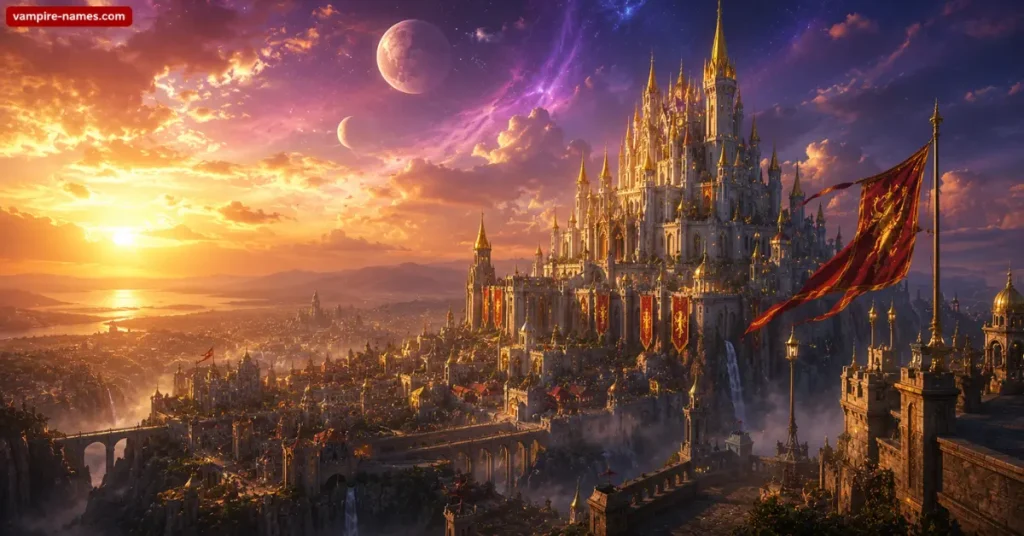
500+ Fantasy Kingdom Names with Meaning: The Ultimate Worldbuilder’s Guide
There’s a moment every worldbuilder knows. You’ve mapped the rivers, sketched the mountain ranges, decided which races populate the northern reaches. Then someone asks: what’s the kingdom called? And suddenly, everything stops. A name that doesn’t fit the world you’ve built can undermine all of it. The wrong kingdom name sounds hollow — or worse, accidentally funny.
Fantasy kingdom names carry enormous weight. They set the tone before a reader even reaches your first chapter. They hint at culture, history, and power dynamics. ‘Valdross’ hits differently than ‘Sunhollow.’ One suggests ancient military dominance; the other, a peaceful agrarian settlement probably one that gets invaded in chapter three.
This guide gives you 500+ fantasy kingdom names across every possible category: dark and sinister realms, ethereal elven kingdoms, fire-forged dwarven strongholds, whimsical fairytale lands, and everything in between. Every name includes context — because a bare list of Vampire Names is only half useful. You want to know why a name works, what it evokes, where it could fit.
Whether you’re building a D&D campaign, writing a novel, designing a video game world, or just playing around with fiction — you’ll find something here. And if nothing sticks, there’s a full section on how to build your own kingdom names from scratch using proven linguistic techniques.
Why Kingdom Names Make or Break Your World
Real-world kingdom names weren’t invented casually. England comes from ‘Angle-land’ — land of the Angles, a Germanic tribe. Burgundy derives from the Burgundiones people. Castile literally means ‘land of castles,’ which is about as on-the-nose as naming gets. These names evolved over centuries and carry genuine history in every syllable.
Fantasy names work the same way — even fictional ones. When Tolkien named Gondor, he was drawing on Welsh and Finnish phonology to create something that sounded ancient and weighty. When you name your kingdom, you’re telling the reader something about who built it and how they saw themselves.
The mistake most beginners make? Picking something that sounds cool in isolation but means nothing within the world. A kingdom called ‘Shadowmere’ is fine — unless it’s a sunny coastal trading empire. Context matters. Your kingdom name should reflect geography, founding culture, dominant religion, or historical trauma.
Real Historical Kingdoms That Inspire Fantasy Names
| Kingdom Name | Meaning / Notes |
| Avalon | Mythic island kingdom from Arthurian legend — ‘isle of apples’ |
| Byzantium | Eastern Roman Empire — complex, layered, politically intense |
| Carthage | Phoenician merchant empire — trading, naval, fiercely independent |
| Dahomey | West African warrior kingdom — powerful military, female regiments |
| Elam | Ancient Near Eastern kingdom — one of the earliest in human history |
| Khmer | Southeast Asian empire — vast temples, divine kingship |
| Nubia | Kingdom along the Nile — rich in gold, rivaled Egypt directly |
| Trebizond | Byzantine successor state — remote, cultured, surrounded by enemies |
What Makes a Fantasy Kingdom Name Truly Memorable?
Not every kingdom name needs to sound menacing or grand. What it needs to do is feel inevitable — like the world couldn’t be called anything else. Here’s what separates the Tiefling Names that stick from the ones that get forgotten:
Phonetic weight matters more than most people realize. Hard consonants — K, G, D, T — project strength and military power. Softer sounds — L, N, M, V — suggest elegance or magic. ‘Kuldrath’ feels like a fortress. ‘Luminael’ feels like a city of spires and starlight.
Brevity is underrated. Two to three syllables is the sweet spot for most kingdom names. Long names can work — ‘Silverendale’ has a nice flow — but names that are genuinely hard to say will be quietly skipped by readers. If you can’t say it aloud smoothly on the third try, trim it.
Internal consistency with your world’s other names is crucial. If your elves are ‘Aelthari,’ your human kingdoms shouldn’t be called ‘Bob’s Reach.’ Linguistic families — groups of names that share sounds or endings — signal that different places in your world genuinely belong to the same universe.
Finally: meaning. Even made-up names can carry meaning through etymology you invent. ‘Valtir’ might mean ‘cold iron’ in your fictional language. Your readers won’t know that, but you will — and it shows in how you write about the place.
Best Fantasy Kingdom Names
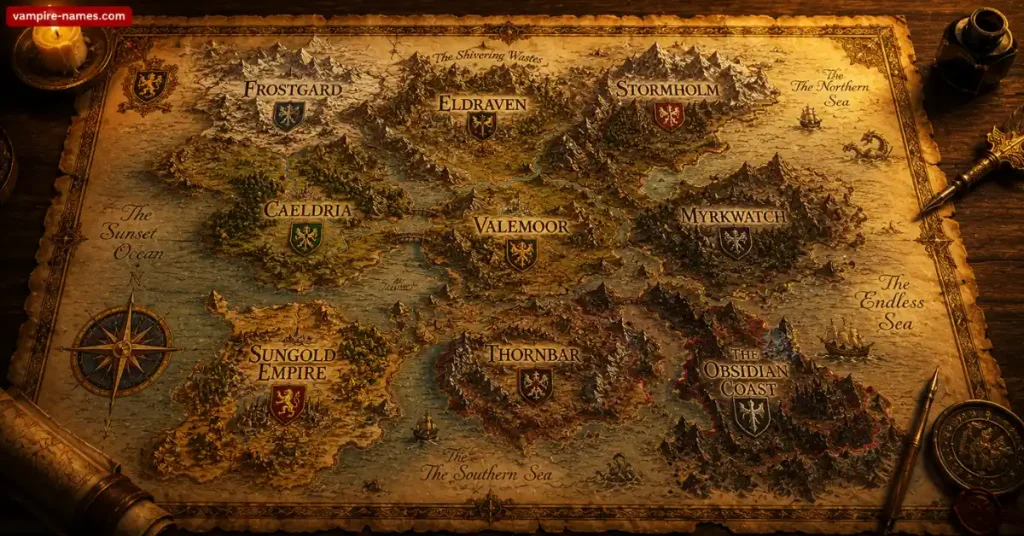
These are the flagship names — the ones that would look good on any fantasy map, in any genre. They’re versatile, strong, and work across a wide range of settings.
Top Fantasy Kingdom Names with Meanings
| Kingdom Name | Meaning / Notes |
| Aethoria | From ‘aether’ — a kingdom that floats between worlds or exists in myth |
| Valdross | Combines ‘val’ (valley/vale) + ‘dross’ — the refined remnants of an old empire |
| Irenmoor | ‘Iren’ (iron) + ‘moor’ — a cold, iron-hearted northern realm |
| Sylvanthar | From ‘sylvan’ (woodland) + ‘thar’ (ancient suffix) — forest kingdom |
| Dawnkeep | A kingdom founded at the edge of the known world, facing east |
| Vordheim | Norse-inflected — ‘vord’ (warden/guard) + ‘heim’ (home) |
| Caldenmere | ‘Calden’ (burning/caldron) + ‘mere’ (lake) — volcanic lake kingdom |
| Ostenveil | ‘Osten’ (eastern) + ‘veil’ — a hidden eastern realm |
| Thornwall | A fortified kingdom built behind great thorn-forest barriers |
| Grimholt | ‘Grim’ + ‘holt’ (woodland) — a dark, ancient forest dominion |
| Azuretheon | ‘Azure’ + ‘theon’ (godlike) — a blue-sky celestial empire |
| Solmareth | ‘Sol’ (sun) + ‘mareth’ — sun-worshipping southern kingdom |
| Velthrane | Invented — elegant, slightly dangerous, aristocratic feel |
| Cinderpeak | A mountain kingdom forged in volcanic fire |
| Mirefall | A marshy lowland kingdom — treacherous, beautiful, secretive |
More Great Kingdom Names — Quick Reference Grid
| Ravenspire | Duskholm | Ironfell | Goldenmarch |
| Embervast | Wyndmere | Stonehearth | Ashenveil |
| Brightwater | Coldforge | Stormcliff | Nightsong |
| Greyholt | Aldenmoor | Westkeep | Sunreach |
| Blackthorn | Coppergate | Silverfen | Dustfall |
| Brightmoor | Runewood | Saltmere | Irongate |
Dark & Evil Kingdom Names
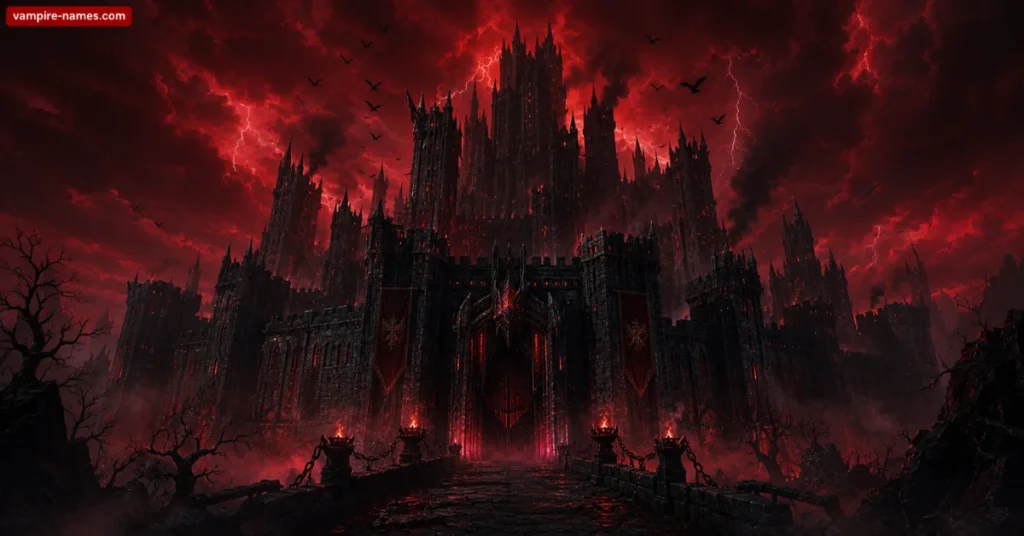
Every great fantasy world needs a kingdom the heroes dread. These Werewolf Names carry menace, weight, and the sense that something terrible either happened here or is being planned. Dark kingdom names work best when they combine ominous sounds with just enough elegance to suggest power, not just chaos.
Dark Fantasy Kingdom Names with Meanings
| Kingdom Name | Meaning / Notes |
| Mordraveth | From ‘mort’ (death) + ‘raveth’ — a death-cultured empire |
| Umbrath | ‘Umbra’ (shadow) + ‘rath’ — the shadow-rage kingdom |
| Kelvanthor | A name that sounds ancient and militaristic — coldly authoritarian |
| Duskenveil | A kingdom permanently shrouded in twilight magic |
| Skarrath | Harsh consonants — brutal, no-mercy warlike state |
| Grimthorn | Where dark magic and nature merge into something terrible |
| Bloodmere | A marshland kingdom with a history of ritual sacrifice |
| Vrothgar | Sounds orcish or barbarian — raw, powerful, conquering |
| Nocturnis | Latin root ‘nox’ — a kingdom that worships or exists in darkness |
| Ashenvale | Post-catastrophe kingdom built in the ruins of something burned |
| Dreadhollow | A kingdom occupying a sunken valley — hemmed in, dangerous |
| Malvoros | ‘Mal’ (evil) + ‘voros’ — devourer, conquering empire |
| Shadefall | A realm where light itself dims at the borders |
| Vexmoor | A cursed marshland kingdom — strange, hostile, otherworldly |
| Rothmael | Combines ‘roth’ (redness/blood) + ‘mael’ — red iron kingdom |
More Dark Kingdom Names
| Gravenmoor | Blightkeep | Fellmarch | Shadowgate |
| Ironveil | Darkthorn | Skullfen | Wraithwall |
| Soulfall | Cindergrove | Blackmire | Voidsong |
| Dreadfen | Ashmoor | Bonehollow | Grimvast |
| Deathsport | Plaguewick | Nightveil | Ruinmarch |
Magical & Enchanted Kingdom Names
These names suggest a world where magic is woven into the very soil — kingdoms where the rules of reality bend, where the royal bloodline carries genuine supernatural power. They lean toward flowing vowels and soft consonants, with a sense of history older than written record.
Magical Kingdom Names with Meanings
| Kingdom Name | Meaning / Notes |
| Luminael | ‘Lumen’ (light) + ‘ael’ (elven suffix) — a kingdom of living light |
| Arcanethorpe | Arcane + thorpe (village) — a whole kingdom built around magic study |
| Mystiveil | The kingdom veiled in permanent enchantment |
| Spellhaven | A sanctuary kingdom — all magic users welcome, all violence forbidden |
| Etherendale | ‘Etheren’ + dale — a valley kingdom touched by the spirit world |
| Runewatch | A kingdom whose borders are protected by ancient rune magic |
| Glimmerthal | ‘Glimmer’ + ‘thal’ (valley) — a valley that permanently shimmers |
| Sorcelorn | ‘Sorce’ (sorcery) + ‘lorn’ (lost) — magic that has gone wild |
| Weavenmere | A kingdom where reality is literally woven by its mages |
| Enchantspire | The central spire of an enchanted mountain kingdom |
| Faeveil | Where fae magic and human civilization intersect uneasily |
| Witchhollow | A kingdom run by a council of witches — not evil, just different |
More Magical Kingdom Names
| Starweald | Moonveil | Crystalore | Dawnspell |
| Shimmerfen | Glowmere | Runeholt | Arcveil |
| Mirrorkeep | Visiondale | Sorcemoor | Spellgate |
| Dreamthorn | Magesfall | Hexenmoor | Starfell |
Medieval Kingdom Names
Medieval kingdom names tend to draw from Old English, Latin, Norse, and French roots — the four major linguistic pillars of the actual medieval period. They feel grounded, earthy, and believable in ways that purely invented Evil Names sometimes don’t. These are solid choices for historical fantasy, low-magic worlds, and D&D settings.
Medieval Kingdom Names with Meanings
| Kingdom Name | Meaning / Notes |
| Aldenmere | ‘Alden’ (old friend/protector) + ‘mere’ — an ancient lake kingdom |
| Westkeep | Classic directional name — the kingdom that guards the western pass |
| Northholt | Norse-English hybrid — northern woodland stronghold |
| Greymarch | A borderland kingdom — always fighting, always defending |
| Stonehaven | A refuge kingdom built in natural rock formations |
| Ironford | A military crossing point that became a kingdom |
| Goldenmarch | Rich borderlands — contested by every neighboring power |
| Saltholm | A coastal kingdom whose wealth came from salt trade |
| Coppergate | Named for its famous market gate — a trading kingdom |
| Ravenspire | A kingdom whose symbol is the raven — wisdom and war |
| Dawnwall | The easternmost fortified kingdom — first to see sunrise |
| Thornmere | A marshy kingdom with natural thorn-hedge defenses |
More Medieval Kingdom Names
| Crosswald | Millhaven | Eastbrook | Dunmore |
| Ashfield | Greywood | Coldwater | Fenwick |
| Hartfall | Kingsford | Longmoor | Millstone |
| Oakholt | Pineward | Ridgekeep | Saltwick |
| Towerford | Underhill | Valehome | Warwick |
Elven Kingdom Names
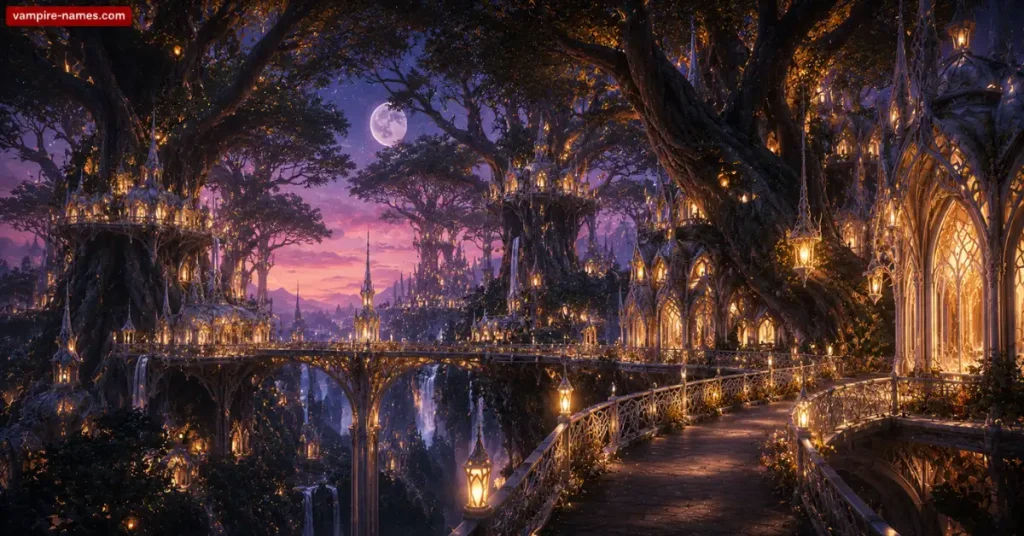
Elven kingdom names have a distinct phonetic signature — they’re long, flowing, full of soft consonants and open vowels. They often borrow from Tolkien’s linguistic tradition, Celtic mythology, or pure invented phonology. The key is that they should feel timeless, slightly untranslatable, like they’ve existed for ten thousand years.
Elven Kingdom Names with Meanings
| Kingdom Name | Meaning / Notes |
| Aelthari | ‘Ael’ (light/sky) + ‘thari’ (people) — the sky-people’s realm |
| Sylvanthas | From ‘sylvan’ — the original woodland kingdom |
| Lyrindal | ‘Lyrin’ (song) + ‘dal’ (valley) — valley of songs |
| Vaelmorath | Ancient elf word for ‘silver-leaf homeland’ |
| Erevanor | Named for Erevan — the elven god of trickery in some mythos |
| Thornelith | Where nature and elven magic fused — thorned but sacred |
| Calimerath | From ‘calim’ (beautiful) + ‘erath’ (earth) — beautiful land |
| Astarindel | ‘Astar’ (star) + ‘indel’ (bower) — a starlit garden kingdom |
| Moonweald | A forest kingdom lit only by moonlight — elves who shun the sun |
| Silvenmere | Silver lake kingdom — famous for its mirrors and prophecy |
| Aldari | Simply ‘the old ones’ in invented elvish — the original kingdom |
| Everwood | A forest that never loses its leaves — and neither does its kingdom |
More Elven Kingdom Names
| Elareth | Sylvenmoor | Thalindra | Vaelorn |
| Misthaven | Greenveil | Starholm | Dawnvale |
| Leafspire | Windthorn | Moongrove | Glassfen |
| Aelindra | Celador | Elenath | Nimrodel |
Dwarven Kingdom Names
Dwarven kingdom names are built differently. Hard consonants, short vowels, consonant clusters that sound like picks striking stone. Where elven names flow, dwarven names clunk and clang — and that’s exactly right. These kingdoms are forged, not grown.
Dwarven Kingdom Names with Meanings
| Kingdom Name | Meaning / Notes |
| Deepvault | The kingdom built deepest underground — the original stronghold |
| Irondelve | ‘Delve’ (mine/dig) — a kingdom that is entirely subterranean |
| Stonecrown | The mountain peak kingdom — highest and proudest |
| Khundrath | Invented dwarven — ‘khund’ (iron) + ‘rath’ (hold) — ironhold |
| Goldvein | Built around the richest gold seam ever discovered |
| Grimdelve | A grim, ancient delving — the oldest dwarven kingdom |
| Bronzeholm | Bronze-age dwarves — older than iron, wiser than most |
| Coppergate | The gateway dwarven kingdom — faces the surface world |
| Flinthall | Built from flint — harder than granite, colder than iron |
| Runemount | A mountain kingdom covered in ancient rune carvings |
| Thunderkeep | Carved into a mountain where thunder echoes through the halls |
| Anvilspire | Named for the great forge at its center — everything is made here |
More Dwarven Kingdom Names
| Darkdelve | Hammerholm | Ironpeak | Stonegate |
| Gravelkeep | Coaldepth | Ashvault | Forgeshire |
| Moldenmere | Rockspire | Dirthollow | Deepstone |
Dragon Kingdom Names
Dragon kingdom names — whether ruled by dragons, worshipping dragons, or built on the bones of one — need to suggest enormous scale and primal power. These aren’t places that emerged from diplomacy. They were seized, burned into existence, or carved from land that no one else dared touch.
| Kingdom Name | Meaning / Notes |
| Pyretheon | ‘Pyre’ + ‘theon’ (godlike) — the god-fire kingdom |
| Scalemarch | A borderland kingdom protected (and taxed) by a dragon |
| Cinderfall | Built in the ash-field where a great dragon died |
| Drakeholm | ‘Drake’ + ‘holm’ — the homeland of dragons themselves |
| Embervast | A vast empire powered by dragon-fire forges |
| Wyrmthrone | Where the dragon literally sits on the throne |
| Scorchveil | A kingdom hidden behind perpetual smoke and fire |
| Flamecrown | The kingdom whose ruler wears an actual dragon-scale crown |
| Ashenvale | Built in the valley where the oldest dragon is buried |
| Infernost | ‘Inferno’ + ‘ost’ (east) — the burning eastern empire |
| Dragonspire | Wyrmreach | Burnveil | Scalepeak |
| Fireholm | Cindergate | Emberkeep | Scorchfen |
| Ashmore | Flameveil | Pyremoor | Dragonfell |
Fairytale Kingdom Names
Fairytale kingdom names are almost a separate genre. They need to sound like they belong in a storybook — warm, slightly whimsical, with the sense that everything is slightly more vivid than real life. Think femboy name from Grimm, Anderson, and Perrault: places that sound beautiful even before you know what’s inside them.
Fairytale Kingdom Names with Meanings
| Kingdom Name | Meaning / Notes |
| Rosenveil | A kingdom wrapped in rose gardens — beautiful and thorny |
| Sunhollow | A sunny valley kingdom — peaceful, prosperous, inevitably threatened |
| Goldspire | The tall golden castle kingdom every story needs |
| Willowmere | A lake kingdom overhung with willows — melancholy, beautiful |
| Dawnglory | Where every day begins with a festival — too good to last |
| Crystalmere | A lake so clear it reflects other worlds |
| Honeywood | A forest kingdom whose trees literally drip with honey |
| Silverbell | Named for the bells that ring at every kingdom event |
| Petalfall | Where flowers fall like snow — a kingdom of eternal spring |
| Stardust | Built from fallen stars — a kingdom of light and wonder |
| Glasshold | A kingdom famous for its impossible glass architecture |
| Brightmere | The brightest kingdom — used as a beacon for lost travelers |
Names for Kingdoms in Fairytales — More Options
| Enchanted Isle | Pearlgate | Glimmerhold | Sunveil |
| Rosewick | Goldenvale | Moonhollow | Dawnkeep |
| Springhaven | Lilyveil | Swanglen | Crystalfall |
| Mirrorgate | Starhollow | Cloudspire | Blossomwick |
Ocean & Water Kingdom Names
Water kingdom names need to carry movement — the sense that nothing here is fixed, that the tide shapes everything including politics and borders. Whether it’s an underwater empire, a coastal trading state, or an island nation, these names should flow when you say them aloud.
| Kingdom Name | Meaning / Notes |
| Thalassion | From Greek ‘thalassa’ (sea) — a pure sea empire |
| Coralveil | Built among coral reefs — breathtaking, labyrinthine, deadly |
| Tidesong | A kingdom whose laws change with the tides |
| Saltmere | A salt-marsh coastal kingdom — fishing, trading, fiercely independent |
| Deepcurrent | An underwater kingdom in deep ocean trenches |
| Shoreholm | The kingdom at the edge of the world’s last shore |
| Mistwater | A lake kingdom always shrouded in morning mist |
| Wavespire | An island fortress kingdom — attacked by sea and defended by it |
| Pearldeep | An underwater kingdom that harvests pearls for its economy |
| Stormhaven | A port kingdom that’s survived every storm — and thrived from them |
| Mariveil | ‘Mare’ (sea) + ‘veil’ — a kingdom hidden beneath the waves |
| Bluehollow | A seaside hollow kingdom — small but strategically vital |
| Seafall | Deepwave | Coralgate | Tideveil |
| Saltwind | Harborholt | Mistshore | Waveholt |
| Reefsong | Markeep | Brinegate | Shorespire |
Sky & Celestial Kingdom Names
Sky kingdoms feel impossible and inevitable at the same time. These are the names you give to floating islands, cloud cities, empires that worship the stars, or civilizations built on mountain peaks so high they’ve forgotten what ground-level feels like.
| Kingdom Name | Meaning / Notes |
| Stormveil | A sky kingdom permanently wrapped in storm clouds |
| Celestara | ‘Celestial’ + ‘ara’ — the star-touched kingdom |
| Cloudhaven | A refugee sky kingdom — built by people who fled the earth |
| Aethermoor | From ‘aether’ — a kingdom existing between the earthly and divine |
| Windspire | Built on the highest spire — the wind never stops here |
| Stargrasp | A kingdom literally reaching for the stars |
| Sunnersgate | The gate through which sunlight enters the world below |
| Dawnspire | The first kingdom to see each sunrise — guards the eastern sky |
| Nimborath | From ‘nimbus’ (cloud) — a kingdom of cloud-walkers |
| Skyholm | The simplest possible name for a sky kingdom — and still works |
| Galewatch | Guards against sky-borne threats — the storm-watchers |
| Voidreach | A kingdom that has pushed past the sky into something beyond |
| Cloudveil | Starbreach | Skygate | Windkeep |
| Airsthrone | Mistspire | Sunreach | Galespire |
| Dawnholm | Stormwatch | Zephyrfall | Highkeep |
Fire & Volcanic Kingdom Names
Fire kingdoms are rarely comfortable places to live. But they’re fascinating to visit in fiction. These names should feel hot, dangerous, forged — like something that was created under impossible pressure.
| Kingdom Name | Meaning / Notes |
| Pyretheon | The god-fire empire — where fire itself is worshipped as divine |
| Lavamere | Built around a lava lake — either insane or brilliant engineering |
| Embervast | A vast fire empire — its forges supply weapons to half the world |
| Scorchveil | Hidden behind perpetual ash and smoke — intentionally mysterious |
| Cinderfall | Where ash falls like snow — a kingdom in permanent volcanic winter |
| Flamecrown | The royal line literally wears molten metal crowns |
| Ashenmoor | Post-eruption kingdom — built in the aftermath of catastrophe |
| Inferngate | The gateway kingdom between the normal world and volcanic hellscape |
| Burnthorn | Where even the plants are fire-adapted — a brutal ecosystem |
| Magmahollow | Built above a magma chamber — everyone knows it’s a bad idea |
| Firegate | Volcwatch | Emberholm | Flameveil |
| Ashkeep | Burnmarch | Pyregate | Infernost |
| Lavaspire | Scorchholm | Cindermere | Hotwell |
Ancient & Lost Kingdom Names
Some of the best kingdom names in fiction belong to places that no longer exist within the story — ruins, legends, cautionary tales. These names should sound like they’re already history: weathered, incomplete, slightly echoing.
| Kingdom Name | Meaning / Notes |
| Arventhal | An ancient word for ‘the first home’ — the mythic origin kingdom |
| Eldenmere | The old lake kingdom — drowned long ago, remembered forever |
| Ruinmarch | A kingdom that exists now only as a name on old maps |
| Vanishmoor | It simply disappeared — the scholars have theories, no answers |
| Sunkengate | The gateway kingdom, now entirely underwater |
| Ashwald | Burned during the war — never fully rebuilt |
| Lostholm | Nobody knows where it was — but everyone knows its laws |
| Forgottenspire | A spire that still stands; the kingdom around it is gone |
| Ancientfall | The kingdom that fell first — and taught all others what to fear |
| Pastmere | A lake kingdom that exists now only in the past tense |
| Oldgate | Primordia | Dustfall | Lostward |
| Pastholm | Ruinveil | Ashvast | Forgotholm |
| Sunkenspire | Driftmere | Deadmarch | Elderwick |
Funny & Quirky Kingdom Names
Sometimes you need a name that doesn’t take itself seriously. Comedic fantasy has a long tradition — Terry Pratchett’s Discworld, the Myth series, Piers Anthony’s Xanth. These names work for parody, light-hearted campaigns, or comic relief nations in otherwise serious worlds.
| Bumbleton | Snottingshire | Peasantfall | Taxhaven |
| Mudhollow | Borington | Quagmire | Drizzlewood |
| Smallmere | Napthorpe | Yawnveil | Bogsworth |
| Halfsburg | Blandkeep | Mediocria | Fineshire |
| Peasantholm | Dullwall | Grumbleton | Sneergate |
Fantasy World & Land Names
Sometimes you’re not naming a single kingdom but an entire world or continent. These Kitsune Names need to work at a larger scale — they need to suggest possibility rather than define a single character.
Names for Fantasy Worlds and Fictional Lands
| Kingdom Name | Meaning / Notes |
| Aldervast | The vast old world — implies age and scope |
| Thornweald | A wild-forest world — nature as dominant force |
| Aethermoor | An otherworldly plane — exists between worlds |
| Lumindra | A world of light magic — optimistic, hopeful |
| Shadowvast | A dark plane — shadow as natural state |
| Emberreach | A volcanic world — everything is fire-touched |
| Stormcrest | A storm-world — constant weather, elemental conflict |
| Mirrorholm | A reflection world — parallel to ours, reversed |
| Deepmere | An ocean world — land is rare and precious |
| Skyweald | A world of sky islands — ground is a myth |
More Fantasy Land & World Names
| Veldmoor | Thornward | Ashweald | Stormvast |
| Goldenreach | Mistworld | Duskplane | Brightland |
| Ironfell | Coldvast | Sunweald | Deepworld |
| Runeland | Spirevast | Wildmoor | Ancientland |
How to Create Your Own Fantasy Kingdom Name
Every technique in this section is something real linguists and world-builders use. None of them require expertise — just a willingness to play with sound and meaning.
Method 1: Combine Real-World Etymology
Take two real words from Old English, Latin, Norse, or Welsh and fuse them. ‘Stone’ + ‘haven’ = Stonehaven. ‘Iron’ + ‘moor’ = Ironmoor. ‘Silver’ + ‘mere’ = Silvermere. This works because it creates names that feel grounded — readers can feel the meaning even if they don’t consciously identify it. Latin gives you gravitas. Norse gives you weight and harshness. Old English gives you warmth and familiarity. Mix them for contrast.
Method 2: Invent a Phonetic Family
Decide what your kingdom’s dominant language sounds like — then stay consistent. If your culture is harsh and militaristic, use K, G, R, D, T sounds. ‘Kelvrath, Durgon, Thraxmere.’ If your culture is elegant and ancient, use L, N, V, M sounds. ‘Lyrindal, Vaelmere, Nimrodel.’ Once you have a sound palette, making new names becomes easy — they all feel like they belong to the same place.
Method 3: Name After a Founding Event
Real kingdoms often do this. Castile is the land of castles. Burgundy comes from the Burgundiones. Pick a defining moment in your fictional kingdom’s history — the Great Fire, the first forge, the treaty that ended the war — and name the kingdom after it. ‘Cinderfall’ suggests something burned here and they built anyway. ‘Ironpact’ suggests the kingdom was founded on a political agreement, not conquest. Instant history baked into the name.
Method 4: Use a Significant Geographic Feature
Mountains, rivers, lake, forests, valleys — these are the most natural naming foundations in any language. Combine a descriptive word with a geographic term: ‘Thornmere’ (thorn + lake), ‘Coldpeak’ (cold + mountain peak), ‘Ashvale’ (ash + valley). The best part of this method is it tells you something about the landscape, which helps with worldbuilding consistency. If you name a kingdom ‘Saltholm,’ you’ve just decided it’s coastal — and that should influence trade, cuisine, military strategy, and culture.
Method 5: Reverse-Engineer from Meaning
Decide what the kingdom means thematically — pride, isolation, warmongering, spiritual obsession — then find sounds that evoke that meaning and build a name around them. A kingdom built on religious fanaticism might be ‘Divetheon’ — divine law made into a nation. A kingdom of paranoid isolationists might be ‘Shieldwall’ or ‘Grimveil.’ Work backwards from the concept and let the sound serve the theme. This is how Tolkien did it, and it’s why his names still feel inevitable sixty years later.
Frequently Asked Questions About Kingdom Names
Q: What is a good kingdom name for a D&D campaign?
For D&D, the best kingdom names are those that hint at conflict or history without over-explaining. Names like ‘Greymarch’ (a borderland always at war), ‘Ironveil’ (a secretive military power), or ‘Thornwall’ (a kingdom defined by its defenses) give your players immediate context. Keep it to two or three syllables, make it easy to say aloud — you’ll be saying it a lot — and make sure it fits your campaign’s tone. Dark campaign? Harsh consonants. Political intrigue? More elegant sounds.
Q: What are some good names for fantasy worlds?
Fantasy world names need to work at a macro scale — they should suggest scope without over-defining. ‘Aldervast’ implies ancient and wide. ‘Thornweald’ suggests a wilderness-dominated world. ‘Lumindra’ hints at magic and light. The key difference between a kingdom name and a world name is that a world name should feel like a container, not a character. It’s the stage, not the actor. Keep it slightly vaguer than a kingdom name, and let the kingdoms within it do the specificity work.
Q: What are some unique fantasy kingdom names?
Unique doesn’t just mean unusual sounds — it means internally consistent with the world’s logic. ‘Vaelmorath,’ ‘Kelvanthor,’ ‘Pyretheon,’ and ‘Aethoria’ are unique because they feel invented rather than borrowed. The trick is to combine sounds that aren’t usually put together in English but still feel pronounceable. Avoid the temptation to just pile on apostrophes — ‘Va’el’mor’ath’ is the same name as Vaelmorath but harder to read and no more unique.
Q: What is a good name for an evil kingdom?
Evil kingdoms benefit from names that suggest decay, conquest, or corruption of something once good. ‘Mordraveth’ sounds like death and rage combined. ‘Blightkeep’ suggests something that was once a safe fortress and is now a ruin of evil. ‘Malvoros’ sounds like devouring. But the most interesting evil kingdom names are ones that were once neutral or even positive — ‘Dawnkeep’ turned sinister hits harder than ‘Skullfen’ because you feel the loss of what it was.
Q: What are medieval kingdom names?
Medieval kingdom names typically draw from Old English, Norse, Latin, and Old French — the four main linguistic pillars of actual medieval Europe. Think place-name elements like: ‘ford’ (river crossing), ‘holm’ (island/small hill), ‘mere’ (lake), ‘holt’ (woodland), ‘worth’ (enclosed settlement), ‘gate’ (gap/road), ‘moor’ (marshland). Combine these with descriptive words: Ironford, Greywood, Coldmere, Thornholt. They feel medieval because they’re built from the actual linguistic toolkit of the period.
Q: What are fairytale kingdom names?
Fairytale kingdom names lean into beauty, warmth, and a slightly heightened reality. They often use soft sounds and cheerful imagery: ‘Rosenveil,’ ‘Sunhollow,’ ‘Goldspire,’ ‘Petalfall.’ The classic fairytale kingdom name suggests abundance and light — which is what makes the darkness, when it comes, so effective. Hans Christian Andersen and the Brothers Grimm rarely named their kingdoms at all, which is why modern fantasy writers have freedom to define the genre’s vocabulary here.
Q: How do I make up a kingdom name from scratch?
Start with two questions: what does this kingdom feel like, and what language family fits its culture? Then pick two words or word-fragments that answer those questions and fuse them. ‘Cold’ + ‘forge’ = Coldforge (industrial, northern). ‘Dawn’ + ‘veil’ = Dawnveil (mysterious, eastern). ‘Storm’ + ‘haven’ = Stormhaven (coastal, resilient). Run the name aloud three times — if it’s hard to say, trim it. Check that it doesn’t accidentally mean something embarrassing in a real language. Then commit and move on.
Q: What are some cool names for a kingdom?
Cool is subjective, but some names consistently work: ‘Valdross,’ ‘Irenmoor,’ ‘Aethoria,’ ‘Vorthmael,’ ‘Grimthorn,’ ‘Cinderfall,’ ‘Stormveil,’ and ‘Runewatch.’ What makes them work? They’re two to three syllables. They combine a concrete concept with a geographic or emotional term. They don’t look like typos. And they have a rhythm — say them aloud and there’s a beat to them. Cool names sound like they were inevitable, even though someone invented them five minutes ago.
Conclusion
A great kingdom name is more than decoration. It’s the first piece of worldbuilding your reader encounters — a handshake between your imagination and theirs. The 500+ names in this guide are starting points, not endpoints. Use them as they are, blend them with your own ideas, or let them spark something entirely original.
The best names usually come from the intersection of sound and meaning. When ‘Grimthorn’ snaps into place for your northern barbarian kingdom, or ‘Luminael’ suddenly feels exactly right for your elven city-state, that’s the moment you know it’s working. Trust that instinct. If a name feels right aloud and fits the world you’re building, it probably is right.
Whether you’re crafting a D&D campaign your players will remember for years, writing a novel you’ve been planning since high school, or just daydreaming about fictional maps on a Tuesday — the name matters. Pick one that deserves the world you’re building around it.
“Every kingdom begins with a name. Make yours worth remembering.”